


AI and data optimization propel packaging material reduction innovation

Key takeaways
- AI and data analytics are enabling packaging companies to reduce material use while maintaining performance and safety.
- Advances in manufacturing technology, such as precision injection molding and DFC inks, help to cut waste and improve recyclability.
- UK packaging EPR fee modulation is accelerating innovation, making material reduction a growing competitive lever across the packaging sector.
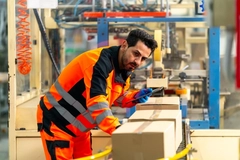
AI and data utilization are increasingly important for improving material efficiency in the packaging sector, according to industry experts. At the same time, ongoing technological advances are enabling packagers to develop designs and inks that further reduce material use.
Packaging Insights speaks to Colpac & Sabert, DS Smith, and PakTech about the latest technological solutions helping the industry players to reduce the use of packaging materials.
Gary Panknin, sustainability officer and supply chain manager at PakTech, tells us: “Technology is crucial to make every gram of material count.”
“At PakTech, our engineering process integrates LCA into the design stage, so each new handle concept is measured not just for mold-flow efficiency and mechanical strength, but for its full environmental impact, covering manufacturing, transport, use, and end-of-life.”
Chris Else, head of design at DS Smith, adds: “Access to sophisticated AI-powered data analysis is driving analytical thinking on an unprecedented scale.”
Talia Goldman, ESG director for Europe at Colpac and Sabert, says that new technology is constantly brought to the market, pointing to Direct Food Contact (DFC) inks and coatings as recent key innovations.
“We have recently used Sun Chemical’s DFC offering, which combines SunPak DirectFood Plus inks with SunStar DFC water-based varnishes to enable safe, compliant printing on the inside of fibre-based food packaging.
Efficiency through AI and data
Else highlights DS Smith’s use of AI to reduce material usage. Meanwhile Panknin explains how PakTech utilizes data-driven approaches for the same purpose.
 Digital prototyping and AI-assisted design are helping DS Smith test structural integrity and consumer impact.“More people are investigating the environmental impact of their habits in greater detail, and this is where technology becomes a powerful enabler,” says Else. “Digital prototyping, simulation tools, and AI-assisted design are helping us test structural integrity and consumer impact without physical samples, speeding up development and reducing waste.”
On the manufacturing side, he says that precision combined with a lighter touch in conversion is allowing a “more efficient” use of materials and “better alignment” between design intent and production reality.
At the same time, Panknin says that PakTech’s data-driven reduction approach is paired with advanced hybrid injection-molding machines, which offer precise control, faster cycle times, and lower energy demand.
“By balancing hydraulic power with electric efficiency, these machines ensure consistent part weights within microscopic tolerances, helping us eliminate over-specification and unnecessary resin use.”
“Technology isn’t just making our products lighter. It is making every decision smarter, grounded in verifiable environmental performance and production efficiency.”
Ink tech for recyclability
Goldman outlines how Colpac & Sabert is making use of the latest ink technology to reduce their material usage. The SunPak DirectFood Plus inks with SunStar DFC water-based varnishes used by Colpac & Sabert are vegetable-based, mineral oil-free, low-odor, and certified for DFC.
“They deliver intense color, covering over 75% of the Pantone color range, enabling foodservice brands to bring vibrant, safe color to the inside of the packaging and enhance consumer experience, without the need for added plastic laminates.”
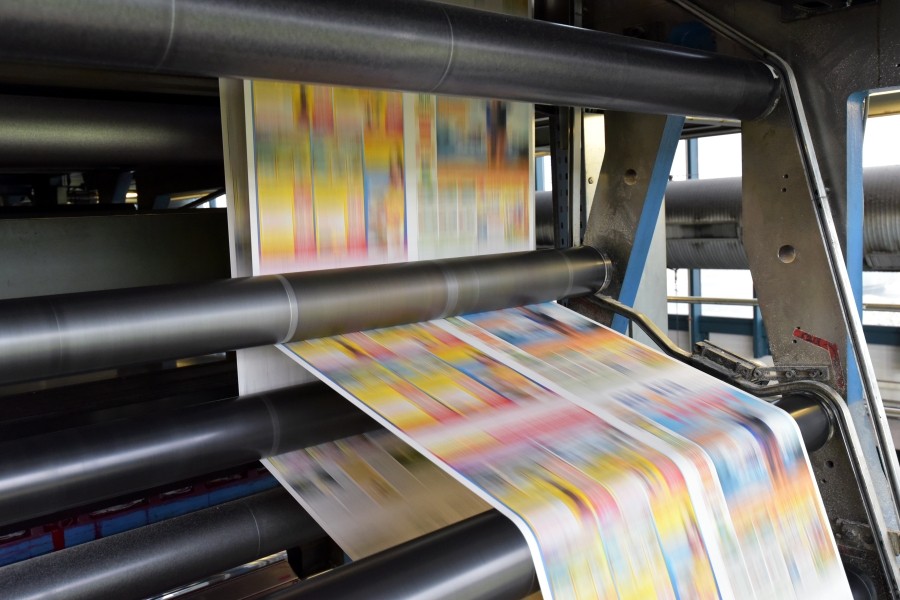 Colpac & Sabert outline how ink innovation can improve packaging recyclability.She adds that this technology has helped several of its customers to improve the recyclability of their packaging and reduce their projected fees under the UK’s packaging EPR (pEPR).
“Investment in waste systems technology is also needed to support the effective recycling of both mono and mixed material packaging,” continues Goldman. “We hope that there will be clear impact evidence following the implementation of pEPR to demonstrate vast investment in packaging re-processing.”
“There are also opportunities to harness technology through areas such as visual identification to improve waste sorting and recycling rates, projects around which we have been involved in early stages.”
Colpac & Sabert recently “pioneered” the use of DFC inks in foodservice for one of its key customers.
“We replaced plastic laminates with DFC inks and coatings and lightweighted the paperboard used, which resulted in the customer’s projected pEPR unit cost being reduced by 55%.”
“We keep designs simple but effective and use monomaterials where possible for simpler recycling. Our continuous product development cycle enables us to make changes to material types, weights, and coating thicknesses. Now, together with Sabert, we have more opportunities to bring new innovations to market and offer an even broader range of products to customers.”
The future of material reduction
Goldman and Panknin highlight upcoming developments, including technological innovation and evolving regulation, that aim to drive packaging material reduction.
“Over the next few years, pEPR fee modulation will put a tangible price on packaging weight and non-recyclability, so we expect a wave of further simplified formats to emerge to reduce pEPR impact and achieve ‘green’ RAM ratings. We therefore anticipate that material reduction will become an even stronger competitive lever,” explains Goldman.
Yet, consumers still want and need the convenience of disposable packaging, she adds. “We expect that demand will remain high and that more and more innovation will appear in support of simpler recycling and material reduction.”
Packaging companies that wish to stay ahead should “combine design innovation with clear communication, so that consumers understand the importance of changes made and do their part in recycling packaging after use,” according to the expert.
Panknin argues that innovation in material reduction “isn’t just about shaving off grams,” but about rethinking the entire packaging design.
Else adds that material reduction is a mainstay of packaging design. “There is no designer in the business who relishes putting more material than is needed into a new solution.”
“Most of the time, the role of the design professional is to reduce material, keep costs down, and ensure no more fibre than necessary is used. DS Smith has long been a leader in the field, adopting its performance, assurance, consistency, and environment principles to align unique packaging solutions with precisely the right board grade, engineered to suit the application.”