
Unilever and Vietnam push for innovation in plastic pack circularity


Key takeaways
- The Vietnam Environment Agency and Unilever Vietnam have introduced the “Plastic Circularity Innovation Solutions 2026” competition under their new cooperation agreement.
- The partnership builds on previous joint efforts that collected and recycled over 60,000 metric tons of plastic waste, while supporting waste sorting and EPR implementation.
- The initiative reflects growing business support for waste management and packaging recycling in Southeast Asia.
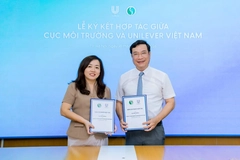
The Vietnam Environment Agency under the Department of Environment and Unilever Vietnam have unveiled the “Plastic Circularity Innovation Solutions 2026” competition, marking the first initiative under their new 2026–2030 cooperation agreement.
The competition targets innovations across the plastic value chain, including packaging design, alternative materials, recycling technologies, waste collection and sorting models, circular business models, as well as consumption initiatives said to be sustainable.
Environment Agency Director General, Tang The Cuong, says: “The program’s distinctive feature is not only that it seeks innovative ideas, but also that it creates a platform for connection between the state, scientists, and businesses.”
“Through this initiative, solutions can continue to be refined, tested, applied, and scaled in practice. Moreover, this is an opportunity to connect scientific research with the needs of management, production, and business, while promoting the formation of an innovation ecosystem in the environmental sector.”
Supporting green transition
The partnership builds on a five-year track record. During this period, joint programs have collected and recycled over 60,000 metric tons of plastic waste while advancing local waste-sorting practices and EPR policy implementation, according to the agency.
Unilever Vietnam reports that 70% of its packaging is now recyclable, with recycled plastic content averaging 50% across its product portfolio.
Nguyen Thi Bich Van, country general manager of Unilever Vietnam, notes that the nation’s green transition begins with reframing plastic as a resource rather than waste.
“Systemic changes such as plastic waste management require collective strength. The combination of the policy-setting role of state agencies and the resources and flexibility of the private sector has proven effective in practice,” says Van.
“The success of this public-private cooperation has given Unilever and the Department of Environment greater confidence to strengthen and deepen their cooperation, officially entering a new cooperation cycle for 2026–2030 to help address larger challenges and contribute to the country’s green transition goals.”
Recently, businesses have increasingly supported waste management and recycling in Southeast Asia.
Last month, SIG expanded its “Recycle for Good” program to Vietnam, providing an education-led model for carton collection and recycling. The initiative aimed to encourage the collection of empty milk cartons at preschools and primary schools.
Earlier this year, Borealis and Borouge, in collaboration with Pelita Mekar Semesta, Reciki Solusi Indonesia, and the Subnational Climate Fund, partnered to establish a circular waste management system in Indonesia to reduce plastic pollution and recycle polyolefin.