



Can Manufacturers Institute pushes for US tariff relief on metals amid rising prices


Key takeaways
- The US trade association Can Manufacturers Institute advocates for tariff relief for critical metals like tinplate and aluminum.
- CMI highlights the impact of current tariffs on the industry, US consumers, and competitiveness in the global market.
- The organization emphasizes the importance of advancing legislation like the STEWARD Act and Circle Act to enhance recycling in the US.
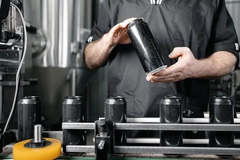
Tariffs and trade are the main obstacles currently facing the US can making industry, according to Pearce Crosland, the senior director of Government Relations and Regulatory Affairs at the Can Manufacturers Institute, based in Washington DC.
The Can Manufacturers Institute is the national trade association of the US metal can manufacturing industry and its suppliers, representing more than 28,000 employees.
The US can industry produces 35 billion metal cans and generates US$15.7 billion in direct economic activity every year, according to the institute.
Packaging Insights sits down with Crosland to better understand the position of the industry organization on trade and tariffs, as well as the current state of US can production and recycling.

“We import a lot of our critical metals, like steel for food cans, aluminum for beverage cans, from our closest trading allies, which are Canada, the UK, and the EU,” he tells us.
“Unfortunately, the reality is that current policies and tariffs on tinplate and aluminum are not only harming the can manufacturing industry, but are also impacting US consumers and making US goods less competitive on a global stage.”
Discussing the Can Manufacturers Institute’s advocacy, Crosland adds: “We're trying to work with the Trump administration right now to provide targeted tariff relief on such products.”
Domestic production capacity drop
Crosland says around 80% of all tinplate steel used in the US manufacturing of tinplate steel — the metal used to make food cans comes from global sources.
.webp) Pearce Crosland, the senior director of Government Relations and Regulatory Affairs at Can Manufacturers Institute.“The domestic production capacity has decreased significantly over the last eight years, which is tied to the current trade policy. The US has three operating steel tinplate lines, a sharp decline from eight years ago, when that number was 12.”
Pearce Crosland, the senior director of Government Relations and Regulatory Affairs at Can Manufacturers Institute.“The domestic production capacity has decreased significantly over the last eight years, which is tied to the current trade policy. The US has three operating steel tinplate lines, a sharp decline from eight years ago, when that number was 12.”
He argues that the tariffs on tinplate steel have contributed to the rising cost of canned foods on US store shelves.
“Consumers, manufacturers, and Can Manufacturers Institute members need the Trump administration to act quickly to provide tariff relief to lower food costs and bolster national food security.”
Regulatory action
The Can Manufacturers Institute is now building a presence on Capitol Hill and within the agencies to ensure members of Congress and their staff are familiar with the industry and the issues it is facing, according to Crosland.
“There are a number of really exciting pieces of legislation out there right now. One of them is the Strategies To Eliminate Waste and Accelerate Recycling Development (STEWARD) Act, which is in the Senate.”
The STEWARD Act aims to improve recycling accessibility by requiring the Environmental Protection Agency to carry out certain activities to collect and disseminate data on recycling and composting programs in the US.
“We’ve got the CIRCLE Act in the House of Representatives that provides a recycling infrastructure tax credit for any investments that are made in expanding current facilities, building new facilities, anything that’s going to bolster recycling.”
The Can Manufacturers Institute works alongside other trade organizations within the packaging space.
“We’re a founding member of and a steering committee member of the ‘We Recycle Working Group’. It’s a collaboration of trade associations and industries that all have a stake in recycling.”
The working group includes stakeholders from industries such as metal cans, flexibles, plastic, wood, glass, and paper. “Everyone who recycles has come together to identify areas of shared concern and figure out where we can work together and promote a single voice that will move the needle on recycling policy.”
Cans for circularity
Crosland describes the metal can industry as a leading example of the circular economy in action.
“If you go to your fridge and pull out an aluminum beverage can and put that empty can into the recycling bin, in 60 days or less, that can will be processed, recycled, and turned into a new product.”
 The Can Manufacturers Institute’s data shows that in the US, recycling rates for aluminum beverage cans are 43% and 44% for steel food cans.The Can Manufacturers Institute’s data shows that in the US, aluminum beverage cans have a 43% recycling rate and steel food cans 44%.
Meanwhile, the recycling rate for aluminum beverage cans in the EU, UK, Switzerland, Norway, and Iceland reached 76.3% in 2023, according to a new report by European Aluminium and Metal Packaging Europe.
“Steel and aluminum are infinitely recyclable, and metal cans are the most sustainable food and F&B packaging product in the US. When it comes to our domestic policy landscape around things that impact the industry, there's simply no reason that we cannot reflect where we are in our policy,” continues Crosland.
“We need to amplify the strengths of our communities and our domestic manufacturers. I’m optimistic that over the next three to five years, we’ll invest in recycling infrastructure and collections, and that our recycling policy will grow along with the industry.”
Refund programs
Crosland calls for “small investments” in waste management, such as improving collection rates, modernizing recycling infrastructure, and creating “thoughtful and well-crafted” recycling refund programs.
“Refund programs will pay dividends on the back end in the next three to five years, when we really do need to catch up to where the rest of the world is.”
“The Can Manufacturers Institute sits at an intersection of manufacturing, sustainability, agriculture, workforce development, and education. It’s a very exciting time, and we’re always looking for ways that we can serve our members and collaborate with other associations.”