
From freezer failures to material innovation: Rethinking frozen food packaging
Key takeaways
- Following cyberattacks on European supermarket freezers, experts say strong seals and puncture-resistant packaging could help maintain pack integrity during temperature fluctuations.
- Amcor, Coveris, ExxonMobil, Hydropac, and Rapids Paper + Packaging offer rigid formats, insulated liners, and paper-based alternatives to plastic films.
- The speakers highlight convenience, downgauging, recyclability, and EPR compliance as key, with food-safe recycled content as the next challenge.

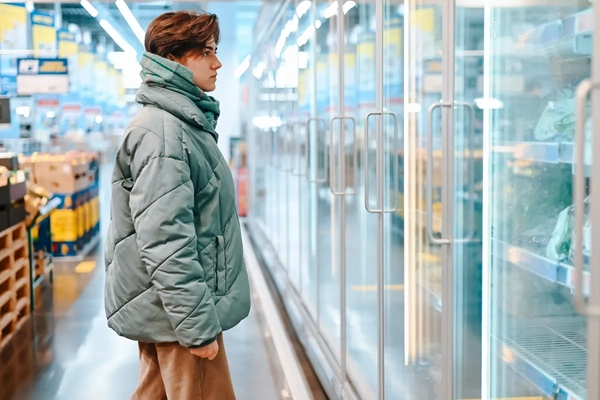
The cyberattacks targeting supermarket freezer systems across Europe in October and November 2026 have drawn attention to the vulnerabilities of frozen food supply chains and the significance of maintaining product integrity.
Packaging can play a key role in protecting frozen products throughout storage, handling, and distribution, according to industry experts.
Packaging Insights speaks to Amcor, Coveris, ExxonMobil, Hydropac, and Rapids Paper + Packaging about their innovations in packaging for frozen products and the latest market developments in the sector.
“Packaging cannot prevent a freezer failure, but it can help maintain pack integrity during temperature fluctuations,” Craig Shakespeare, Coveris sales director, Consumer & Healthcare, UK and Northern Ireland, tells us.

“Strong seals and puncture resistance reduce the risk of leakage or contamination if products soften and are subsequently refrozen. Ultimately, packaging is one layer of protection within wider food safety and cold-chain management.”
Also discussing frozen packers’ response to the recent cyberattacks, Berto Sanchez, North America PE market development expert at ExxonMobil, says that packaging can provide an additional layer of protection during temporary freezer disruptions.
“High-performance PE structures can help maintain package integrity during thaw-freeze cycles, reducing the risk of leaks, punctures, and contamination,” he adds.
“Strong seals enabled by ExxonMobil’s Exxtra Seal grades and robust abuse resistance provided by our Exceed Tough grades can help preserve product quality and minimize waste during short-term temperature excursions.”
In the near future, Sanchez also sees opportunities for smart packaging technologies, such as time-temperature indicators, to complement packaging performance and improve cold-chain resilience.
Cool packing innovations
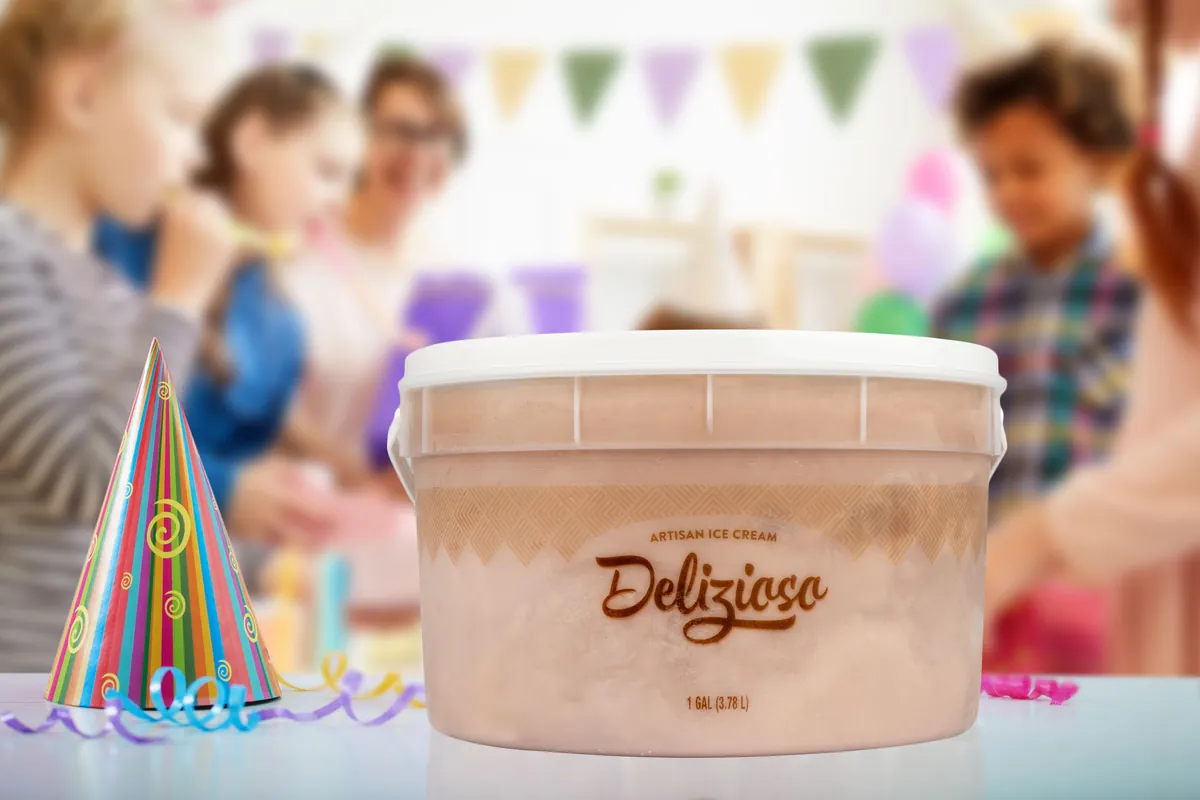 Amcor offers rigid packaging for ice cream in pint and gallon formats (Image credit: Amcor).Representatives of Amcor, Hydropac, and Rapids Paper + Packaging spotlight rigid plastic formats suitable for heating, temperature-controlled solutions, and paper-based alternatives to flexible pouches, as their key developments for freezing.
Andrew Dick, strategic marketing expert for Rigid Packaging Solutions and Nutrition, North America, at Amcor, highlights the company’s rigid packaging offerings for a range of frozen food applications.
The offerings target applications such as pints and gallons for ice cream, bowls for frozen entrees and prepared meals, and packaging for frozen cookie dough and baked goods.
“In some prepared meal applications, packaging also supports preparation by keeping ingredients separate during freezing, then bringing them together during heating,” Dick adds. “It is a good example of the package playing a role throughout the product journey.”
At the same time, Colin Rowland, managing director of Hydropac, says the UK-based company supplies thermally insulated liners and water and gel ice packs for temperature-controlled distribution. Hydropac’s solutions include its range of HydroFreeze coolant ice packs for frozen applications, which include packaging suitable for −12, −16, and −21 degrees Celsius.
“We design the complete pack-out around the product, the order size, and the delivery route,” Rowland explains. “A box of frozen ready meals can need a different combination of liner, coolant, and layout from a box of frozen pet food, even when both travel through the same courier network.”
Meanwhile, John Wilson, director of Sales and Marketing at Rapids Paper + Packaging, points to its Ecova Barrier range. The “paper-first option” provides frozen food brands with an alternative to conventional flexible films, according to the US-based paper and packaging company.
“We combine patented PaperLock heat-seal technology with available moisture or grease barriers, depending on the specific needs of the product application,” says Wilson. “For applications with more demanding barrier or sealing requirements, we also offer Ecova Lamination, which combines a paper outer with a thin plastic film layer.”
“This gives frozen food brands another pathway to reduce plastic use compared with a conventional plastic package, while meeting the product’s protection needs.”
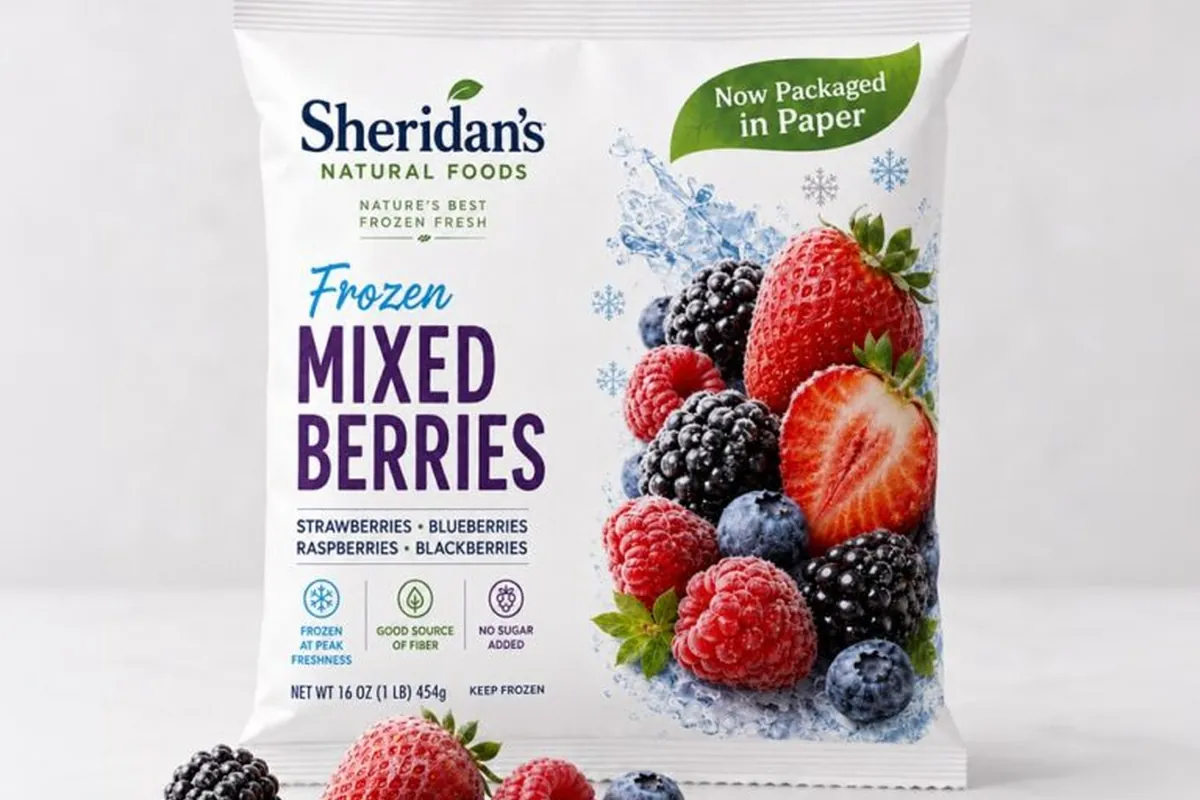 Rapids Paper + Packaging says it provides a “paper-first option” for frozen food packaging (Image credit: Rapids Paper + Packaging).Ecova is offered commercially as rollstock or premade pouches, he adds. According to the expert, the typical packaging format for a product like frozen fruit is a pillow bag produced on vertical form-fill-seal equipment.
“The Rapids Paper + Packaging team can evaluate the structure on the customer’s existing form-fill-seal equipment, then validate seal integrity, line speed, distribution performance, and shelf life with the product inside.”
Trends shaping offerings
Recyclability, downgauging, convenience, and cost management are emerging as the key ongoing trends shaping packaging formats for the freezer, according to the Amcor, Coveris, and ExxonMobil experts.
ExxonMobil’s Sanchez sees four major trends shaping the market. “First, the continued growth of convenience and ready-to-cook frozen foods is driving demand for high-performance packaging. Second, brand owner commitments are increasing interest in recyclable, all-PE structures.”
“Third, converters and brand owners are pursuing downgauging to reduce material consumption and costs,” he continues. “Finally, the growth of e-commerce and home delivery is increasing the need for packaging that can withstand more demanding distribution environments without compromising product protection.”
ExxonMobil Signature Polymers’ portfolio of PE solutions for frozen food packaging includes films for frozen vegetables, seafood, meat, poultry, prepared meals, bakery products, and freezer bags.
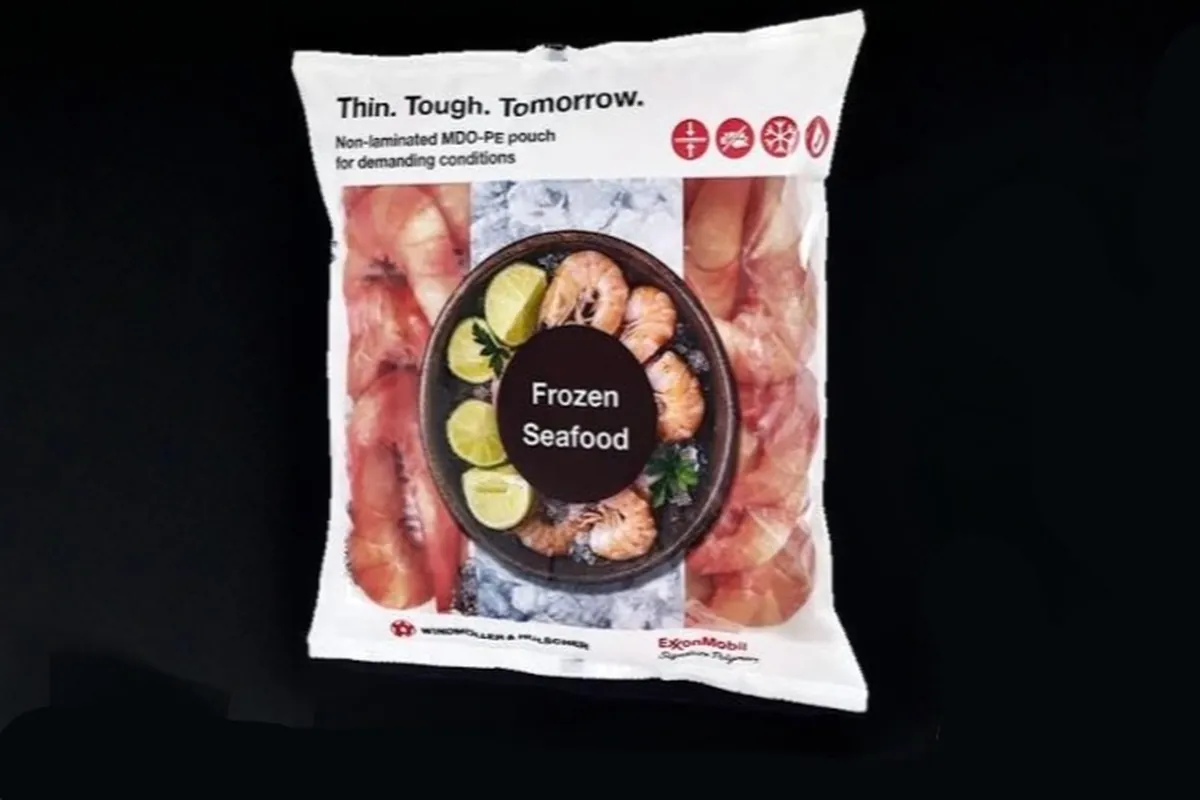 ExxonMobil’s Signature Polymers portfolio includes PE solutions suitable for freezer pouches, according to the company (Image credit: ExxonMobil).Amcor’s Dick builds on the ready-to-cook trend spotted by Sanchez. “Convenience in frozen foods increasingly starts with preparation.”
“The package is not finished doing its job when the product reaches the freezer. In some applications, it also needs to manage portioning, keep ingredients separated, and support how the meal is heated and served.”
At the same time, visual expectations are changing, Dick adds. “As frozen foods expand beyond traditional value and convenience cues, brands are looking for packaging that can deliver demanding freezer performance and still create a strong presentation for the consumer.”
Shakespeare says that Coveris continues to see strong demand for downgauging projects, with some applications achieving material reductions of up to 20% while maintaining the performance required for frozen products.
“Downgauging reduces the amount of plastic used, while helping businesses manage the financial impact of packaging taxes and EPR schemes, including the UK’s packaging EPR,” he shares.
Sanchez says that ExxonMobil’s Exceed Tough grades can deliver low-temperature toughness and puncture resistance, while Exceed Flow grades help converters achieve high output and downgauging.
“Exxtra Seal grades can enable seal performance across demanding manufacturing conditions, and Exceed Stiff grades can be incorporated where increased package rigidity is required. Together, these solutions can help support conventional multilayer and recycle-ready, all-PE packaging structures.”
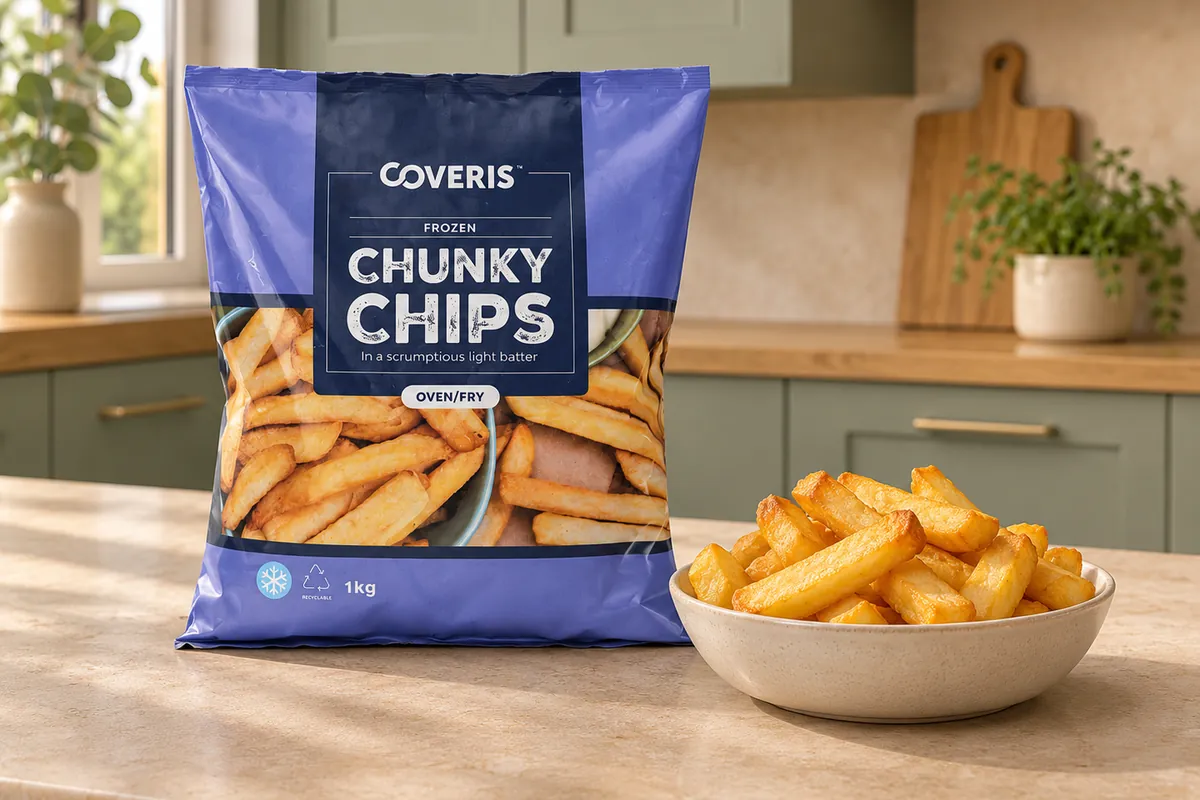 Strong seals and puncture resistance can reduce the risk of leakage or contamination, Coveris points out (Image credit: Coveris).Speaking from a consumer perspective, Shakespeare says that product visibility is increasingly influencing packaging design. “We’ve seen this trend in cycles over the years, but currently, more customers are opting for clear windows that allow consumers to see the product before purchase.”
“Coveris is also seeing greater attention given to supply chain resilience. Ongoing geopolitical uncertainty has reinforced the importance of reliable raw material supply and strong supplier networks.”
Frozen applications evolve
The future of frozen packaging will be shaped by solutions that do more across the full product journey, according to Amcor’s Dick. “That means thinking about how a package performs during manufacturing, freezing and preparation, and also how design choices can support recycling systems.”
“The package still must perform through demanding supply chains, support convenient preparation, and create a strong consumer experience. Increasingly, the opportunity is to bring those needs together with material efficiency and design choices that support circularity.”
Next year, Hydropac’s Rowland expects more businesses to specify frozen packaging by route, season, and order size. “A short winter delivery and a longer summer journey place different demands on the box. Testing both gives customers a basis for deciding where they can use less material and where they need extra protection.”
 (002).webp) Hydropac supplies thermally insulated liners, as well as water and gel ice packs, for temperature-controlled distribution (Image credit: Hydropac).“I also expect EPR-led decision-making to play a major role in shaping customers’ packaging requirements,” he adds.
Similarly, Shakespeare foresees a focus on frozen packaging that combines performance with the recyclability and recycled content needed to meet evolving legislation.
“Coveris is already seeing increasing adoption of monomaterial structures that are designed to be recycle-ready and aligned with evolving legislation, including the UK’s Simpler Recycling framework and the requirements being introduced through the EU’s Packaging and Packaging Waste Regulation (PPWR),” he says.
“The next challenge will be incorporating food-safe recycled content into these structures,” he asserts. “Meeting PPWR recycled content targets will require significant progress in food-contact recycling technologies and infrastructure.”
He adds that initiatives such as the COtooClean recycling technology developed by Nextek and scaled with Coveris are “so important,” because the next step for the industry lies in technologies capable of producing high-quality recycled material suitable for demanding applications, including food packaging.