



Household refill packs go mainstream as convenience drives adoption


Key takeaways
- Refill systems are moving toward mainstream household use as regulations, EPR fees, cost pressures, and consumer demand drive convenient packaging formats.
- P&G, ProAmpac, and Greiner Packaging are developing refill solutions that improve pouring, dosing, storage, transport efficiency, and accessibility.
- Industry experts also expect further growth in flexible pouches and concentrated products.
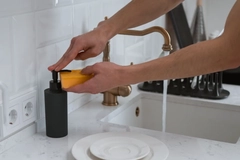
Refill systems are transitioning from a niche packaging choice to a household standard, as environmental regulations tighten and economic pressures shift consumer habits.
Packaging Insights speaks to Procter & Gamble (P&G), ProAmpac, and Greiner Packaging about how their refill solutions aim to achieve sustainability by making it user-friendly.
“Manufacturers are challenged to balance sustainability goals with product performance, consumer convenience, cost efficiency, and evolving regulatory requirements,” says Jörg Sabo, global director for marketing and innovation at Greiner Packaging.
“We expect the household packaging market to be increasingly shaped by EPR fee structures and regulations such as the EU Packaging and Packaging Waste Regulation (PPWR) requirements. These developments will drive greater adoption of recycled materials, lightweight packaging designs, monomaterial solutions, and refill concepts.”

E-commerce optimization
Sabo observes that globally, there is a growing adoption of refillable and reusable packaging solutions designed to reduce virgin plastic consumption and packaging waste. On the consumer side, packaging is placing a stronger emphasis on enhanced convenience through designs that facilitate easier storage, handling, dispensing, and refilling.
“We are also seeing growing demand for packaging that is optimized for e-commerce and automated logistics. This requires solutions that can withstand transportation and are compatible with automated picking and robotics systems,” says Sabo.
“Features such as tamper-evident designs, reinforcing elements, protective components, and optimized pack geometries help meet these requirements while remaining aligned with PPWR and recyclability goals.”
Bob Flaherty, VP of Product Development at ProAmpac, identifies a similar trend, highlighting the demand for reducing transportation impacts.
“As consumers continue to seek greater value and convenience, we expect refill formats to become increasingly mainstream. Flexible refill pouches provide an attractive alternative to rigid containers by reducing packaging material while offering cost savings in manufacturing, transportation, and storage.”
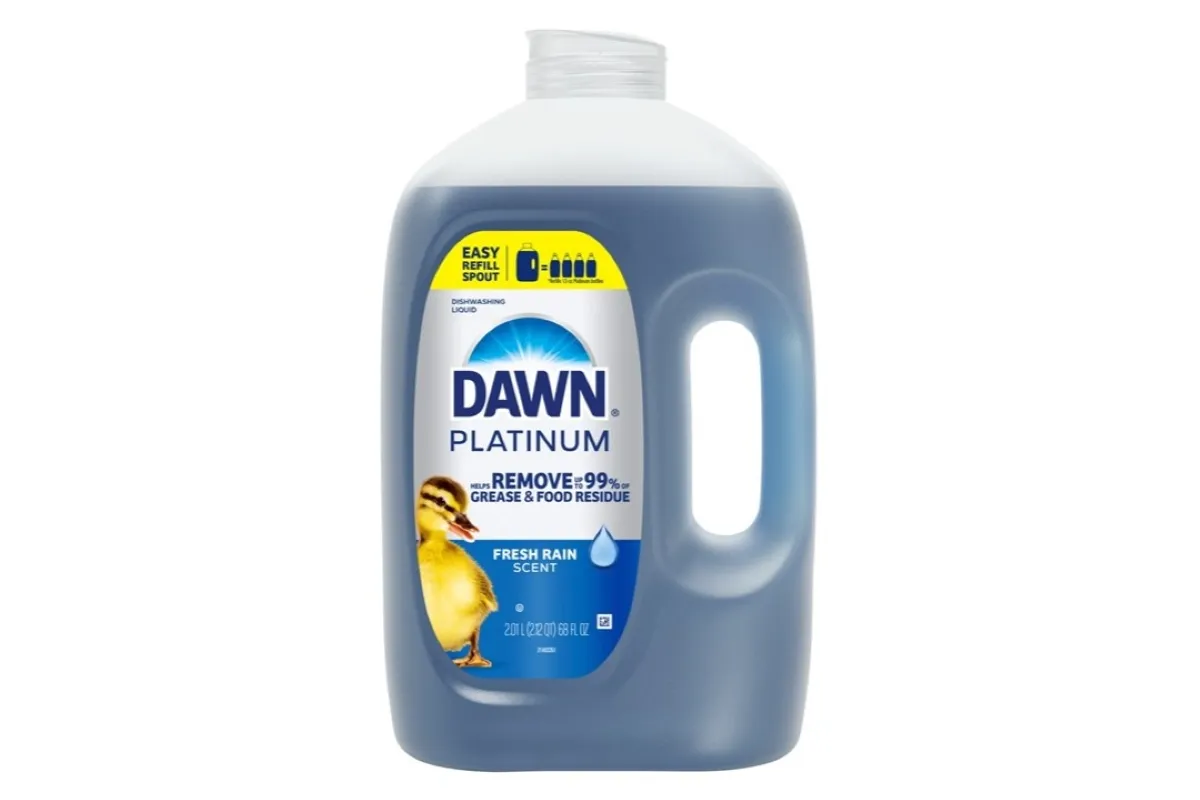 The ergonomically redesigned value-size jug aims to make refilling Dawn EZ-Squeeze bottles spill-free (Image credit: P&G).“One of the biggest drivers is reducing material usage without compromising performance. Flexible packaging is well-suited for e-commerce due to its lighter weight and smaller shipping footprint.”
Cost-saving solution
P&G recently launched a redesigned Dawn refill jug and an upgraded Platinum formula. The refill system aims to simplify the dish soap refill routine.
Morgan Eberhard, principal scientist and scientific communications director at P&G, tells us: “Our consumer research revealed that only 12% of US households currently use jugs to refill their dish soap.”
“The data indicates that most people need to run to the store every time they run out of Dawn. Knowing that and recognizing that washing dishes is the second most hated household chore, we redesigned the Dawn refill jug to act as a ‘kitchen hack’ to save people’s frustration at the sink.”
According to the company, compared to previous Dawn jugs, the new solution is shaped to reduce the physical effort required by nearly 50%, and can eliminate “the awkward pouring and mess that often deters people from refilling.”
“We also leveraged the large format size to deliver the most value for people’s wallets. The refill jug helps people save money by offering the lowest cost per ounce of Dawn Platinum’s premium grease-fighting power while also reducing the need for frequent, last-minute trips to the store.”
Ergonomics meets convenience
Eberhard shares that the main design challenge the company sought to address was user frustrations associated with traditional large-format refill jugs.
“Time is valuable, and the last thing anyone needs is a slow, messy refill process standing between them and a clean kitchen,” adds Angelica Matthews, brand VP for North America Dish Care at P&G.
“To overcome this, we completely re-engineered the Dawn refill jug for maximum ease, speed, and accessibility,” Eberhard shares. “We developed the precision-engineered EZ-Pour spout, which is designed to perfectly align with the mouth of Dawn EZ-Squeeze bottles and enables air to enter the bottle as you pour, reducing the glugging effect and ensuring the dish liquid pours out in a smooth, steady stream.”
“This design combination creates a dish soap refill system that eliminates the mess and pours 37% faster than our prior jugs. All the users need to do is to unscrew the refillable Dawn EZ-Squeeze bottle lid, flip open the refill jug cap, align the precision-engineered EZ-Pour spout, and pour smoothly.”
The products are available in stores across the US and online in 90-ounce jugs and 24-ounce bottles.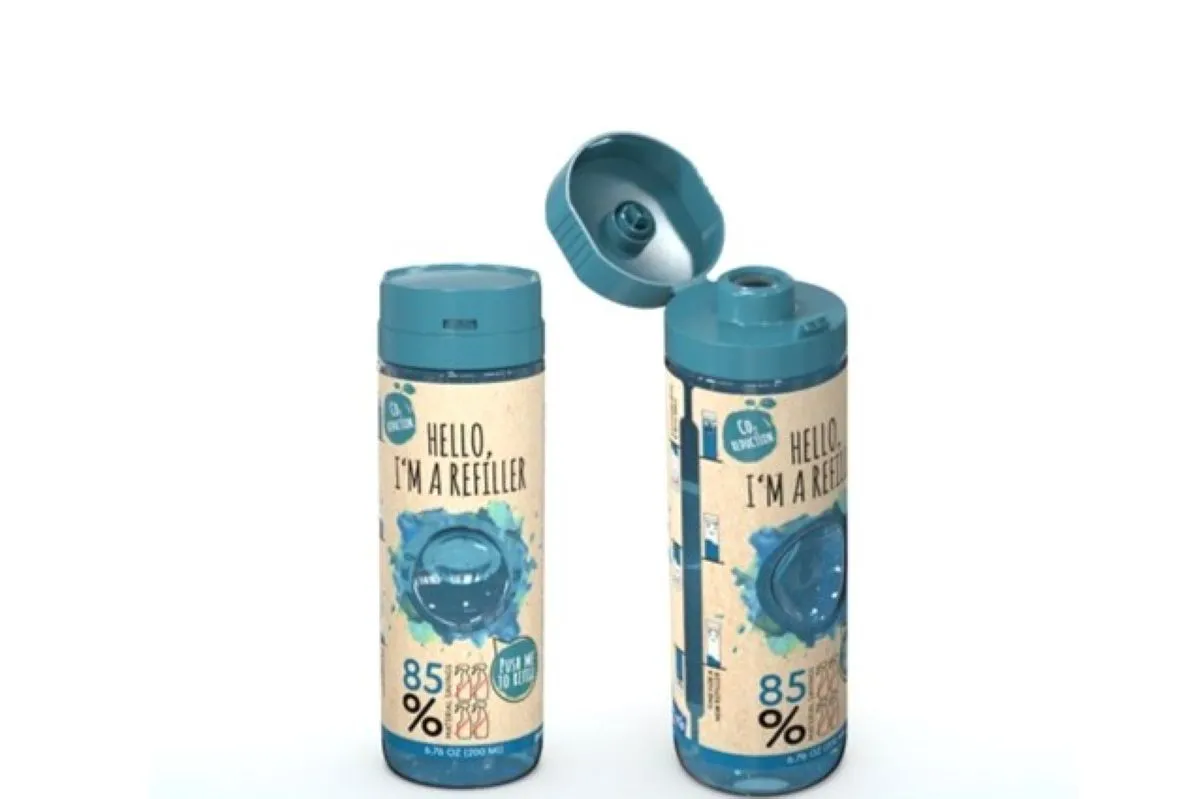 Greiner Packaging is engineering sustainable solutions while keeping consumer-friendly usage in mind (Image credit: Greiner Packaging).
Cutting plastic waste
Sabo tells us that there is an increased use of recycled and recyclable materials, particularly post-consumer recycled plastics, in household packaging, driven by corporate sustainability targets and regulatory requirements. Furthermore, the industry is incorporating more accurate dosing and dispensing systems to improve product performance, reduce waste, and ensure consumers use the correct amount of a product.
These developments are complemented by value-added packaging features, such as recloseability, leak prevention, and ergonomic designs, all aimed at improving the overall user experience.
Sabo shares that Greiner Packaging is developing refill packaging for concentrates, including the Trigger Refill solution.
“This system enables consumers to reuse the same spray bottle multiple times through precise dosing and simple at-home dilution. A single 200 mL concentrate refill provides four complete 750 mL bottle fills and can reduce plastic consumption by up to 85% compared with purchasing four conventional spray bottles.”
Another innovation from the company is Refill Funnel, a solution that allows consumers to refill existing bottles quickly, cleanly, and with lower product loss, according to Sabo.
“Its integrated funnel design and airflow principle support almost complete emptying. By replacing conventional bottles with an ultra-lightweight monomaterial refill pack, it significantly reduces plastic consumption, lowers CO2 emissions, and supports recyclability without compromising ease of use.”
Refillables for pest control
Last year, ProAmpac partnered with ScottsMiracle-Gro to unveil a spouted pouch for Ortho Home Defense Max, an insect killer designed to kill different household pests.
Flaherty notes that one of the biggest challenges for the designers was ensuring all required labeling from the US Environmental Protection Agency (EPA) and regulatory information could fit on the flexible pouch.
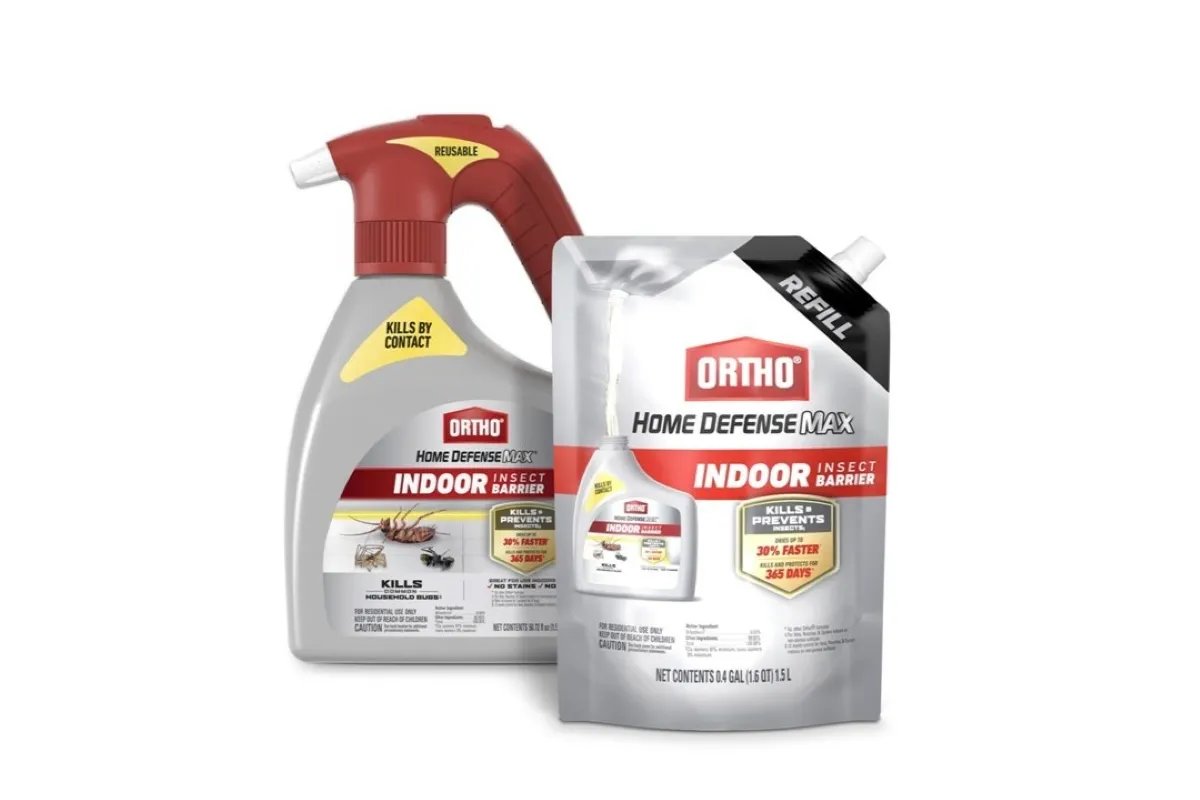 The new packaging uses 90% less plastic after shifting its rigid container to a flexible pouch (Image credit: ProAmpac).“Unlike rigid containers, which often use peel-and-reseal labels to accommodate extensive instructions, the customer wanted to avoid that format for the refill pouch.”
“To overcome this, ProAmpac worked closely with the customer’s graphics team and our own design engineers to optimize the available billboard space. Through thoughtful package design and strategic layout of graphics, we maximized the printable area while ensuring all required EPA content was clearly presented in a consumer-friendly format, without compromising the package’s overall appearance or functionality.”
ProAmpac conducted extensive shelf-stability testing across multiple product formulations to validate long-term packaging performance under aggressive chemical exposure.
“By combining our expertise in packaging challenging formulations with our deep understanding of material performance under outdoor conditions, we developed a durable, flexible package designed to withstand both the chemical product inside and prolonged environmental exposure, including UV light,” Flaherty furthers.
Looking into the future
As flexible refills gain traction, industry experts point to concentrated products as the logical next leap for household goods.
Flaherty says: “We anticipate continued growth in concentrated products, as many household cleaners and pest control solutions are primarily liquid. Shipping concentrates instead of liquid is a more efficient approach that reduces packaging needs and transportation costs while maintaining product performance.”
He argues that one of the biggest claims driving interest in household packaging is reducing material usage without compromising performance.
“Flexible packaging can reduce plastic use by more than 80% compared to rigid containers while delivering the durability consumers expect. Looking ahead, they create an ideal pathway for concentrated refill systems, further reducing packaging requirements and transportation impacts.”
Greiner Packaging is going to continue with its work on dosing solutions for liquid concentrates, designed to ensure accurate dilution, ease of use, and consistent product performance while supporting the transition to more concentrated formulations.
“Manufacturers will continue to focus on reducing packaging material and improving recyclability. Not only to meet sustainability and regulatory targets, but also to optimize costs associated with EPR schemes. At the same time, consumer convenience and product performance will remain essential requirements for successful packaging solutions,” concludes Sabo.