


Packaging machinery producers automate for labor shortages and recyclable formats

Key takeaways
- Packaging machinery is becoming smarter through automation and connected factory platforms that improve productivity, traceability, and maintenance.
- Labor shortages, SKU growth, and sustainability targets are accelerating investment in equipment that delivers faster changeovers and easier operation.
- Manufacturers are preparing for future regulations by developing machinery that processes thinner films, recyclable materials, and alternative packaging formats.
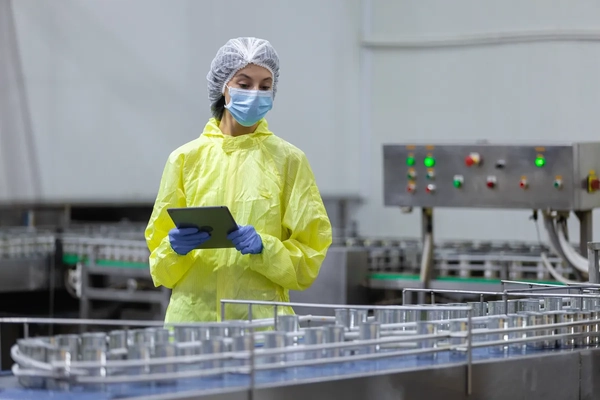
Packaging machinery manufacturers are redesigning equipment to help producers tackle labor shortages, rising sustainability requirements, and increasingly complex production demands. Packaging Insights speaks with Markem-Imaje, Multivac, Sidel, Syntegon, TNA Solutions, and UFlex about the technologies shaping the next generation of packaging machinery.
“Four major forces are reshaping packaging machinery innovation today: labor availability, smaller portion sizes, increasing product variety, and sustainability requirements,” Simon Hill, group product innovation manager at TNA Solutions, tells us.
“Manufacturers are being asked to produce more packs, more SKUs, often from the same factory footprint and with the same, or fewer, skilled operators. At the same time, retailers, regulators, and consumers are placing greater emphasis on reducing waste and improving sustainability performance.”
These pressures are driving demand for packaging solutions that can deliver higher throughput, faster changeovers, lower waste, and greater flexibility without adding complexity to operations, asserts Hill. He adds that operational efficiency and agility are now “critical” differentiators for food manufacturers as they respond to changing consumer and market demands.
Sumeet Arora, senior VP Engineering Business Marketing at UFlex, argues: “For many years, the packaging machinery industry was driven by three fundamental objectives — speed, flexibility, and accuracy. Manufacturers focused on increasing machine speeds, improving precision and enabling quick product changeovers. While these continue to be important, customer expectations have evolved significantly.”
“Today, manufacturers are looking beyond machine performance. They want higher productivity from the same manufacturing footprint, maximum equipment uptime, lower operating costs, and greater process predictability. Packaging machinery is increasingly expected to become an intelligent manufacturing asset rather than simply a production tool.”
Another significant trend that Arora spots is the growing need for versatility. “Consumer preferences are changing rapidly, product portfolios are expanding, and packaging formats continue to evolve. As a result, machines must be capable of handling multiple pack formats and a wider range of packaging materials with minimal changeover time.”
Smart factory solutions
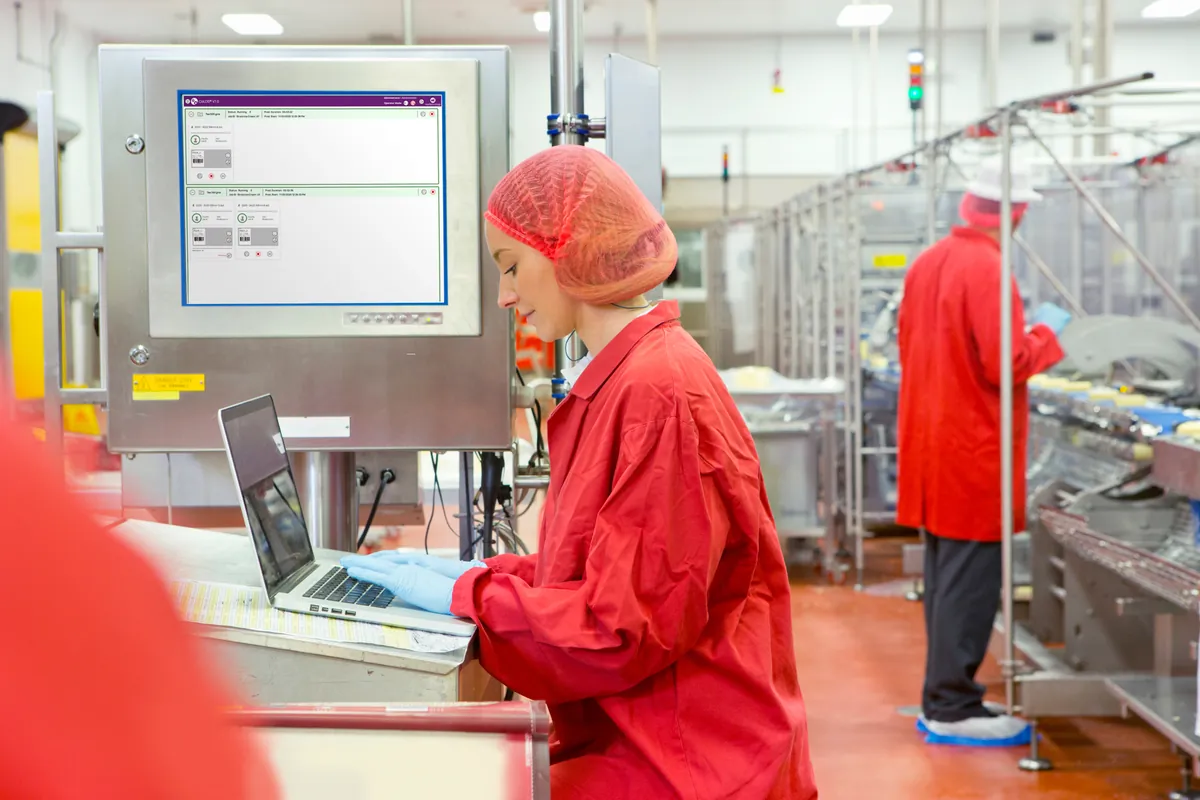 CoLOS 7 from Markem-Imaje is said to support a fully inline verification through its Vision and Verification module (Image credit: Markem-Imaje).Automation and digital technologies are playing a practical role in the transformation of the modern packaging factory, as they help manufacturers to reduce manual intervention and improve accuracy, says Stephen Tagg, global application sales manager for Software at Markem-Imaje.
“There is a lot of discussion about AI in manufacturing, but the most valuable applications today are often very specific. In packaging, AI inspection is a good example. It can help manufacturers check that the right code, label, image, or product feature is present, without relying only on manual inspection or older rule-based systems.”
Tagg gives CoLOS 7 from Markem-Imaje as an example, saying it can support a fully inline verification through its Vision and Verification module, as well as up to a 20% reduction in manual coding errors and real-time Enterprise Resource Planning, Manufacturing Execution System, and Warehouse Management System synchronization.
“A single code can help identify the product, connect it to production data, support traceability through the supply chain, and give consumers access to digital information. It can also help brands detect diversion, where products intended for one market are resold in another, or identify potential counterfeit goods.”
Andrea Solfa, product manager for End of Lines and Tunnels at Sidel, adds that connected platforms enable manufacturers to monitor performance in real time, gain greater visibility across production lines, and make faster, more informed decisions. “This supports predictive and proactive maintenance strategies, helping to minimize downtime while maximizing equipment availability.”
“As digital technologies are continuing to evolve, data-driven insights are playing a crucial role in enhancing efficiency and productivity. Virtual platforms, such as Sidel’s Evo-On software suit, designed to supervise and improve all line aspects, demonstrate how connected equipment and operational data can be brought together to support smarter manufacturing.”
Automation amid labor shortages
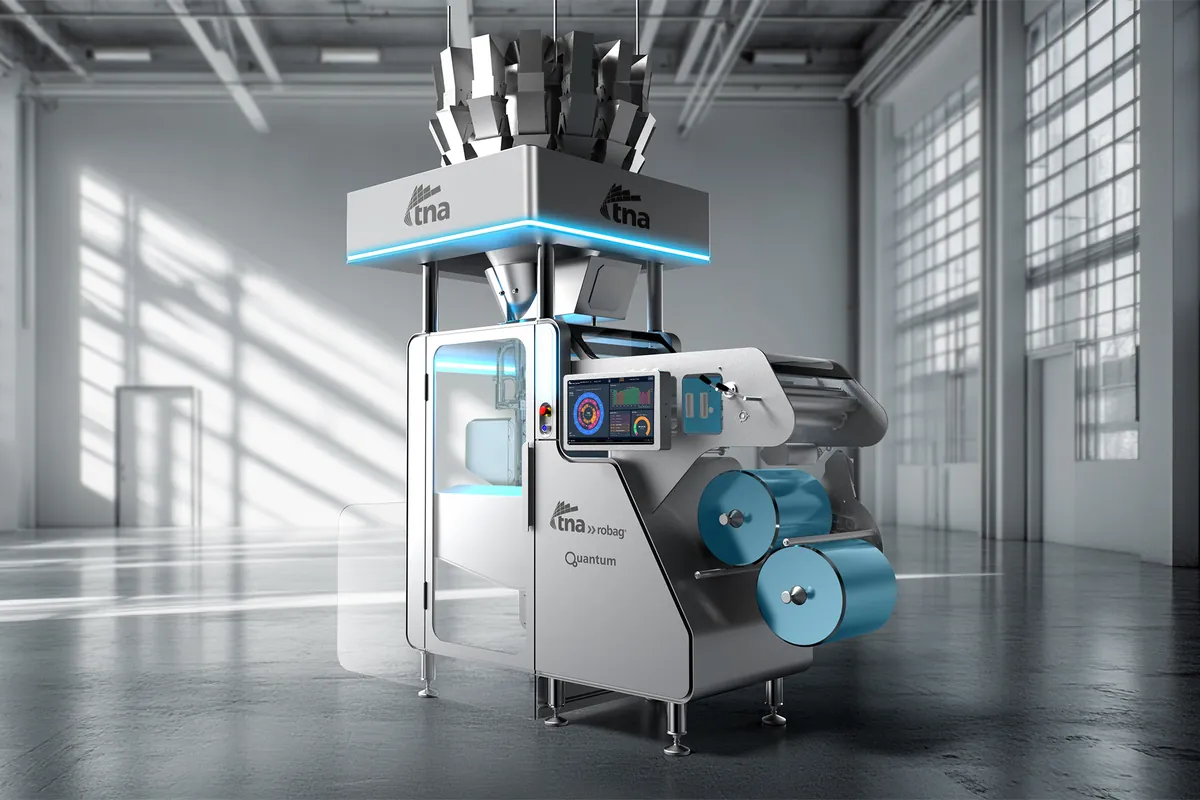 TNA Solutions' fully automatic packaging system tna robag Quantum (Image credit: TNA Solutions).As highlighted by TNA’s Hill, labor availability is increasingly driving packaging producers’ machinery choices. “Labor challenges are making it harder to recruit and retain experienced operators. As a result, manufacturers are prioritizing equipment that is easier to operate, quicker to changeover, and less dependent on specialist skills.”
He says that these changing labor realities, alongside the rise of smaller portion sizes, multipacks, seasonal products, and flavor variety that require frequent changeovers and a growing number of SKUs, have influenced the development of the tna robag Quantum.
“Rather than simply adding more bagmakers to increase output, the Quantum is engineered to deliver higher output per tube (up to 300 bags per minute, subject to bag, film, and product type), helping manufacturers achieve production targets with fewer machines and a more manageable overall line.”
“Automation and digital technologies are becoming essential tools for overcoming labor constraints and improving overall equipment effectiveness. The next generation of packaging machinery is designed to simplify operation, reduce the risk of operator error, and support faster decision-making through greater visibility of machine and line performance.”
Markem-Imaje’s Tagg also expects automation to grow because of labor pressures. He says that many manufacturers are finding it harder to attract people into factory roles.
Tagg and UFlex’s Arora both point out that labor shortages are currently a critical issue for the food manufacturing sector.
Tagg continues: “Deloitte and the Manufacturing Institute estimate that US manufacturers will require 3.8 million new workers by 2033, with nearly half of these roles potentially remaining unfilled if current labor gaps persist. Similarly, Deloitte reports that 62% of European manufacturers face recruitment and retention challenges, which are expected to continue through 2030.”
“Automation is not about replacing people. It is about empowering people to focus on problem-solving, quality, and decision-making, while machines handle repetitive, high-speed, and error-prone tasks.”
Pharma packaging machinery
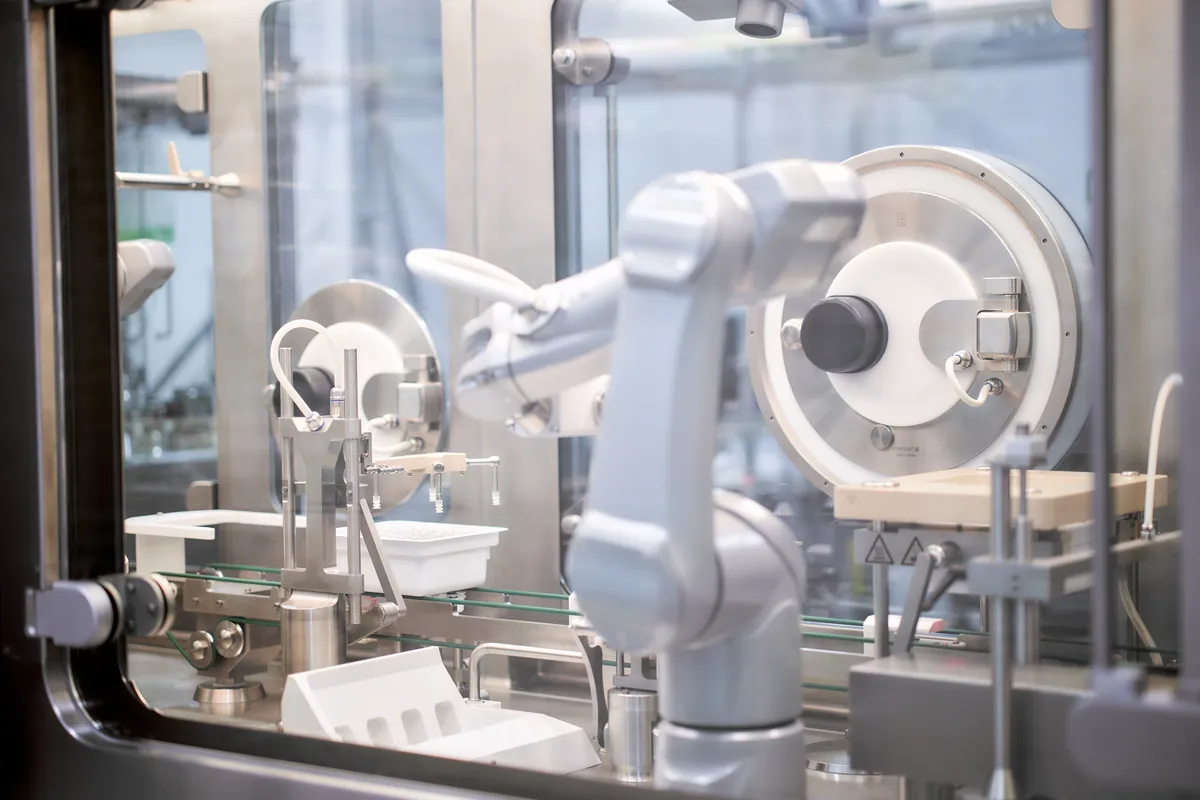 Syntegon highlights its fully automated SynTiso fill-finish line (Image credit: Syntegon).Taking a closer look at pharmaceutical packaging production in particular, Elias Hashemian Nik, product manager sterilization at Syntegon, similarly highlights the increasing significance of packaging machinery automation amid labor shortages and productivity demands, alongside regulatory factors.
“Unlike many other industries, pharmaceutical manufacturers operate in a highly regulated environment, where new requirements directly influence equipment design. More than four years after its publication in August 2022, Annex 1 of the EU Good Manufacturing Practice (GMP) guidance continues to influence major shifts in particular.”
He explains that the GMP aims to separate the aseptic process area from the operator environment, reduce human intervention, and limit the risk of product contamination to a minimum.
“At the same time, manufacturers are facing increasing pressure from growing product diversity, and the need for faster changeovers. As a result, they are looking for equipment that not only ensures compliance but also improves productivity and operational flexibility.”
Syntegon argues that automation is the solution to these challenges in liquid fill-finish operations. “Jointly developed with two big pharmaceutical companies, the fully automated SynTiso fill-finish line addresses real-world demand. It removes the need for human interference with gloveless isolator technology and a fully robotized operation — including a contactless, suspended container transport system.”
Nik says that SynTiso ensures not just benchmark-level regulatory compliance but also up to 50% faster changeovers, and higher product output per batch.
Digital technologies are becoming equally important, he continues. “Beyond machine automation, customers increasingly expect transparent production data that enables predictive maintenance, performance optimization, and data-driven decision-making.”
He adds that solutions such as Synexio provide visibility by connecting equipment, monitoring process performance, and helping manufacturers continuously improve production over the entire lifecycle of their equipment.
Material reduction amid cost pressure
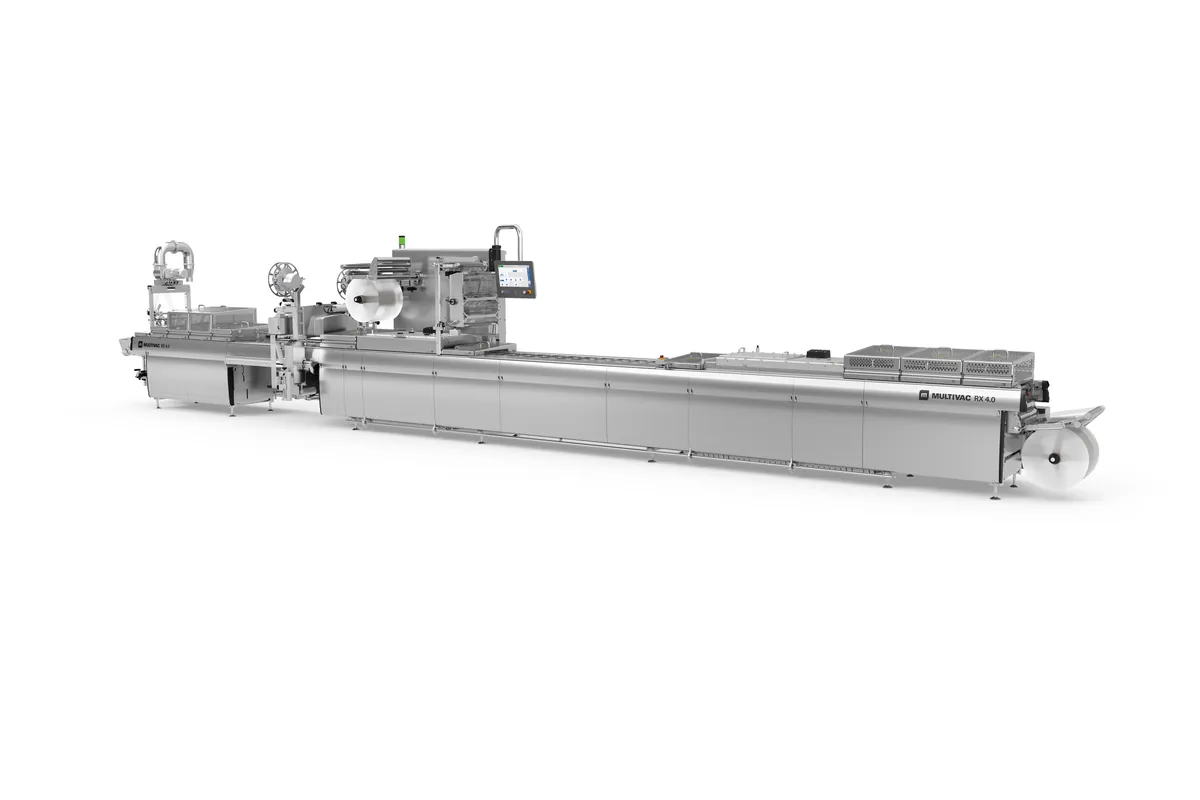 Multivac's thermoforming packaging machines for the high-output segment (Image credit: Multivac).Tobias Richter, chief sales officer and group president at Multivac, highlights that the packaging machinery market is further being shaped by increasing cost pressure, the need to reduce packaging material, and growing demand for recyclable packaging concepts.
“Against the backdrop of the EU Packaging and Packaging Waste Regulation and its requirements to reduce packaging waste and material use, machinery must enable the reliable processing of thinner films and alternative materials while maintaining high levels of efficiency, output, and pack quality.”
Richter says that Multivac supports sustainability targets by helping its customers reduce material consumption, energy use, and process-related waste in industrial production. “This includes developing equipment that can reliably process thinner films, recyclable monomaterials, and alternative packaging materials while maintaining efficiency, output, and pack quality.”
“In our innovation center, we work closely with our customers to develop new packaging solutions and optimize existing ones. Using all Multivac machine types, we can produce shelf-ready packs to show our customers what is possible.”
“In addition, our cloud-based Smart Services combine a Consumption Monitor with advanced analytics functions, enabling customers to gain detailed insights into energy and resource consumption. By identifying trends, inefficiencies, and optimization opportunities, these digital solutions support more sustainable and cost-efficient production operations.”
Over the coming years, Sidel's Solfa expects to see continued growth in technologies that combine sustainability, automation, and operational streamlining.
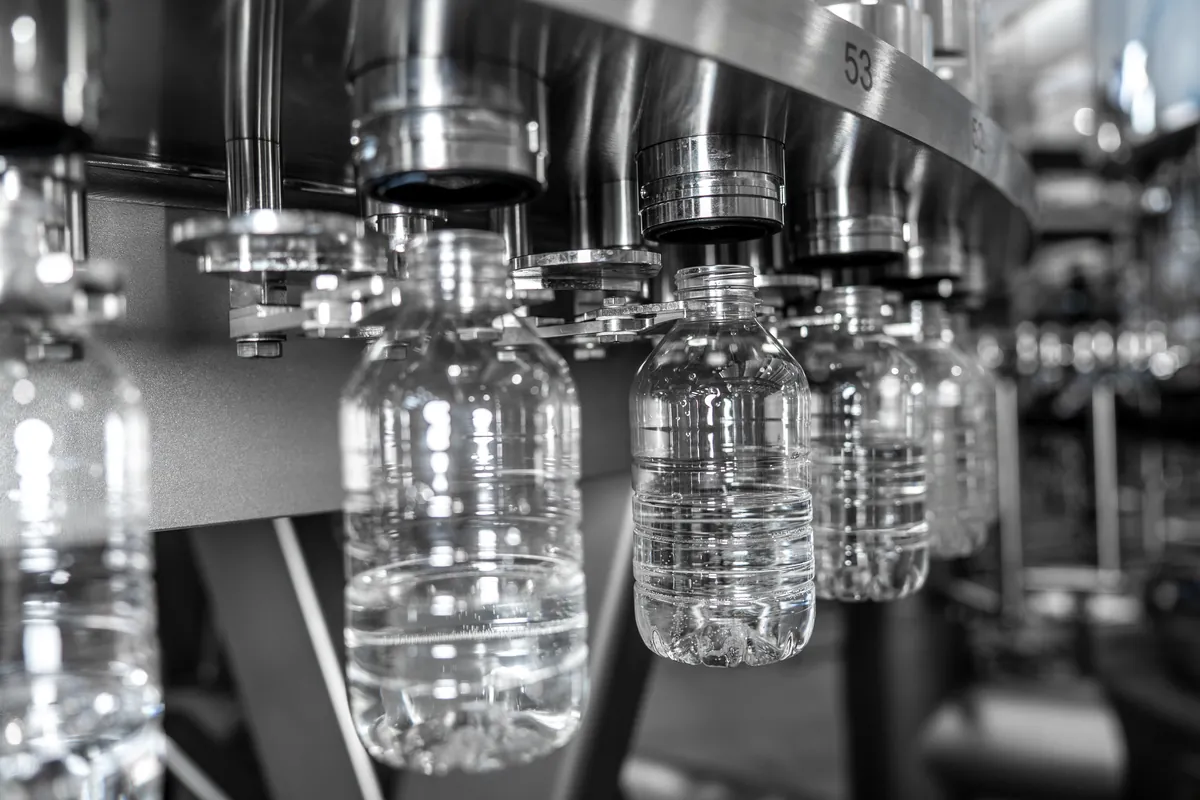 Sidel’s EvoFILL PET for water and still beverage markets (Image credit: Sidel).“Advanced bottle technologies, such as Sidel’s latest Returnable PET — Still Water bottle, which is fully compatible with existing PET recycling streams, enables bottle-to-bottle circularity at the end of its service life, helping manufacturers to optimize material use while supporting their circular packaging objectives.”
Integrated production solutions that streamline multiple processing stages into a single system will continue to gain traction as manufacturers seek greater productivity and flexibility, the company spokesperson argues.
“By the same token, digital platforms and intelligent monitoring tools are forecasted to play a larger role in enabling predictive maintenance, process optimization, and data-driven decision-making across entire production lines,” he adds.
Hill adds that TNA supports its consumers environmental sustainability goals by helping reduce product giveaway, minimizing film waste, and improving production efficiency. “Reducing the number of rejected packs, cutting waste during changeovers, and optimizing the use of packaging materials all contribute to lower environmental impact.”
“Equipment also needs to provide the flexibility to accommodate new packaging materials and support future sustainability initiatives without compromising performance.Increasingly, manufacturers are looking for sustainability improvements that also deliver measurable operational and commercial benefits.”