

Sealed Air banner promoting CRYOVAC Darfresh packaging with fresh meat cuts in vacuum trays on a rustic surface
Home
Videos
Smart Robotics found...

Smart Robotics founder: Regulations and rising costs drive automation in packaging

20 Aug 2025 | Smart Robotics

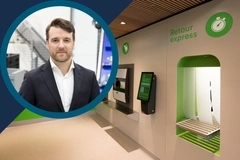
Heico Sandee, founder and co-CEO of Smart Robotics, highlights how the company’s AI-driven automation solutions are transforming productivity in the packaging industry. He notes that stricter regulations, along with rising energy and labor costs, are accelerating the demand for automation.


Hello and welcome.

This is Milana with Packaging Insights, speaking to Heiko Sandi, the CEO at Smart Robotics.

Could you tell us a bit about yourself and the company?

Yeah, of course, and thanks for the invitation for this interview.

So my name is Haiker Sunday.

I'm CEO of Smart Robotics.

We are a company delivering robotics or automation for for the packing, packaging industry, for more warehouses in general as.

And then you can think of, packing of boxes, item picking, palletizing, depelletizing.

So basically all kinds of handling.

Solutions with robots for packing.

Great.

And today we're gonna talk a little bit about automation and how it can help solve issues related to lack of work skills, skill sets and economic pressures.

So could you tell us a bit about the kind of issues the Dutch packaging companies are facing right now?

Yeah, so I guess the biggest issue is rising costs on different perspective perspectives.

So one of the issues is rising costs of energy, obviously, but the other one is rising costs of labor.

So wages are increasing quite, quite rapidly, and still the industry is, is very much dependent on, on, on human labor.

So basically, that's also why we as a company are providing these automation solutions to help basically the companies in becoming less dependent on, on, on human labor.

And I guess the last thing is also very much related to sustainability regulations which are also pushing companies to invest in new materials, new machinery, and and also even new processes as a whole in order to to deliver on these updated sustainability goals.

I see.

And are you facing any labor shortages related to the rising wages already?

And, is it affecting packaging operations in practice right now?

Yeah, so definitely, and that especially holds for the more repetitive labor basically we, we hear a lot of our customers that they see a lot of big turnover at those positions, but also regulations here are, are important.

So if you, if you, for instance, look at the Scandinavian companies that are front runners on these regulations.

You, you, people can still lift up to 25 kg, but if it's like for, , let's say, what was it, I think 12 lifts per minute, which is quite normal if you do a palletizing or a de-pelletizing task, then this reduces already by 80%.

So there is not a, not, not a lot, not a lot that people are, are capable and allowed to lift anymore.

And actually, like I said in the beginning, that people typically don't really want to do those very repetitive jobs anymore.

So hence the high turnover.

And that's why I guess most companies actually come to us for automation with the biggest reason of labor shortages, labor shortages they are having right now, and also labor shortages that they see increasing and see happening more and more in the future.

Interesting.

And do you have any examples of companies adopting this kind of automation and seeing productivity lift or other kinds of advantages in their workflow?

Yeah, many obviously, so we, we deliver throughout Europe mainly.

So we have over 100 robots in the field and most of these robots are actually there to help the companies which are, which were previously struggling on keeping their.

Production up and running.

So we, we have seen customers, that have had delays, to even keep, their facilities running because of the, the, the, the not having the people available to, to run the, to run the facilities.

And then, and then it helps a lot to have automation and because the, once you have it running, it will keep on running for, , at a very continuous pace.

So typically we've just installed a new robot at the at the co-packing company here in in the Netherlands who previously were struggling to keep up with the output that they are running at and that they are currently running at a 9 99% uptime.

5 days in a week is 16 hours per day in a very consistent manner.

And I think that's also an additional benefit of automation if you If you start using machinery, for instance, for stacking of boxes on pallets, then every pallet is perfectly stacked, and typically you also see less damages and, and with this fewer rework and returns.

But have you ever noticed that companies are making some mistakes while adopting such technology and do you have any tips on how to avoid these?

Yeah, so what, what often happens is that they, they think that automation is replacing a person with a machine or with a robot, but this typically isn't, isn't the case or it's not that easy.

What typically is what we are doing is looking at the whole system as a whole, basically.

So it's, it's probably good to replace that specific pain point that has been identified, but then It's also looking at the upstream and the downstream, parts of the process to actually get to a full aligned updated process which might need some more automation or might need some changes in the in the process.

I guess another, mistake, so to call it, that we see is that, the, the, there is not enough attention on the flexibility, the level of flexibility within the automation.

Typically, it's being thought of that the processes are very, will keep on running that, that they do currently, but what we see and, we, we've talked a little bit about sustainability things.

You see that things are changing.

Packaging is changing, demands are changing due to, for instance, how much air we are allowed to ship.

So because of all these reasons, the, the, the system and the products and the environments are continuously changing.

So when thinking of automating a part of the, of the process, it's super important that this automation is also very flexible.

Humans are by nature super flexible, but so should the automation be.

If something changes, then the automation should be able to adapt and accommodate for these changes.

And that's basically why we are working a lot with AI.

So our, our, our solutions are driven by AI exactly because of the reason AI is very, very capable or even designed to be able to adjust for things that haven't been designed or programmed into the machine at the moment that that the process was, was, was designed and and automated.

Yeah, makes sense.

And, yeah, you mentioned sustainability a bit more, but, could you, give us a bit more details about how you see sustainability regulations such as the new EU packaging rules impacting operations and, investment priorities, things like that.

Yeah, so an important, really important thing is that, less and less, like I said, less air needs to be shipped, and that basically boils down to, packaging being much more tailor-made for the products inside.

So where we saw mainly a limited set of standard box sizes typically at a at a packing facility.

Then what we more and more see is that we have boxes designed for each specific product and with this, the variability of of products and packaging, but also packaging material is a lot larger.

So some items might be more efficiently packed in a bag, for instance.

Another might be more efficiently packed in a box, but then every box might have a different dimension.

As the, the machines already are able to accommodate, for on-demand, box making as.

And then, the next point is how to, how to get all these, boxes and, and, bags on in a, in a shipping container or on, onto a pallet.

So there is quite a bit of challenges, which are, , how do you say, connected to those, to, to those changes in practice.

That's, that's why, for instance, we quite recently added, , a, a mixed, what we call a mixed case stacker to our program, basically allowing us to, to have the robot, I always say play live Tetris in the field to basically stack any box that would arrive at a, at a given point.

As neatly as possible while, creating an as stable as possible stack to be transported afterwards as.

So there you see that regulations lead to new packaging and new packaging needs, leads to new machinery, and that's also relating, I guess, to my point in that, we really need to look, look at the system as a whole where something changes.

A lot of different things might change as.

Yeah, I see, and any final words on this topic?

Yeah, so I think it's very important to understand that that we are not basically replacing workers with robots.

I think it's really adding to the workforce and helping customers to be, to be more sustainable basically in the end, to be, to be able to continue their business while lowering the costs of the operations.

While maintaining flexibility for the changes that are to be expected in the future.

So basically providing, , , the, the right technology, like I said, really much based on AI to be able to, to keep running the whole facilities on a, on a, on a very consistent pace day in, day out.

Yeah, I think that's very important to to keep realizing.

Yeah, yeah, that's a very important point and very interesting insights indeed into this increasingly important topic.

Thank you so much for your time.

You're very welcome.

Thank you as.

More videos

Image