
The Greif Advantage banner with green connected lines on a dark background.
Home
Videos
John Beard Jr: Fight...

John Beard Jr: Fighting toxic petrochemical pollution in marginalized US communities 

14 Feb 2023 | Port Arthur Community Action Network 

John Beard Jr. spent 38 years in the petrochemical industry working for ExxonMobil. Today, he campaigns on behalf of Port Arthur Community Action Network, which represents marginalized US communities disproportionately affected by pollution in areas where petrochemicals are produced. PackagingInsights speaks to Beard about the obligation corporations have to improve the lives of local residents and why he believes they avoid and postpone making needed changes.
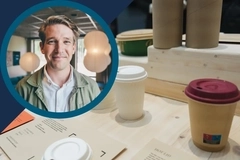
This is Sabine Waldeck for CNS Media.

Joining me today is John Beard, CEO at Port Arthur Community Action Network.

Welcome, John.

Good morning, or whatever time of day it is where you are and watching this.

I hope you're having a good day so far.

Thank you, Sabina.

Thank you.

So can you tell us a bit about Port Arthur Community Action Network, its mission, and what role you play in it?

As you said earlier, I'm the CEO but not just the CEO I'm also the, founder and CEO of the Port Arthur Community Action Network.

And Port Arthur Community Action Network, or better known by its acronym PECANN, not PECAN.

Pecan with an A.

If you mix the two up, people will think we're nuts, and I don't want that to happen.

So we make sure people know it's PACAN, Port Arthur Community Action Network.

But we are an environmental, social justice and community development organization here in Port Arthur, Texas, or in what I like to call the belly of the beast, where whatever's going on in this petrochemical expansion age, and matter of fact, some of the first refineries built in the country were here.

And also, you know, whatever's going on in this movement from carbon sequestration, the hydrogen hubs to food oil and, LNG exports and all of that, it's happening right here in Port Arthur.

So we're here to help, a community that's long been overpressed, or oppressed and overburdened, rather, with, pollution from industry, over 12 decades of industrial pollution.

And it has manifested itself in the lives and health of people.

So our mission is to help them live better, to eliminate as much as possible these sources of pollution, also to help usher in a clean, green renewable age of energy that is less threatening, that creates good jobs and opportunities for people here.

Great, thank you.

So in your opinion, what communities are the most impacted by the waste from petrochemical facilities?

The communities that are most impacted, elementally speaking, are the communities where they're located, which are largely BIPOC communities and largely communities of low to moderate-income persons, communities of color, and also in indigenous areas where there are indigenous tribes, so to speak.

So those are the communities that have it as.

I like to say, they don't build these places in Beverly Hills, they don't build them in River Oaks or Madison Avenue in New York.

These things are located.

Where people are who are low means and low income, and it's done as I've heard said by one of the heads of industry.

We go where there's the least resistance, the least ability to push back and to fight back and to speak out, and to be able to hire lawyers to protect their interests, the interests of those peoples in their community.

So that's where they're located.

And it didn't really start out that way.

It really started out as being when these plants were here, you know, they built company towns around the plant, so their workers who normally came from elsewhere and other places would have somewhere to stay and they built homes and communities around there.

But as you know better, you do better.

And we know now that the pollution and all that came from it all over the years was unhealthy and not good for people.

But yet the communities are still there and a lot of those people because they no longer work in the industry, can't afford to move anywhere else.

They can't afford to give up a home that's been in their family 23 generations or more.

So, it's important that, you know, we, we understand that and, and look at it from the perspective of this is where this happens at and they don't happen in other places.

They happen usually in those small communities that have very little ability to fight back.

So who do you think is responsible for the waste inequity that these communities are facing?

I'm gonna put it squarely on the shoulders of industry because industry can do better.

And I say that from the perspective of someone who spent 38 years in the petrochemical industry.

In another life, as I like to say, I worked for ExxonMobil Corporation as a process operator.

I was also in the maintenance department for a better half of my career there.

But I was also an industrial firefighter, hazardous materials handler, and also an apparatus engineer or what we call a fire truck driver.

So I understand the emergency management profiles and what you have to do to protect the community, but also protect yourself in the plant.

And unfortunately, because the bean counters rule the world, them and the politicians who make up on the, the rules and laws and regulations, a lot of times they don't go nearly far enough.

And the companies get Time on top of time to make these changes, but yet people are breathing every day.

They're, you know, breathing minute by minute.

And if there's a lot of pollution, then they're breathing this pollution in.

If it's, whether it's in the air or the water or the soil.

So these companies have an obligation to make the communities in which they live better, cleaner, healthier, and safer.

But they use the rules to skirt around that, to delay and postpone making the necessary improvements and doing the things to protect the community.

They like to say we wanna be a good neighbor.

But look at those communities.

Come to Port Arthur and see what our city looks like.

And it does not look like a prosperous community that's home to the largest refineries and petrochemical complexes in the country, if not the world.

It looks like some places you would see in Beirut or Iraq, or even in Ukraine, bombed out and depleted.

And that's a tragedy, that's a tragedy as as a travesty.

So these companies for all of their promises of wealth and prosperity and the money they make, we see quarterly, billions upon billions of record profits.

The companies or the communities rather in which they are based, don't show that wealth and that, the, the, that profitability.

It's not there, especially in communities of color like Port Arthur.

Mhm.

Do you think that this waste inequity that is seen in Port Arthur is a global issue?

Yes, it is, you know, take for instance, the fact that they want to talk about recycling more of these plastics and things that come from the petrochem industry.

And, but they're only recycling 10% at best.

And of that 10%, a lot of it is exported.

But if you follow the pipeline of, or the life cycle of that plastic, whether it's a bottle, bottle cap or whatever, first of all, it's made with materials that are toxic.

And then some of it is not recyclable anyway.

Then when they do get it and ship it off, it goes to countries that aren't really recycling it.

They're either burying it on the ground or worse yet, they're burning the plastic, which releases more toxins and poisons and pollutants into the air, as as getting the water streams and the underground water sources that of the countries in which those are done.

So, once again, we've got to hold these companies responsible because they have a cradle to grave obligation.

Using what is basically unsafe and toxic chemicals to make these substances that even though all of us use them, they're still toxic.

But they have an obligation to do better and to correct the problems they have.

That's the inequity in it, where they don't really accept the responsibility for it, they place responsibility on the user.

But if they did not create the demand in the market and manufacture those products from very toxic chemicals, we wouldn't have this problem.

We could use something else and do better.

What actions do you think that these companies should take in order to solve the problems that they have created?

And then also, in your opinion, what would you do if these are not enacted?

First of all, I think you have to go to all of these companies.

You have to understand the makeup of the substances and products used.

Those that use PET type plastics, those that use plastics that are very toxic or that leach into the substances they contain such as bottled water or, or, or any number of other things.

And if they're made with plastics that aren't recyclable.

That aren't safe, then we need to call it to their attention and demand that they cease immediately and, and, and, and work themselves out of that to use materials that are safer and better.

We need to also demand that those things be recyclable and recycled in such a way that it does not pollute or further pollute other communities and other resources which people depend on.

And if they don't do that, then we need to use the power of public opinion.

We need to use the power of our collective voices.

With our politicians to initiate change in the, in the policies and rules and regulations that happen there.

I firmly believe that a lot of these companies would do better if only the people would rise up and make sure that they understand that they're not going to take it anymore.

Or as we say in Port Arthur here, that we refuse to be sacrificed any further.

This nation runs on oil and gas that we produce here and the things that we do, but we look at the impact on the community and we don't see the benefits of it.

We just see people who don't live here getting jobs and opportunities where people here don't.

And it's been like that for decades, unfortunately.

But we have to change that.

So I think the power of public opinion by showing that this company is not a good neighbor, that this company is poisoning and polluting the air and water and the grounds upon which they live and upon which we have to live in the communities in which we live, and that we're not gonna take it and we're gonna keep beating that drum louder and, and longer to get them to understand that and, and join others to understand it and say, this is wrong and it has to stop.

And I believe that opinion will force politicians as as these companies to do better and to clean up their act.

But it all starts with us.

It all starts with the little guy, the man on the street, and he has to decide, finally decided enough is enough and take action and do everything he can to change it.

And that's kind of in part my mission is in being the founder of my, you know, nonprofit organization.

And also, the, the work that we do is to address those environmental inequity issues in the Port Arthur community.

John, thank you for joining Packaging Insights.

Thank you.

More videos

Image