
Sealed Air banner promoting CRYOVAC Darfresh packaging with fresh meat cuts in vacuum trays on a rustic surface
Home
Videos
Empack 2026: Xampla ...

Empack 2026: Xampla presents plastic-free packaging with Huhtamaki for Just Eat

17 Apr 2026 | Xampla

Xampla is showcasing its plastic-free coating made from pea protein, featured in Huhtamaki’s corrugated paper box. At the show, we speak to Sam Walker, head of sales and business development at Xampla, about ambiguous definitions of “bio-based” amid rising consumer demand for natural solutions.
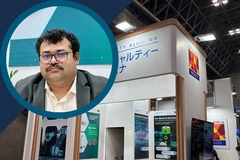

Libby Davis reporting from Impact 2026, talking to Sam Walker from Zamla.

And I wanna ask you guys what solutions you're presenting here today.

Fundamentally, it's our plastic-free solutions, replacement coatings for your typical PE PLA or aqueous line barrier properties in carton board.

We've brought you here today with Hutamaki, presenting our taste range.

With a moral coating on it as , which we're launching into market across about 10 countries or so as part of our partnership, with Esbezorg, or Just Eat, as they're also known in the UK as.

Yeah.

What are you expecting from this year's trade show for yourself, but also for the industry as?

It's our first time presenting here, so it's kind of like, you know, let's see what's actually going on in the market over here.

We talked to a lot of.

Dutch brands, a lot of European brands as , but a lot of our kind of interaction is in the UK so we thought, look, let's go out, go out to the Netherlands, meet some people, like have kind of actual face to face conversations and just get a bit of more of a feel for what the markets are doing, cos obviously, yes, there's Europe and there's the UK, but they're very different markets.

Each country is very different.

There's lots of different legislation happening in each country.

Different market trends and the way you find out about that is coming to events like this and speaking to people.

Right, and so the actual product that the Morrow coating, then this was born out of Cambridge, out of a startup.

So can you explain to me what it actually is, what it's made of?

Yeah, yeah, it's fine.

So it was actually, that's about 15 years of innovation within our morrow coating.

So we have Zamla, who are the brand, Mora is our plastic replacement coating, which is all protein-based.

So it actually started back in the day where I think they were looking at spiders originally, that then moved into plant proteins, where we're now using peas at the moment.

And what the technology actually does is proteins are quite complicated, tangled structures.

Our technology untangles them, suspends them in a solution, we then coat onto a board or a film where as it dries off, the proteins self-assemble back again to kind of create, what they're called beta sheets, which are green.

Some water resistance.

But the really cool thing about technology is it's material agnostic, so we're using pea protein, but we can use any kind of protein to make our product.

And it's all plastic-free.

There's no chemical modification.

The protein at the beginning is exactly the same as the protein at the end.

Yeah.

I've got some data to back up as.

And how does this solution tap into current trends?

Like, what do you identify as the current trends in the packaging industry, and then how does it tap into them?

Yeah, so I've been in the packaging industry for about 10 years now.

Originally looking at kind of compostible packaging, you know, the gas, PLAs, but as time's moved on, that's kind of gotten more and more to how can we be more sustainable than that?

What's the next thing coming through?

And the moral coating is that sort of next wave in, in, in basically in innovation where, yeah.

It's also biobase, but it's natural polymer, naturally occurring, it biodegrades in all environments as.

And that's kind of what consumers want.

You know, there's a real shift away from plastics into kind of more natural bio-based materials, and we're kind of right at the forefront of the innovation in that, and we're just kind of riding that wave of consumer pressure, legislation changes as.

It's interesting you mention consumer pressure because I've, I've been researching and I've read some things myself about.

A bit of confusion from consumers about what bio-based is or what bioplastics are, and there's a lot of words floating around and it can be confusing for consumers.

So how do you, how do you market this and how do you choose how to present yourself so that it is, it isn't appealing to consumers?

No, totally, I think like the whole area is rife with kind of greenwashing claims that you don't really know.

And like I say, you know, you can have fossil fuel plastic derivatives that are kind of called biobase because they're just using a, a different feed.

But it's still the same kind of plastic.

OK.

And what we're trying really hard is kind of really work and promote natural polymers.

OK, cos those are the materials already exist in nature.

And we're taking natural solutions and applying them to areas where we need a better solution than fossil fueled plastic.

And packaging and coatings is a real key part of that.

But as you say, it's just tough to get the message across when there's been so much , misinformation or just lack of clarity in what products are.

Yeah.

So it's a real focus for us on that education piece.

Yeah.

And can you explain to me a bit about the Kotamaki's involvement and what this packaging for takeaway packaging is?

Yeah, no, of course, obviously, like, we have a lot of interest in the general sector from all the massive brands about, you know, how can we get this to market.

Kotamaki were a very early partner of ours that we were speaking to that had interest, and then I think, I'm not sure how it was before my time at.

Examer, but we also met someone from Just Eats in the UK.

They said, we're really keen on this product, so we kind of brought everyone together.

And then Huma been really supportive and kind of like bringing that product to market.

First launching a bundle, launching with Just Eat, and expanding across Europe.

And now we look at the solid board range coming as , which, again, they're kind of next step in our kind of product innovation.

Yeah, I read that it's the solutions being rolled out in 10.

Markets across Europe now, so a lot more, yeah, how are you responding then to current regulatory pressures, because obviously expanding it in the European market also means responding to the EU PPWR and other EU regulations, so how are you guys responding to that?

Yeah, it's really fun, Libby.

You know, obviously in the UK we have EPR.

Obviously there's PPWR across Europe, there's SUPD as , there's UPV here in, in, in the Netherlands as.

I think where we have a real benefit is that we kind of fall exempt from SUPD.

We're in the lowest fees for kind of EPR regulations, both in the UK and in Europe and in other areas as , like, you know, SP 54 in America.

That definition around what plastic is, is pretty standard across the world.

And because of that, we're now falling into the lowest category costs for the material types, which is what everyone kind of wants.

I think the real barrier and challenge within kind of buy based materials and innovation has been typically if you want better sustainability, there's a drop in performance.

OK.

I think the taste box is one of the first products to come to market where actually you don't have that compromise.

It's still high performing er and that's been kind of the gap in it that kind of really validate.

Dates like what natural polymers can do.

OK.

And my last question is, what trends are you predicting in barrier coatings for the next 5 years or 10 years?

Paperization, I think everyone kind of wants to move away from plastics to paperization, monomaterials as , for ease of recycling, lowering weights, lowering coating to respond to things like UPB, EPR, and SUPD thresholds as.

I think with what's going on in the Middle East too, and.

Basically every 3 or 4 years there's kind of some global issue or disaster that means fossil fuel prices rise through the roof, and I think people are now starting to really cotton on to the fact that they'll never have a really kind of truly sustainable and secure supply chain until they start looking at alternative materials that are, you know, less volatile from external pressures, and that's where materials like morrow and other natural polymers really kind of come to the fore.

Great, alright, thank you very much.

More videos

Image