



Non-wood pulp offers paper packaging producers cost stability, says Canopy Planet

Key takeaways
- Agricultural residues such as wheat straw and sugarcane bagasse could help paper packaging producers reduce exposure to volatile wood pulp prices.
- Canopy Planet’s economic modeling suggests that a 5–10% blend of Next Gen pulp can be incorporated into existing folding boxboard production.
- Commercial adoption faces hurdles including fiber qualification, limited supply at scale, and the costs of mill trials and infrastructure.
Paper packaging companies can benefit financially from switching from forest fiber to pulp from agricultural residues amid fluctuating wood pulp prices, suggests economic modeling by Canopy Planet, a nonprofit based in Vancouver, Canada.
Canopy Planet highlights that the fiberization trend in packaging has coincided with growing energy and raw material prices, disruptions to global trade, climate-change-related supply hurdles, and tightening regulations.
The organization investigated whether Next Gen, a term it uses for pulp from wheat straw and sugarcane bagasse, could offer a solution. The report, “Seeing the Field and the Forest,” published alongside economic consultancies Blue Lotus Strategies and Glynmoran, tests Next Gen cost-effectiveness for consumer paperboard.

“Wheat straw pulp comes from a separate supply system, often collected close to the mill, so its cost does not move with the wood market,” Kari Stoever, head of Impact at Canopy Planet, tells Packaging Insights. “A mill that blends some into its furnish is less exposed when wood prices swing. That hedge is a large part of what makes it competitive.”
“‘Seeing the Field and the Forest’ puts numbers on this. We modeled a high-performance folding boxboard at an illustrative integrated mill in China, with Next Gen pulp used only in the middle layer and estimated the highest delivered price at which using it still makes commercial sense.”
Cost-competitive source
 Kari Stoever, head of Impact at Canopy Planet (Image credit: Canopy Planet).Canopy Planet’s report models a commercial relationship between a buyer, such as a global, high-volume consumer goods company or a paperboard converter, and an integrated pulp and paperboard mill based in China.
In particular, the model focuses on a demanding, high-performance folding boxboard grade: a lightweight, three-layer board with bright white printable front and reverse sides, and a strong middle layer that provides bulk and stiffness.
Discussing the report findings that point to agricultural residues as a more cost-effective source of fiber for the packaging industry, Stoever points out: “Industry reviewers consider about US$345–380 per air-dry metric ton plausible for wheat straw and bagasse pulp.”
“At that price, the mill reaches the 10% inclusion limit within three to four years, on the value of the hedge against wood price volatility alone,” she adds.
“The case gets stronger when wood prices rise, or when due diligence requirements add cost to higher-risk wood. A brand can also share the cost with its mill where Next Gen pulp lowers the brand’s own expected costs.”
“A 5– 10% blend fits within today’s specifications and equipment, and running the fiber at commercial volume is how its quality and cost improve. In a sensitivity case where higher-quality Next Gen pulp can also go into the outer layers of the board, inclusion rises to about 30% by 2032.”
Earlier this year, Canopy Planet partnered with The White Company to help the UK retailer identify lower-impact alternatives to forest fibers for packaging using its EcoPaper Database.
Reliability factors
Alongside cost considerations, Canopy Planet posits that Next Gen pulp can be more attractive than forest fiber because of its widely available supply and suitability for companies needing to comply with deforestation regulations.
Regarding supply, Stoever says that cereal straw and sugarcane bagasse are produced every year in the same regions where much of the world’s paper and board is made, and bagasse is already gathered at sugar mills.
“Fiber collected near the mill shortens the supply chain and sits outside the wood market, which matters to producers trying to regionalize sourcing and spread their risk,” she asserts.
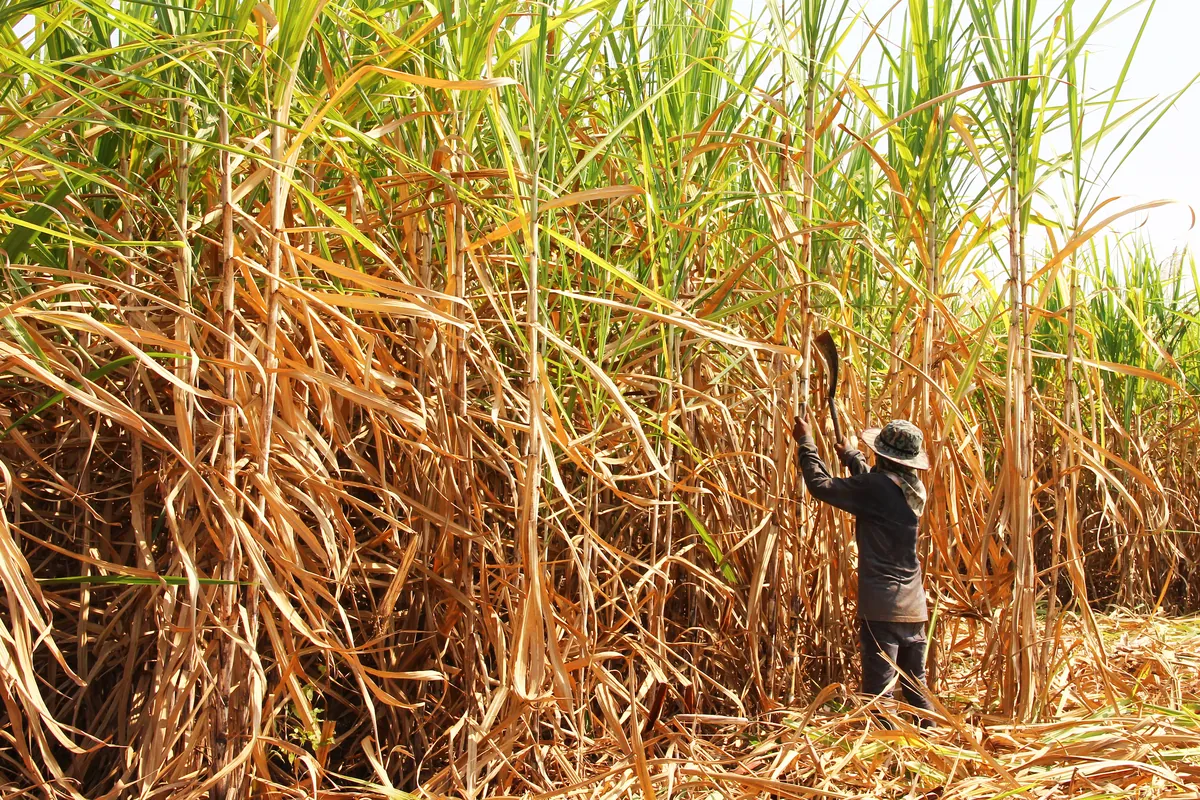 Wheat straw and sugarcane bagasse could help paper packaging producers diversify their fiber supply.In terms of regulatory compliance, Stoever points to the EU’s Deforestation Regulation, which will apply to pulp, paper, and board from 30 December 2026, requiring wood to be traced to the plot where it was harvested. “Fiber from agricultural residues such as straw and bagasse falls outside its scope, so every ton of virgin wood replaced is a ton that does not need tracing.”
“Then there is what happens in the field,” she continues. “A lot of straw is burned after harvest. Smoke from crop-residue burning caused an estimated 44,000 to 98,000 premature deaths a year in India between 2003 and 2019. Selling straw to a pulp mill gives farmers an income and an alternative to burning.”
“The climate numbers are promising too. Preliminary life-cycle research commissioned by Canopy Planet found that replacing old-growth softwood with wood from managed forests plus 10% agricultural residues could cut life-cycle GHG emissions by about 50% in some applications.”
At the same time, Stoever highlights that all of these factors are dependent on responsible sourcing. “The residue has to be surplus to what soils and livestock need, and it has to be pulped in modern mills with chemical recovery and proper wastewater treatment.”
Diverse packaging applications
Molded fiber is the most established packaging application for Next Gen, according to Canopy Planet. Food service trays, bowls, and containers made from bagasse and bamboo are already sold at commercial scale, mostly in place of plastic and virgin wood pulp, highlights Stoever.
Earlier this year, Emerald Ecovations launched a packaging board made from bagasse targeting food, pharma, and consumer goods, while the Indian packaging company Pakka highlighted its home-compostable solutions using bagasse as its primary material.
Containerboard is another common packaging application for Next Gen, Stoever continues. “Recycled board needs some fresh fiber to stay strong, and straw can supply part of it.”
She points to two major players: “In China, Century Sunshine is adding 300,000 metric tons of wheat straw pulp a year for its packaging papers. In Germany, OutNature and Leipa are building a straw fiber line inside a recycled paper mill.”
In cartonboard, the practical entry point is said to be a blend containing around 5–10% Next Gen pulp. Stoever says experts Canopy Planet interviewed estimated that most existing boards can take about 10% non-wood fiber with negligible effect on performance.
“‘Seeing the Field and the Forest’ models exactly that in the middle layer of a high-performance folding boxboard. Folding boxboard is a demanding grade, so it is a conservative reference point. Less demanding boards could take more. Carvajal in Colombia already makes paperboard from 100% bagasse.”
Barrier and flexible papers made from agricultural fiber are on the market as well, Stoever points out, adding that these are in small volumes “for now.”
“Alongside packaging reduction and reuse, recycled fiber, and forest protection, responsibly sourced Next Gen pulp can help brands, converters, and mills in consumer paperboard supply chains spread their risk and reduce their dependence on high-risk forests.”
Commercialization hurdles and opportunities
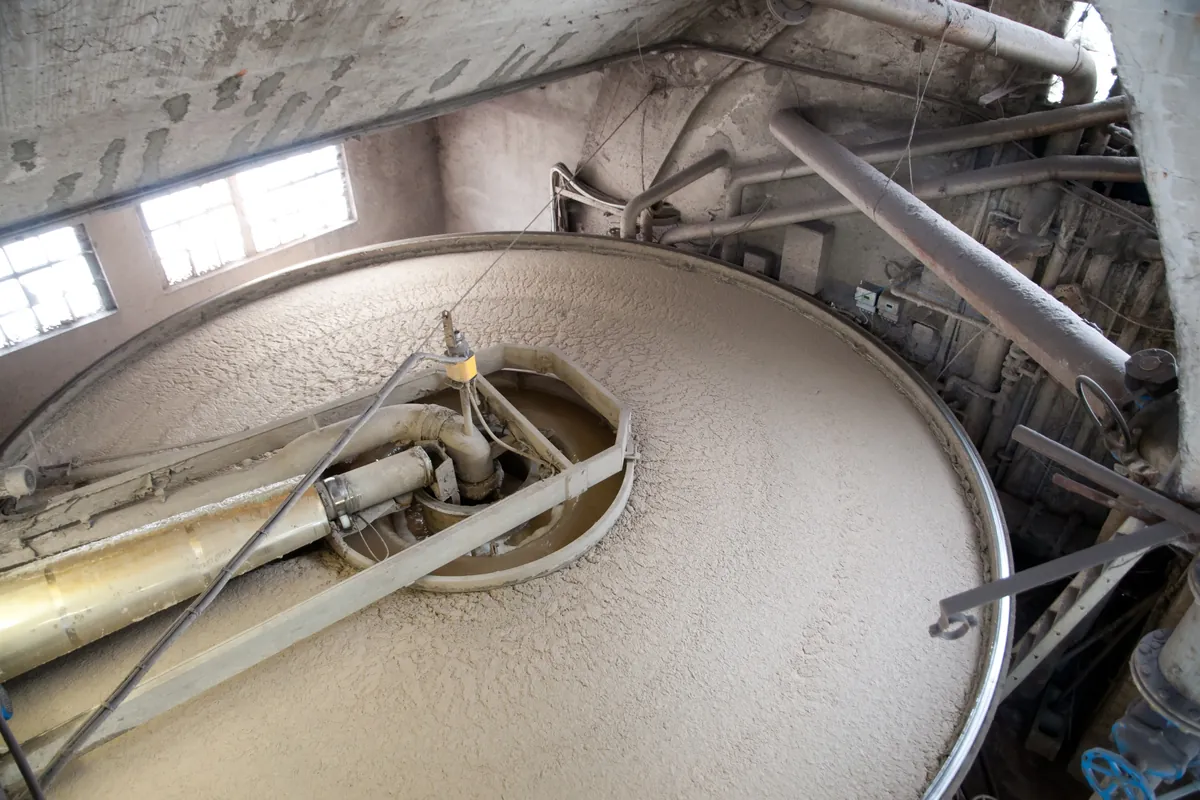 A 5–10% blend of Next Gen pulp could reduce mills’ exposure price fluctuations, according to Canopy Planet.According to Stoever, most of the barriers to Next Gen adoption are commercial. She says that every mill and every mill customer has to qualify a new fiber on its own lines.
“Wheat straw behaves differently from wood on the paper machine. It carries more fines, which slow drainage, and silica, which affects machine efficiency and chemical recovery. Pre-treatment and refining now deal with much of this, but the trials still must be run.”
“The cost and risk of those trials fall on mills and converters, which earn the thinnest margins in the chain and have spent the past few years managing overcapacity and closures. Brands have more room to carry that cost, and, so far, most have signaled interest without signing offtake [agreements].”
Supply is “the other half” of the scaling issues. “Outside China there are few sources of straw pulp that a wood-based mill can buy at volume, and a first-of-its-kind pulp mill is hard to finance without a committed buyer.”
Columbia Pulp in Washington State, US, went into receivership in 2022 before it had time to win customers, says Stoever. “Newer projects are bringing buyers in as owners. Red Leaf Pulp’s planned straw pulp mill in Saskatchewan, Canada, has Dart Container as an equity holder with rights to the fiber,” she adds.
“Policy has been slow to help. Food-contact standards, recyclability protocols, and procurement rules were written around wood, and public support for residue collection mostly steers straw toward energy and animal feed.”
“That is the reason for the price work in ‘Seeing the Field and the Forest.’ It gives producers a figure to weigh against their own wood exposure, and a 5– 10% blend is a place to start that needs no new equipment.”