



Kenvue leverages Greyparrot AI for circular packaging system

Key takeaways
- Greyparrot partners with Kenvue to apply AI-driven recycling insights for packaging design.
- The Deepnest platform models real-world recycling behavior, component impact, and financial implications of design changes.
- AI-enabled scenario modeling aims to improve recovery rates, reduce costs, and accelerate sustainable packaging adoption.
Greyparrot, an AI-powered waste intelligence company, has partnered with Kenvue, a pure-play consumer health company, to advance circular packaging solutions amid growing regulatory requirements.
Using Greyparrot’s Deepnest platform, Kenvue will be able to use evidence-based data from real-life recycling processes to design its products for circularity.
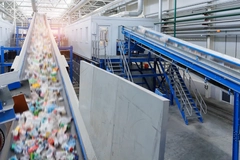
For example, its AI system can capture how products behave in operational recycling facilities in the US and UK, as well as locate specific packaging components, like pumps or labels, that impact detection rates.
It can also model the financial impact of EPR on design changes, such as adjusting translucency or switching material types before physical prototypes are manufactured.
Yaseed Chaumoo, managing director of Deepnest by Greyparrot, says: “Data is the ultimate catalyst for change in the sustainable packaging landscape, and AI has provided the means to deliver those insights at a truly global scale.”
“This collaboration represents a significant step beyond waste tracking; it’s about utilizing Deepnest’s predictive capabilities to model real-world recovery scenarios.”
Greyparrot explains that while many packaging types are recyclable, their recovery rates can be hindered by component materials or regional infrastructure variations.
AI for efficiency, not hindrance
Greyparrot’s technology is used by other major industry players, including L’Oréal Groupe, Unilever, and McDonald’s.
David Lickstein, global head, Packaging Innovation, Sustainability, and Experience, at Kenvue, says: “To help achieve our circular packaging goals, we must move beyond aspirational guidelines and embrace real-world evidence. Our partnership with Greyparrot and the integration of Deepnest represents a fundamental shift in how we approach sustainable packaging.”
“AI-driven waste intelligence allows us to go beyond simple tracking and into advanced scenario modeling, helping us identify the most impactful design changes and implement innovative solutions across our global portfolio faster and more cost-effectively than ever before.”
AI-enhanced detection systems in recycling sorting can enhance accuracy and recycling recovery rates.
Recently, Tomra Recycling introduced an AI-native platform from PolyPerception and three deep learning applications for its GainNext technology to enable further collaboration between real-time data and physical sorting action.
Meanwhile, Packaging Insights spoke to creative technologist, designer, and chartered engineer Jude Pullen about how AI can enhance packaging efficiency and sustainability by using simple algorithms.