


Amsterdam targets packaging litter as city explores ban on disposables

Key takeaways
- Amsterdam is exploring a ban on single-use packaging to reduce litter and encourage reusable alternatives.
- Environmental campaigners emphasize convenient reuse systems, deposit return schemes, and enforcement to ensure success.
- The municipality is examining successful European initiatives in Lisbon, Copenhagen, and Tübingen to inform its next steps.
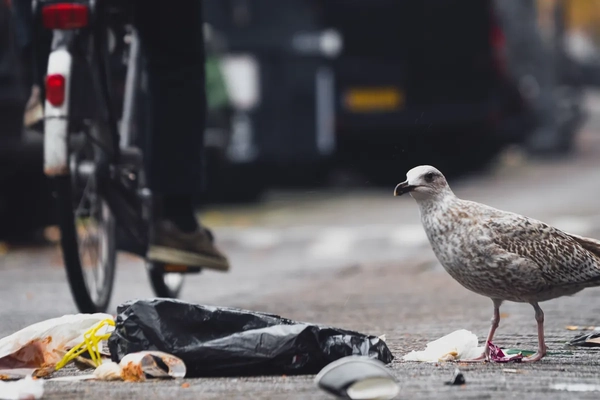
Amsterdam, the Netherlands, is considering a ban on single-use packaging to address rising concerns over the environmental impact of litter in the city.
The municipality commissioned legal knowledge platform CircuLaw to research whether a ban on the use of single-use packaging is legally possible.
The municipality says that a ban would work in combination with other measures to reduce disposable packaging pollution, such as reusable systems.
Amsterdam city alderwoman for waste and cleaning, Lian Heinhuis, says that “a ban on the use of disposable packaging is a realistic option. Our goal is clear: a city without litter, where reuse is the norm.”
Packaging Insights speaks to the Fair Resource Foundation, a non-profit that advocates for the equitable use of resources, and Zwerfinator, a local environmental activist group based in the Netherlands.

“Disposable cups, along with other disposable packaging, are among the largest waste streams and are also one of the most common items found in litter,” Chloé Schwizgebel, project coordinator at Fair Resource Foundation, tells us.
“A ban on disposable coffee cups or single-use coffee cups is the most effective measure to reduce this type of waste.”
She adds that disposable items either end up as litter or are incinerated or recycled into low-value products due to contamination in the waste stream.
Dirk Groot, founder of Zwerfinator, says that about 90% of litter in the Netherlands consists of single-use packaging, largely from takeaway food and drink packaging.
“In a busy city like Amsterdam, the proportion of litter volume made up of single-use packaging is even higher because of the large number of tourists and day visitors who eat and drink while walking around the city,” he adds.
Reusable systems
The Amsterdam municipality says that it is investigating how reusable systems across the city can work to reduce packaging pollution alongside a ban on disposable packaging.
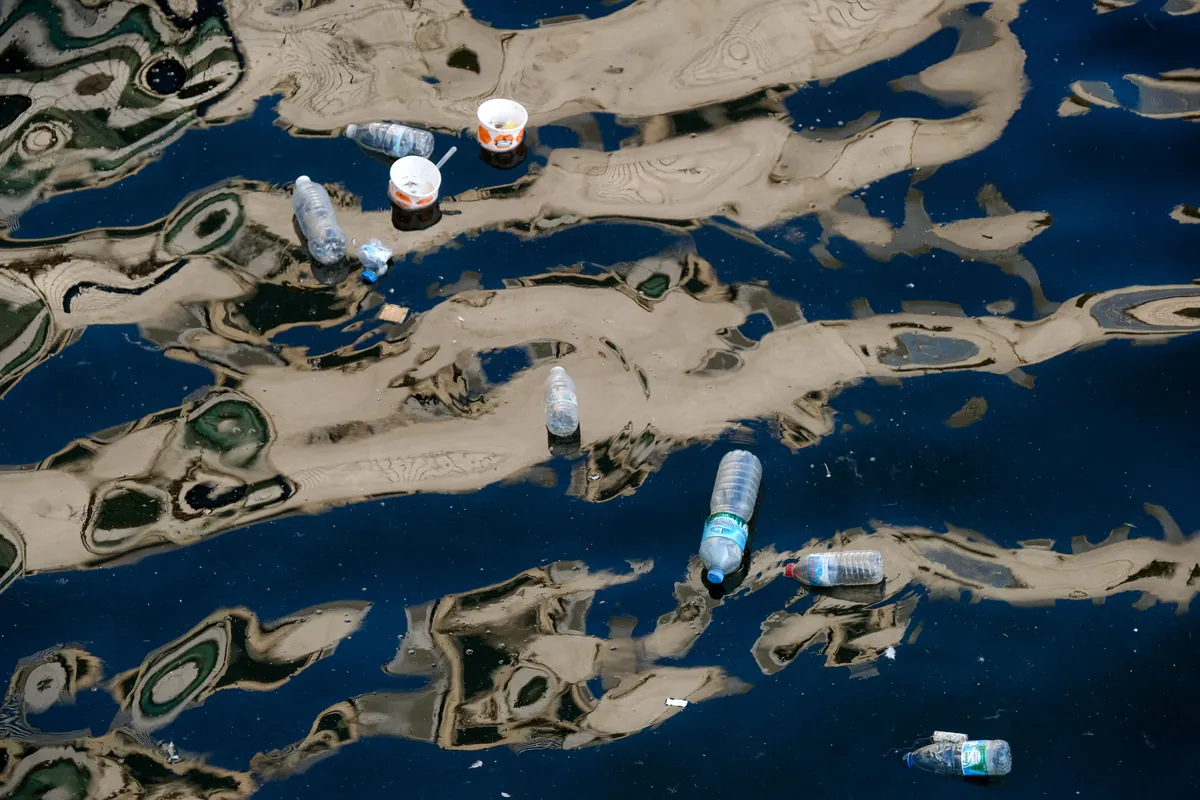 Amsterdam is exploring a ban on single-use packaging to tackle litter and encourage reusable alternatives.Groot notes that it’s important for reusable systems to be convenient for consumers. “There also needs to be an efficient logistics system to collect the returned cups and get them back to the businesses that use them. The municipality may need to play a facilitating role in this.”
Schwizgebel says that reusable cups can be better for the environment than disposable alternatives, but only if they’re part of a reusable system in which they’re used frequently.
She adds that in recent years there has been a “great deal of confusion” regarding the sustainability of reusable cups versus single-use cups.
“At the European and national levels, this confusion is being fueled by fast-food chains, soft drink manufacturers, and players in the packaging industry. The stakes are enormous; the global economy is heavily dependent on cheap disposable packaging.”
She highlights how members of the European Parliament have stated that they have never been subjected to such "intense lobbying" as they have been regarding the Packaging and Packaging Waste Regulation.
“Falsehoods, incorrect assumptions, and industry-funded reports” have “eroded” administrative support for the transition away from single-use packaging, underscores Schwizgebel.
Throwaway habits
Heinhuis continues that the solution to single-use packaging pollution is to end “throwaway culture,” which results in a “persistent problem” and “costs millions” for Amsterdam to clean annually.
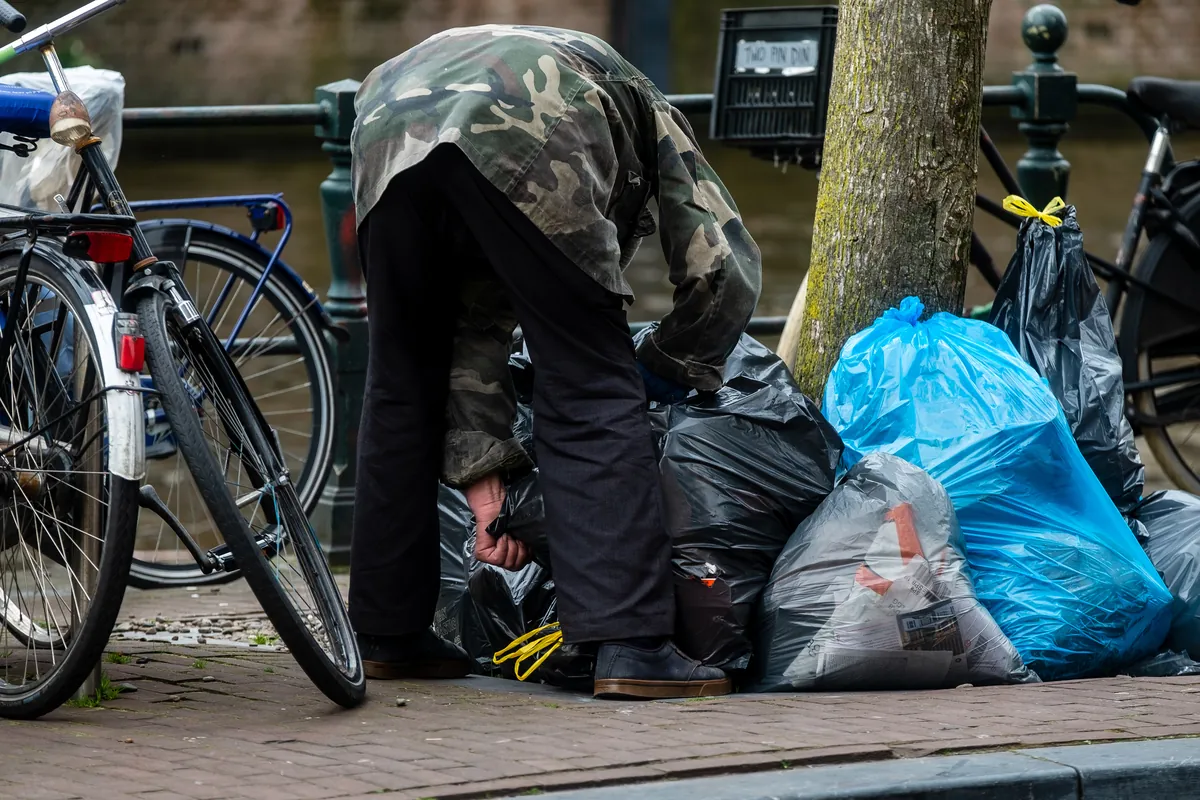 Environmental campaigners emphasize the importance of convenient reuse systems and deposit return schemes to reduce packaging waste.Schwizgebel concurs, adding that disposable cups are a “quintessential symbol of our throwaway society.” She suggests that reusable alternatives like mugs or glass can help the broader transition from disposable to reusable packaging.
“Then, as a society, we might gradually get used to the idea that it’s perhaps not ‘normal’ to throw away a cup after a single use — just as was the case well into the last century — and that the same applies to other types of packaging.”
Groot and Schwizgebel argue that a deposit return scheme is crucial to changing consumer habits.
“Without a deposit, people simply won’t return their cups and food containers, and collection won’t work effectively,” says Groot. “Enforcement is always necessary for any measure to succeed, which should focus on businesses, not just consumers.”
Schwizgebel suggests that there would probably need to be a transition for consumers to get used to a reuse system, but she points out that “walking to the recycling bin, returning bottles and cans, and using deposit-refund cups at events also took some getting used to — yet those practices have now become second nature.”
Groot asserts that one factor for the municipality that is “particularly relevant” in discussion of litter in Amsterdam is the citizens who look for deposit-bearing cans and bottles in the trash.
“This creates additional litter in those particular areas, while the rest of the city, and the Netherlands as a whole, has become considerably cleaner.” He suggests that banning disposable items from the waste stream could help mitigate the litter created by this activity.
Learning by example
Amsterdam states that its next steps are to investigate which combination of measures will be “most effective” in reducing single-use packaging litter. Specifically, the municipality will look at the bans and reuse systems of other cities, such as Copenhagen, Denmark, and Lisbon, Portugal.
 Amsterdam is examining successful reuse initiatives in Lisbon, Copenhagen, and Tübingen to inform its approach to disposable packaging.“Amsterdam doesn’t have to reinvent the wheel. Several European cities already have experience with reusable cup and food packaging systems, and there is a lot to learn from them,” says Groot.
Schwizgebel points to the German city of Tübingen, which has imposed a local tax on single-use packaging to encourage reusable alternatives. “Several German and other European cities are following suit.”
Meanwhile, she highlights how, since 2019, the city of Leiden, also in the Netherlands, has banned disposable cups at events with more than 200 people.
Last year, Lisbon became the first European capital to implement a city-wide reusable cup system supported by a local deposit-return model.
“If Amsterdam implements [a ban], I suspect that the cities of Rotterdam, The Hague, and Utrecht will follow suit, and that will be a big boost toward phasing out disposable packaging wherever possible,” says Schwizgebel.