

Coca-Cola, PepsiCo & Keurig Dr Pepper expand QR codes for ingredient transparency


Key takeaways
- Coca-Cola, Keurig Dr Pepper, PepsiCo, and other US beverage companies are rolling out QR codes that link consumers to an ingredient transparency database from American Beverage.
- The platform provides information on more than 140 beverage ingredients, including their use, function, and safety assessments from authorities.
- The beverage brands target full or near-full market penetration by the end of 2027.
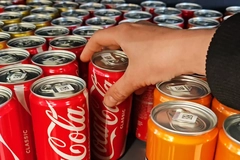
The Coca-Cola Company, Keurig Dr Pepper, PepsiCo, along with other US beverage companies, have announced the nationwide expansion of a shared digital ingredient transparency infrastructure developed to empower consumers with information about the ingredients in their drinks.
The QR codes displayed on beverage cans and bottles enable consumers to connect to Good to Know Facts, a database created by American Beverage, a trade association that represents the US non-alcoholic beverage industry.
The database is said to offer “factual, non-industry information about more than 140 beverage ingredients.”
Kevin Keane, president and CEO at American Beverage, says: “Consumers want greater transparency and deserve to have confidence in the safety of their foods and beverages. Transparency means more than simply listing ingredients — it means providing relevant context that helps people understand where specific ingredients are used, what function they serve, and how regulators in different countries view them.”

“By integrating Good to Know into QR codes, we’re making it easier than ever for consumers to have clear and reliable information right at their fingertips.”
Advancing connectivity
The platform is engineered to be a first stop for consumers who are looking for accessible and clear information about the increasing choices of beverages in the grocery aisle.
Good to Know is a compilation of publicly available safety information from global food safety agencies. The site contains only the published findings of international independent food safety authorities.
The QR codes can lead users to complete ingredient safety assessments from the US Food & Drug Administration, the European Food Safety Authority, and Health Canada in one place, with assessments from the Joint Food and the Agriculture Organization’s and World Health Organization’s Expert Committee on Food Additives where needed.
US beverage companies started integrating Good to Know into product QR codes in the first quarter of 2026. Brands are set to achieve full or near-full market penetration across all beverage portfolios by the end of 2027, according to American Beverage.
There has also been a broader shift toward connected packaging beyond the US. According to a survey from earlier this year by Appetite Creative and Koenig & Bauer, the packaging industry’s confidence in connected packaging has been growing and reached 92.3%.
Last year, the South Korean government announced that bottled water sold in the country must be label-free throughout manufacturing and distribution processes. Product information previously provided on the label will be available through a QR code on the bottle cap.
This week, Twinings, a UK tea and beverage company, introduced accessible QR codes and GS1 Digital Link QR codes across its packaging to support blind and partially sighted consumers.