

Twinings rolls out accessible QR codes for tea packaging across UK


Key takeaways
- Twinings is unveiling accessible QR and GS1 Digital Link QR codes across its UK packaging.
- Developed with RNIB, Zappar, and io.tt, the codes help blind and partially sighted consumers locate products and access information.
- The rollout, starting this summer with Twinings’ Black Tea range, reflects the packaging industry’s growing focus on inclusive, connected packaging.
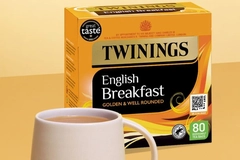
Twinings, a UK tea and beverage company, has introduced accessible QR (AQR) codes and GS1 Digital Link QR codes across its packaging to support blind and partially sighted consumers, becoming the “first UK tea brand to roll out this technology at scale.”
The new solution is developed in collaboration with the UK’s Royal National Institute of Blind People (RNIB), alongside digital solutions partners Zappar and io.tt. Last year, the two companies joined forces to accelerate the rollout of vision-inclusive, connective packaging.
The codes aim to support blind and partially sighted consumers locate products and access key information, such as ingredients and brewing instructions, using smartphone accessibility apps.

“This is an important step toward more inclusive packaging, helping to remove everyday barriers and create a more independent shopping experience. We know there’s more to do, but we’re proud to be taking meaningful action, and hope this helps drive wider change across the industry,” says Twinings.
Advancing inclusive design
Twinings says the rollout will begin this summer across Twinings’ Black Tea range.
“This initiative demonstrates how connected packaging can help solve real consumer challenges.
It’s an example of how packaging can deliver more than compliance — improving accessibility and creating meaningful value for consumers,” says io.tt.
The move aligns with the packaging industry’s increasing focus on accessibility, assisting brands to enhance user experience and strengthen brand trust.
Earlier, Persil, a Unilever detergent brand, added AQR to a range of its packs, developed in partnership with Zappar and the RNIB. The code is accessible via smartphone. It provides product, usage, safety, and recycling information.
Microsoft and Haleon introduced a feature to Microsoft’s Seeing AI app that reads health product labels aloud for people who are blind or have impaired vision.
This year, Xaar, an inkjet printing technology group, published a whitepaper exploring how digital inkjet technology could enable effective braille printing for accessible packaging.