
BMT study shows how simulation can mitigate altitude-driven bottle deformation


Key takeaways
- BMT’s study shows how combining simulation with physical testing can help predict and reduce altitude-induced bottle deformation before products enter the supply chain.
- BMT says the approach can support better bottle design decisions by reducing risks of paneling or collapse.
- The method aims to help avoid over-engineering that conflicts with lightweighting goals.
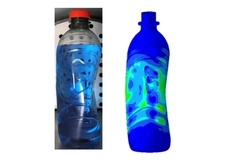 (Image credit: BMT).
A study by Blow Moulding Technologies (BMT), a UK-based technology company, has revealed how integrated simulation and physical testing can be adopted to predict and mitigate altitude-induced bottle deformation before products enter the supply chain.
When products are filled at high-altitude facilities and then transported to lower elevations, changes in pressure can create a vacuum inside sealed containers. This can cause the packaging to deform in the shape of paneling and, in severe cases, structural collapse.
Responding to the challenge, BMT designed an integrated engineering methodology combining stretch blow molding simulation and structural testing to assess the impact of fill volume on bottle performance under altitude-induced pressure changes.
Ross Blair, head of Engineering at BMT, says: “Packaging performance must be assessed across the distribution chain, not just at the point of manufacture. This work demonstrates how simulation and physical testing can be used together to predict altitude-induced paneling and support more informed package design decisions.”
Physical testing
The study looked into the impact of headspace volume on bottle performance. Bottles were filled to different levels to evaluate how the volume of air above the liquid influenced deformation under vacuum conditions.
BMT notes that with altitude-induced pressure changes being a “well-recognized consideration” in package development, it can lead to over-engineering and create conflict with bottle lightweighting aims.
The company validated its approach through a Mount Everest-inspired case study simulating a bottle filled and sealed at the summit before being transported to sea level.
“The Everest scenario created a pressure differential of approximately 680 mbar between the summit of Mount Everest and sea level, enabling engineers to investigate the effects of altitude-induced loading on lightweight PET packaging,” says the technology company.
“Advanced simulation techniques were used alongside physical pressure chamber testing to recreate the deformation and validate model predictions against physical test results.”
Earlier this year, BMT supported bottle manufacturers and brands with its Smart prototyping platform, which delivers data-driven validation to reduce development risks.