

California invests millions to expand bottle deposit return network


Key takeaways
- California is investing US$10 million to expand CRV redemption sites, including mobile recycling services and beverage bag drop-off points.
- The funding is part of a wider US$41 million circular economy investment to boost recycling infrastructure, green jobs, and material recovery.
- The move builds on California’s wider sustainability agenda, including EPR rules, plastic packaging measures, PFAS restrictions, and recycling labeling laws.
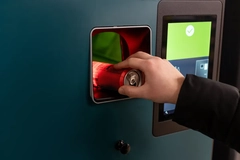
In the US, California is investing US$10 million to expand its deposit return scheme (DRS) infrastructure. Circular CRV Solutions, a nonprofit beverage collector, has received a Beverage Container Redemption Innovation Grant to fund additional California Redemption Value (CRV) return sites statewide.
CRV is California’s term for a refundable beverage container deposit that Circular CRV Solutions redeems on behalf of its member beverage retailers. With the investment, the organization will install mobile recycling deposit services and bag drop-off points for beverages, specifically in areas with limited access to bottle deposit return facilities.
The investment is part of a wider US$41 million investment that aims to expand recycling infrastructure, create “green” jobs in the state, and keep valuable materials in circulation, instead of landfill.
“California is proving that reducing waste and growing the economy can go hand in hand,” says Zoe Heller, CalRecycle director.
“These investments will make recycling more convenient, support good-paying jobs, and help turn discarded materials into valuable new products. By keeping resources in use, we’re building a cleaner and more resilient future for communities across California.”
California’s sustainability story
California is increasingly investing and innovating in circular economy measures. Recently, Closed Loop Partners’ Center for the Circular Economy announced plans to advance the recovery of small-format plastic packaging in the state, ahead of its EPR deadline, which comes into force on January 1, 2027.
SB 54 was approved in May by the California Office of Administrative Law. It aims to establish an EPR program to manage “packaging and single-use plastic foodservice ware” across the state.
However, since it was approved, the law has been facing legal scrutiny from environmental NGOs, who argue it undermines the law’s initial recycling and plastic reduction goals.
Other ongoing legislation in the state includes a ban on PFAS, the “truth in labeling” law, and prohibitions on plastic checkout bags.
Expanding circular investments
As part of the US$41 million investment, California is awarding 13 local conservation corps with US$30.6 million to provide young people in the state with job training through recycling training and community improvement projects.
Meanwhile, the state will also provide US$800,000 to expand textile recycling services. With the investment, the Recycling Market Development Zone aims to quadruple its capacity to turn old textiles into new products, according to CalRecycle.
According to CalRecyle, by 2050 a fully circular economy in California is projected to generate US$411 billion in economic growth, US$11 billion in avoided health and environmental costs, and over 500,000 new jobs across recycling, reuse, repair, and manufacturing sectors.
DRS schemes are being launched or piloted in many countries, most recently in Finland and Portugal.
In the UK, the Association of Convenience Stores (ACS) unveiled a resource hub for convenience retailers to help them prepare for the upcoming DRS. According to research conducted by ACS through the Voice of Local Shops Survey, only half of more than 1,000 independent retailers have no awareness of the DRS.