



California standardizes food date labels to mitigate confusion and food waste

Key takeaways
- California has banned “sell by” labels and requires standardized quality and safety date labels under Assembly Bill 660.
- The law aims to reduce consumer confusion and food waste while giving manufacturers and retailers clearer labeling rules.
- California is the first US state to standardize food date labels, while similar measures are advancing in New York.

California, US, has banned the use of “sell by” labels on food packaging. Under the regulation, manufacturers are now required to transition to standardized date labels designed to clear up consumer confusion and reduce food waste.
The law, Assembly Bill 660, requires food products to use standardized quality labels, “Best if Used By” or “Best if Frozen By,” or safety labels, “Use By” or “Use or Freeze By.” Any food item for human consumption in California that is not labeled according to the standard is prohibited from sale as of 1 July 2026.
The bill’s provisions do not apply to infant formula, eggs, pasteurized in-shell eggs, beer, or other malt beverages.
Nick Lapis, director of advocacy at Californians Against Waste, an environmental NGO, tells Packaging Insights: “For years, consumers have walked into grocery stores and seen more than 50 different date labels on food products, even though there has never been a consistent standard for what those labels mean. Research shows that confusion over date labels accounts for about 20% of avoidable household food waste.”
“This law gives consumers straightforward information they can use. ‘Best if Used By’ tells people when a product is likely to have the best quality, while ‘Use By’ is reserved for the relatively small number of products where safety is the concern.”
Establishing consistent standard
The California Grocers Association issued compliance reminders earlier, noting that some retailers have had to overhaul their labeling systems due to the law. Overall, the association expressed support for the change.
“Everyone benefits when we replace confusion with consistency. Manufacturers now have a clear statewide standard instead of choosing from dozens of different phrases. Retailers can communicate more clearly with their customers, and food banks can reassure donors and recipients that food labeled ‘Best if Used By’ often remains wholesome after that date if it has been properly handled,” shares Lapis.
“California throws away about six million tons of food every year, enough for roughly 2.5 billion meals, and much of that food never needed to become waste in the first place. By giving everyone in the food system clearer information, this law helps recover more edible food, reduces unnecessary disposal, and cuts methane emissions from landfills.”
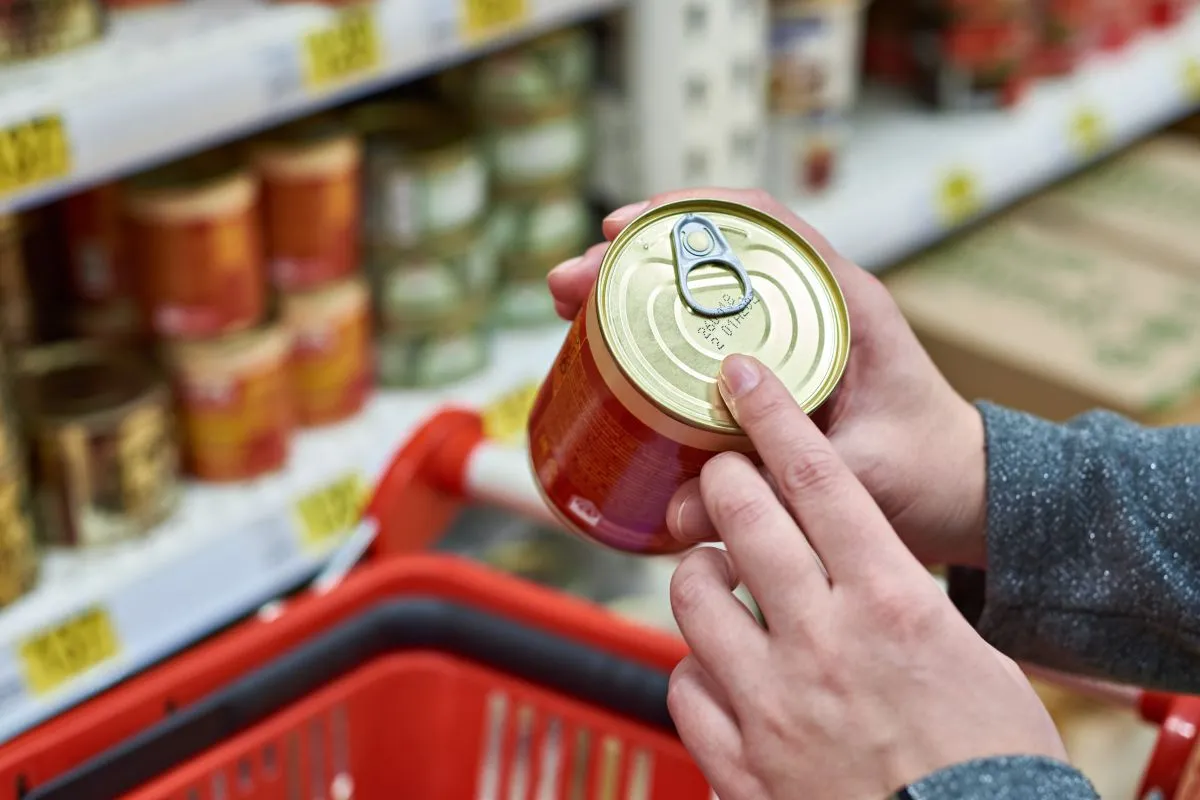 The bill aims to help families save money and keep tons of food out of California landfills.California has become the first state in the US to standardize food labels. Last month, in New York State, the Assembly joined the Senate and passed the Food Date Labeling Act, a similar law that requires standardized date labels on food packaging. The New York Bill now awaits the signature of Governor Kathy Hochul.
Combating high food costs
Lapis furthers that food banks have been among the strongest supporters of the bill, highlighting that food waste is not only an environmental issue.
“The average consumer spends US$1300 on food that is never eaten, which is more than they spend on gas or property taxes. With food prices as high as they are, nobody can afford to throw away good food.”
“Food bank customers also tend to avoid products past the ‘sell by’ date. It’s completely understandable that nobody wants to eat expired food or risk making their family sick, but these dates were never intended to communicate anything to consumers.”
Beyond the US, industry stakeholders worldwide are also recognizing how confusion about date labels on food packaging contributes to food waste and are taking steps to address the issue.
Last year, a study by the Royal Melbourne Institute of Technology University and End Food Waste Australia revealed that confusing food labels are prompting Australians to throw away edible food, underscoring the impact of labels on consumer behavior and sustainability.
Meanwhile, Avery Dennison partnered with Walmart to advance the use of radio-frequency identification labels, providing data that helps workers stock and organize products efficiently by tracking food freshness. The solution focused on meat packaging and was to be used in baked goods and deli packaging.
Previously, Danish company Too Good To Go unveiled an AI-powered solution that helped supermarkets verify the expiry date of food products and reduce the number of expired products on shelves.