





Coca-Cola, Nestlé & Danone to revise plastic bottle recycling claims after EU dialogue

Key takeaways
- Coca-Cola, Nestlé, and Danone have committed to clarifying recycling and recycled-content claims on plastic bottles.
- The companies will revise wording such as “100% recycled plastic” to exclude caps and labels where necessary and remove potentially misleading phrases.
- The EC and CPC network may take further enforcement action or engage with wider bottling industry associations.
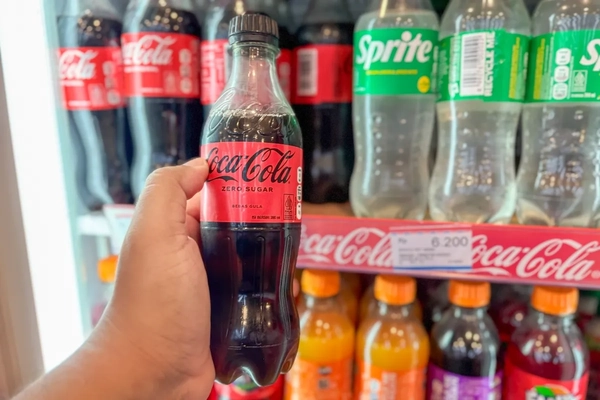
Coca-Cola, Nestlé, and Danone have committed to changing recycling claims advertised on their plastic bottles after a dialogue with the European Commission (EC) and the Consumer Protection Cooperation (CPC) network.
The changes aim to provide consumers with “fair and clear information” about the recycling characteristics of the bottles, in line with the requirements under EU consumer law.
As a result of the dialogue, Coca-Cola, Nestlé, and Danone have agreed to replace claims on bottles’ labels such as “I am a bottle made from 100% recycled plastic” with “This bottle is 100% recycled. Excluding cap and label” to provide factually clear information regarding recyclability and composition.
Danone’s global press relations team tells Packaging Insights: “We take the clarity of environmental claims very seriously. We are engaging constructively with the EC and the CPC Network, and as part of this dialogue, we have proposed voluntary commitments to further clarify recycled-content claims on plastic bottles, including where claims apply to the bottle body and not to caps or labels.”
“These commitments reflect our willingness to strengthen transparent consumer information and to align our packaging communications with evolving EU expectations.”
A spokesperson for the EC tells us: “The Commission welcomes the commitments of Coca-Cola, Nestlé, and Danone to change the recycling claims on their plastic bottles. Once the commitments are fully applied by the three companies, consumers will be able to rely on fair and clear information about the bottles’ recyclability and composition.”
Tighten recycling claims
Coca-Cola, Nestlé, and Danone have also committed to replacing claims on bottles’ labels, such as “Recycle me again” with “Recycle me,” so companies do not make a false impression when encouraging consumers to recycle the bottle, that the bottle was already recycled before purchase, and can be recycled into another bottle again.
 The dialogues lead to results that benefit consumers, providing them information to make informed choice.According to the EU, the companies will make sure the overall impression of labels and marketing is not misleading regarding the “inherent environmental benefits of plastic bottles, for instance by combining them with other green claims or symbols.”
They will also need to ensure that digital marketing campaigns on their respective websites and social media channels reflect the content of these commitments.
In November 2023, the European Consumer Organisation issued an alert against bottling companies selling plastic bottles in the EU.
Coca-Cola and Nestlé, whose dialogues were concluded in June 2025 and February 2026, have implemented some of the commitments within the established deadlines, notably those relating to recycling claims advertised in digital campaigns.
The EC spokesperson tells us that the EC and the CPC network contacted Danone to align its practices with the commitments of Coca-Cola.
Henna Virkkunen, Executive VP for Tech Sovereignty, Security and Democracy of the EC, says: “We must ensure that traders operating in the EU are transparent in their labeling practices. These commitments by Coca-Cola, Nestlé, and Danone show that the dialogue between companies and the national consumer protection authorities leads to results that benefit consumers, providing them with information to make informed choices.”
The EC and the CPC network share that they may engage with bottling industry associations to support “a level playing field where all companies operating in the Single Market abide by the same rules.”
“The enforcement of consumer rules is a matter for national authorities. They coordinate actions together at the EU-level in the CPC Network in case of suspicion of widespread infringement of EU consumer rules across the Single Market. Our role is to facilitate this coordination. CPC authorities will monitor the implementation of these commitments,” the EC spokesperson says.
“In practice, the companies will submit implementation reports to these authorities, which the authorities will use as a basis to verify compliance.”