
Coveris unveils monomaterial stretch sleeve to reduce packaging use

Key takeaways
- Coveris has developed a monomaterial LDPE stretch sleeve for Dr. Beckmann fabric softener bottles in France, cutting sleeve material use by approximately 30%.
- The SleeveFlex Ultra Stretch solution eliminates the need for a steam tunnel, reducing energy use and potentially lowering operating costs by up to 50%.
- Its floatable LDPE design allows separation from PET during recycling, supporting PET bottle-to-bottle recycling and alignment with EU packaging requirements.
 (All image credits: Coveris).
Coveris has announced the development of a monomaterial sleeve for the launch of Dr. Beckmann liquid fabric softener in France. The packaging solution can support material reduction and recyclability while lowering energy usage, according to the company.
For the project, Coveris utilized its SleeveFlex Ultra Stretch. “The material reduction is achieved through the fundamental design of the stretch sleeve,” Thorsten Umek, product expert for sleeves at Coveris, tells Packaging Insights.
“While a conventional shrink sleeve needs to be larger than the bottle before it is shrunk into place, the stretch sleeve is manufactured smaller than the bottle and stretches to fit around it, much like a sock. This design inherently requires less material, enabling a material reduction of approximately 30%.”
Unlike conventional shrink sleeves, the stretch sleeve does not require a steam tunnel, saving approximately 150 kg of steam per hour, Coveris outlines.
“Its functionality is based on the natural elastic behavior and memory effect of the material, allowing the sleeve to conform to the container without heat or steam,” continues Umek.
“Eliminating the steam tunnel significantly reduces energy consumption and associated costs, as no gas is required to operate the tunnel. It can also reduce the need for air conditioning during transport and warehousing, further lowering overall energy and resource requirements.”
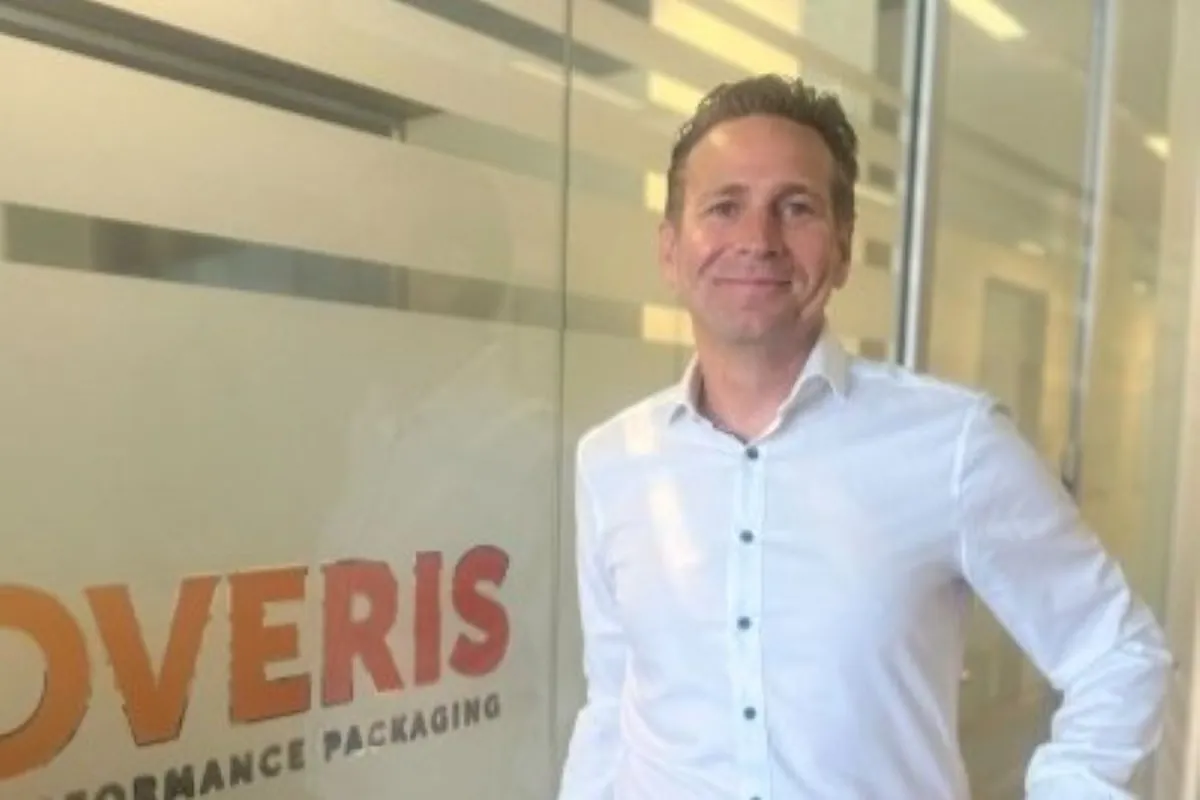 Thorsten Umek, product expert for sleeves at Coveris.Removing the need for temperature-controlled transport and storage can reduce the total operating costs by up to 50%, according to the company.
Coveris adds that it developed and delivered the project for Dr. Beckmann within six months, providing assistance, including the selection and integration of new machinery and commissioning the production line.
Bottle-to-bottle recyclability
Umek highlights that the sleeve solution is suitable for high-density PE and PET bottles and containers, and it can also be used for bundling applications.
Coveris describes its Dr. Beckmann packaging as suitable for bottle-to-bottle recycling, supported by its “floatable” design, helping brands meet current and future Packaging and Packaging Waste Regulation requirements.
“The low-density PE (LDPE) sleeve has a lower density than the PET bottle,” continues Umek. “During the recycling separation process, this difference in density allows the sleeve material to float while the PET sinks.”
“The two materials can therefore be effectively separated, supporting the recovery of PET for bottle-to-bottle recycling.”
At Packaging Innovations 2026, we discussed the latest recyclability trends with Will Mercer, Coveris’ Paper R&D director.
In a separate conversation, Katja Killian, business development director at Coveris, told us that the company’s refillable pouch solutions are also made of fully recyclable PE.
Earlier this year, Coveris also launched a paper wrap for confectionery packaging and a PFAS-free, monomaterial pet food packaging range.