



London Packaging Week 2026 live: DeltaH debuts recyclable self-cooling can to cut refrigeration demand


Key takeaways
- DeltaH Innovation has debuted its recyclable Cool>Can at London Packaging Week 2026.
- The independently sealed cooling system keeps chemicals separate from the beverage and has undergone regulatory and safety testing.
- DeltaH is working to industrialize the technology while reducing its weight, size, and cost to support mainstream adoption.
 (Image credit: London Packaging Week).
DeltaH Innovation, a Wales-based technology company, is debuting its self-cooling and recyclable can at the ongoing London Packaging Week 2026 (September 16-17) in the UK, which aims to change the way beverages are conventionally cooled.
The Cool>Can was inspired by CEO and founder James Vyse’s frustration at a lack of cooling systems for single-beverage cans. The solution is based on the endothermic reaction that occurs when salt dissolves in water, absorbing heat from the surrounding area.
The can-within-a-can system features a patented salt-based cooling agent called DC15 on the outer can wall. Each can includes a button on the base that, when pressed, pushes water into the can walls, where the salt-based coolant is sitting, activating an endothermic chemical reaction and cooling the beverage.

Packaging Insights catches up with Vyse about the innovation, exploring its technical applications, market adoption, and safety requirements.
“The biggest challenge now is industrialization. Making one self-cooling can work is very different from making millions of them consistently and economically,” says Vyse. “Our focus is on high-speed assembly, accurate dosing, sealing, automated quality control, and reducing the material required while maintaining cooling performance and safety.”
At London Packaging Week 2026, DeltaH Innovations has partnered with Welsh craft brewer, Bayside Welsh Lager, to debut the innovation.
Changing cooling habits
The can is also recyclable and has received the UK’s On-Pack Recycling Label . However, Vyse highlights how the can’s sustainability potential is “much bigger” than its material composition.
“Conventional refrigeration uses energy to keep drinks cold continuously, through storage, retail, and events, regardless of when they’re going to be consumed. Our longer-term vision is to move some of that cooling to the point of consumption: keep products at ambient temperature and use energy-free, on-demand cooling only when it’s actually needed.”
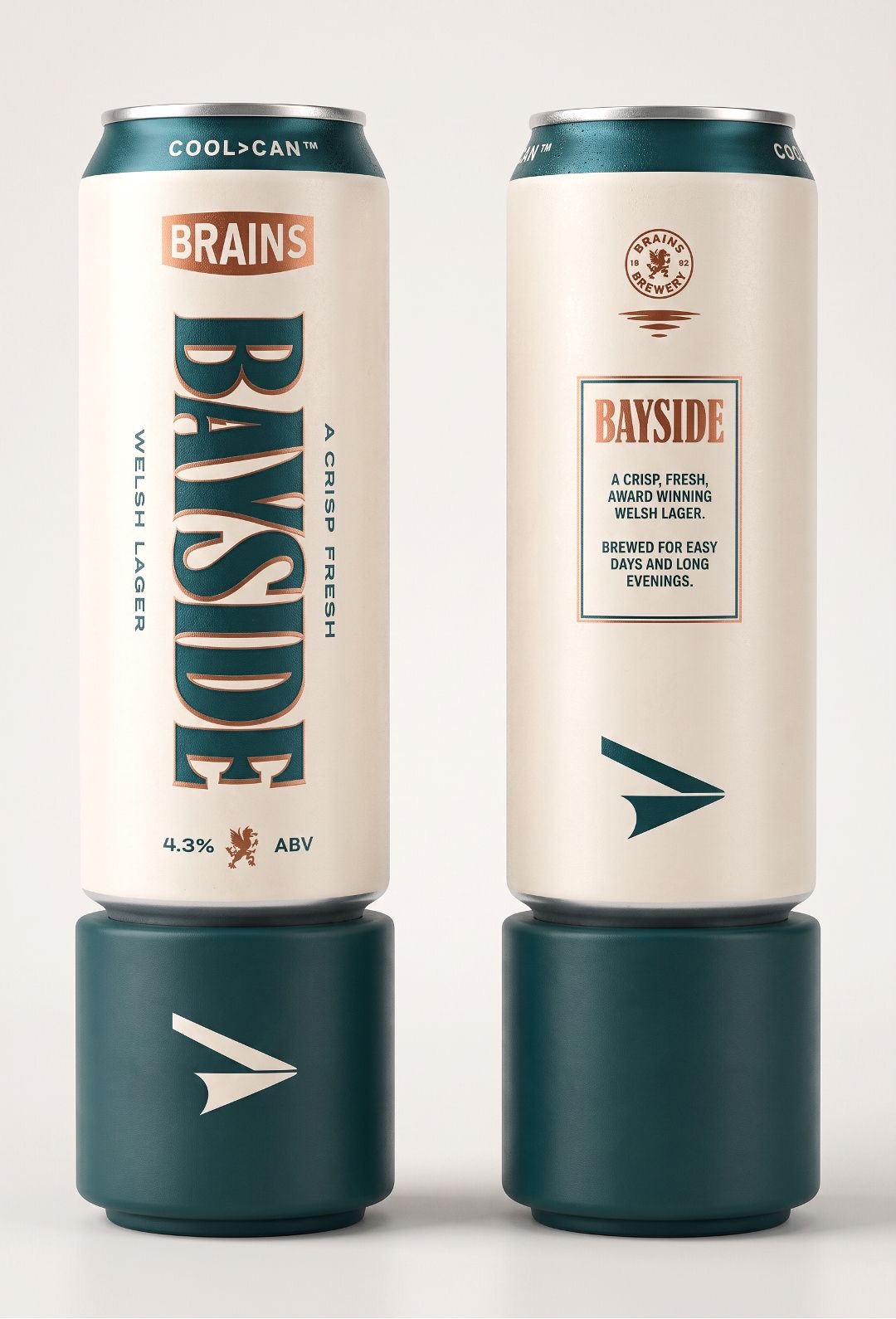 DeltaH Innovation’s Cool>Can uses a salt-and-water reaction to cool beverages at the press of a button (Image credit: DeltaH Innovations).He suggests that the Cool>Can has the potential to reduce the energy demand and infrastructure associated with refrigerated drinks. “That’s one of the reasons we’re building DeltaH as a wider cooling technology platform rather than simply a self-cooling can company.”
Prioritizing consumer safety
As the cooling technology involves chemicals, the Cool>Can had to go through many regulatory approvals, including the UK and EU Registration, Evaluation, Authorisation, and Restriction of Chemicals and the US Federal Drug Administration.
“Safety has been fundamental to the design from the beginning,” says Vyse. “The beverage remains inside its own independently sealed aluminum can, separate from the cooling system.”
“The cooling components sit outside the beverage can within our Cool>Can architecture, with multiple layers of containment. The cooling medium never comes into contact with the drink, and the reaction produces no gas by-product.”
He adds that the design has undergone extensive prototyping, leak, pressure, and repeated activation testing throughout development to ensure consumer safety.
Weight, cost & capacity
The can is designed as a drop-in solution into existing supply chains, says Vyse, sharing that a product must fit within the technical and logistical constraints of the industry.
“A brand’s liquid can be produced and sealed by its preferred partner in a normal slimline can. We then make a slight modification to the outer can shell, attach the cooling mechanism, and slide the beverage can inside. The slimline can is mechanically sealed to the external can before we attach the chemistry and water module to the bottom,” he adds.
Moreover, Vyse tells us how the cooling mechanism affects the can’s weight, cost, and beverage capacity.
“Our first commercial Cool>Can contains 250 mL of beverage inside our own purpose-built outer shell, which externally is roughly the size of a standard 16 oz/500 mL can. The current architecture adds approximately 16 grams of aluminum compared with a conventional can.”
He notes that the size and weight of the first product have been determined by time, cost, and existing beverage-industry standards.
“Rather than trying to reinvent every component from day one, we’ve deliberately designed around established can sizes and manufacturing infrastructure to get the technology commercialized.”
Therefore, there is “significant scope” to optimize further product types that reduce overall size and weight and increase beverage-to-cooling ratio, says Vyse.
He adds: “There is naturally an additional cost, but the cooling technology itself isn’t inherently expensive to produce. As volumes increase, our objective is to keep the premium low enough for Cool>Can to become mainstream rather than a novelty. The final retail price is determined by the brand and retailer, but we’ll work with partners to keep that premium sensible.”
Looking to the future, Vyse says that the challenge is making the Cool>Can lighter, smaller, and cheaper while maintaining performance, safety, and recyclability, “ultimately demonstrating that on-demand cooling can provide a more sustainable alternative to unnecessary continuous refrigeration.”
Also at London Packaging Week 2026, Sabert Corporation Europe released its catalog, revealing its “most comprehensive portfolio to date,” following the integration of Colpac.