


Husky Technologies upgrades injection molding tool for beverage closures


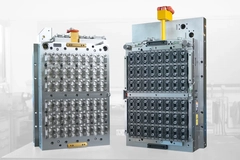
Husky Technologies has launched its next-generation HyCap 4.0 Mold tooling platform for the injection molding of beverage closures, including tethered caps. The tool upgrade includes bushings, hollow cylinders designed to to help minimize wear and prolong the equipment’s lifespan.
“The primary focus of HyCap 4.0 Mold is extending tooling performance while improving operational efficiency,” a spokesperson for Husky Technologies tells Packaging Insights.
Dave Morton, Husky’s executive VP of business development, comments: “The beverage packaging industry is undergoing a transformation as sustainability goals, regulatory requirements, and performance expectations continue to evolve.”
The spokesperson for the technology provider adds that the evolution of beverage closures was one of the key drivers behind the development of HyCap 4.0 Mold. “As the industry continues to move toward ultra-lightweight designs and tethered closures, mold technology must deliver precision, reliability, and durability.”

“HyCap 4.0 tooling represents the next evolution of closure manufacturing, enabling brands and producers to achieve lightweight designs, operational flexibility, and higher overall equipment effectiveness.”
Extended mold life
The Husky Technologies spokesperson highlights that HyCap 4.0 includes key redesigned wear components and incorporates advanced polymer bushings — hollow cylinders designed to reduce friction — to minimize wear-related issues and simplify maintenance.
“By reducing metal-to-metal contact, the bushings help minimize wear generation, improve component protection, and maintain smoother operation over time. The result is a more robust molding platform designed for higher uptime and lower lifecycle operating costs.”
“Mold life improvements depend on factors such as resin selection, operating conditions, maintenance practices, and production volumes,” the spokesperson continues. “However, HyCap 4.0 was specifically engineered to reduce wear in critical tooling interfaces, helping manufacturers maintain mold performance longer and reduce the frequency of major refurbishment events.”
According to the company, many customers will see the greatest benefit in overall mold longevity as well as improved consistency between maintenance cycles.
The spokesperson adds that the cost savings manufacturers can expect to come from reduced maintenance labor requirements, lower replacement-part consumption, and decreased downtime for maintenance interventions.
In addition, extended service intervals between major refurbishments and consistent production performance over the life of the mold can contribute to a lower total cost of ownership and improved manufacturing profitability, according to the company spokesperson.
“Ultimately, the technology is not only about extending mold life. It is about enabling manufacturers to confidently produce the next generation of beverage closures at scale.”
Supporting tethered cap design
Husky Technologies further outlines that HyCap 4.0 Mold is optimized for ultra-lightweight and tethered closure designs.
The company says that the expansion of regulations that require tethered closures on beverage bottles across markets is pushing packaging manufacturers to seek machinery adapted to these changing demands without significant capital reinvestment.
“HyCAP 4.0 tooling supports tethered and non-tethered closure applications, enabling producers to respond to regulatory changes and market demands while minimizing operational disruption,” according to Husky Technologies.
Recently, Packaging Insights explored how packaging machinery manufacturers are responding to the sustainability regulations and consumer demands increasingly shaping the industry.
Last week, the EU updated its guidance on the interpretation and implementation of the tethering requirements of different types of caps, lids, and covers under the Single-use Plastic Directive.
Earlier, we spoke with KHS and Zwerfinator about what the EU law means for the packaging industry, consumers, and the environment.