



BASF and Evonik defend food packaging plasticizer after birth weight study
Key takeaways
- A US study links prenatal exposure to DINCH, a phthalate alternative used in food packaging, to lower birth weight and size.
- BASF and Evonik defend the plasticizer’s safety, citing extensive toxicological research, regulatory approvals, and limitations in the new study.
- The Food Packaging Forum calls for further research into DINCH to prevent potentially harmful chemical substitutions.

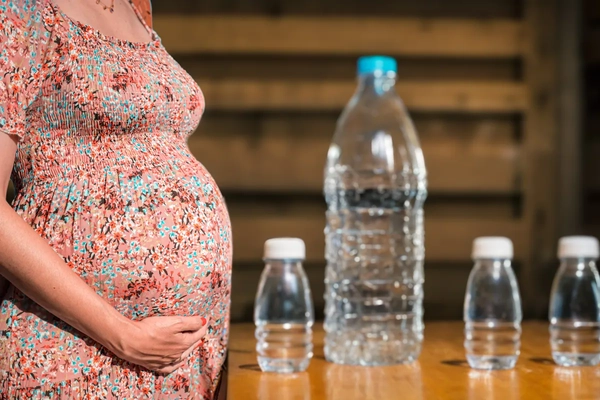
Exposure to a reportedly safe type of plastic additive used in food packaging has been linked to lower birth weight and size, a peer-reviewed study by scientists in the US has found.
Currently used in food and health care packaging, diisononyl cyclohexane-1,2-dicarboxylate (DINCH) is said to be safe for humans, but a growing body of research is finding that the chemical is potentially linked to adverse health effects.
DINCH is a non-phthalate plasticizer introduced by German chemical giant BASF in 2002 under the name Hexamoll DINCH. Plasticizers are added to packaging to make it more flexible, softer, and more durable.
DINCH was developed as an alternative to conventional phthalates, which were found to adversely impact human health.

Speaking to Packaging Insights, BASF and Evonik highlight industry research that validates the safety of DINCH, as well as methodological flaws in the US researchers’ study.
“Hexamoll DINCH is a widely trusted non-phthalate plasticizer,” says the BASF spokesperson, pointing to previous safety tests and market validation.
Hendrik Fischer, director for advocacy and regulatory marketing at Evonik Oxeno, also points to previous regulatory approvals of DINCH, adding that Evonik Oxeno “considers it safe for use.”
However, the Food Packaging Forum Foundation, a non-profit that has previously raised awareness over the potential health impacts of DINCH, tells us that more research is needed to avoid “regrettable substitutions.”
“The new study adds to the evidence suggesting that DINCH deserves closer scrutiny,” says Dr. Helene Wiesinger, scientific officer at the non-profit. “Although it does not directly establish that DINCH causes adverse health effects, it establishes a strong link between DINCH exposure and adverse birth outcomes.”
Investigating DINCH exposure
Previous research has found that DINCH exposure has adverse metabolic and reproductive effects on rats, and it has also been identified in human urine, including that of pregnant women.
The study, published in Environment International, adds to this research, assessing the effects of prenatal DINCH exposure on birth weight and gestational age in the US.
The researchers measured the presence of DINCH in the urine of pregnant women. They say that when DINCH is present in the body, it is metabolized into other compounds, called metabolites, which can be detected in human urine.
The study found that between 50 and 70% of the participating pregnant women had measurable levels of a DINCH by-product in their urine. Moreover, it determined that a tenfold increase in DINCH’s average urinary concentration during pregnancy was associated with a 27.43 g reduction in birth weight.
The link with lower birth weight was strongest for exposure during the third trimester. Alongside reduced birth weight, the study also found that DINCH exposure was associated with lower birth size and adverse birth outcomes.
Contrasting previous research, the researchers did not identify an association between DINCH exposure and gestational age.
The researchers, alongside Evonik’s Fischer and the BASF spokesperson, underline that the study shows an association, not causality. The researchers say that more research is needed to accurately assess the impact of DINCH on pregnancy.
Assessments of DINCH
The EU approved DINCH for food contact applications in 2006, with separate studies from Sweden and Denmark concluding that the chemical is a “promising alternative” to phthalates, according to Fischer.
In a June 2007 press release, BASF described DINCH as an “innovative plasticizer whose health safety is beyond all question.” The German chemical giant says it has invested more than €7 million (US$7.7 million) in toxicological research for Hexamoll DINCH.
“It is developed for applications with close human contact like medical devices, children’s toys, or food contact materials. It is approved and certified by many authorities and institutions worldwide,” says the BASF spokesperson.
“Before market launch, a comprehensive set of toxicological studies were conducted, including a 2-generation study and a chronic lifetime study in rats, as well as developmental toxicity studies in rats and rabbits.”
Evonik’s Fischer concurs, stating that “the safety of DINCH has been demonstrated through extensive research and regulatory evaluations.”
Avoiding “regrettable substitutions”
The Food Packaging Forum has previously raised the potential health risks associated with DINCH in packaging, including concerns about endocrine disruption, reproductive health, and increasing human exposure.
“We know that DINCH is relevant for food packaging,” Wiesinger tells us. “It is allowed to be used in plastic food contact materials in Europe; many studies have confirmed its presence in and migration from food contact materials, including from cling film and gaskets of lids.”
“When chemicals of concern such as phthalate plasticizers are replaced, we need sufficient evidence that the alternatives are actually safer. Otherwise, there is a risk of regrettable substitution, where one problematic chemical is simply replaced by another.”
She explains that it has been one of the main replacement chemicals for phthalate plasticizers in food packaging, with “increased production in recent years and increased exposure in the European population over recent decades.”
Scientific rigor or limitations?
The researchers analyzed mothers and children from 22 US cohorts, drawing data from the Environmental Influences on Child Health Outcomes research program.
The BASF spokesperson suggests this is a limitation of the study, observing that its results are not based on toxicological or biological evidence, but rather “statistical data evaluation.”
Evonik’s Fischer also points to limitations of the study. “The authors acknowledge that the observed association is weak and only statistically significant for some statistical conditions, noting that ‘chance’ may have influenced the results.”
Moreover, he suggests there is a lack of harmonized dietary data and external influencing factors such as maternal age.
“Given these and other shortcomings, we believe it does not contribute meaningfully to a robust scientific discussion about DINCH and its potential risks.”
However, the researchers behind the study state that they adjusted all models for a variety of external factors such as ethnicity and education, as well as “maternal age at delivery.”
The study also outlines its own constraints. It states limitations including unmeasured external variables, chance findings, and a lack of dietary data, among many more.
But the BASF spokesperson says that these shortcomings “make it difficult to attribute an observed effect to a single substance.”
The BASF spokesperson concludes: “The reported findings are subject to multiple methodological limitations, the observed effect sizes are very small, and the proposed biological mechanisms remain unconfirmed.”