



Engineered Printing Solutions chair highlights direct-to-object printing technologies

Key takeaways
- Engineered Printing Solutions highlights DTO technology, including pad printing, inkjet, and robotic systems, as alternatives to labels and sleeves.
- DTO printing can help packaging manufacturers reduce costs, simplify inventory management, support customization, and improve recyclability.
- EPS outlines key adoption considerations, including substrate preparation, ink chemistry, automation, and compliance requirements for packaging applications.
 (Image credit: EPS).
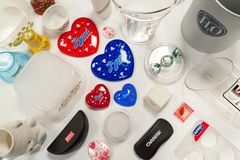
Kenneth Stack, executive chairman at Engineered Printing Solutions (EPS), discusses the range of direct-to-object (DTO) printing technologies and how EPS helps brands and manufacturers select the product printing solution best suited to their needs.
Highlighting the company’s DTO solutions include pad printing, single-pass inkjet, multi-pass inkjet, and robotic printing, Stack tells Packaging Insights: “You decorate the container itself instead of wrapping or gluing a different substrate onto it. That removes the label or sleeve — the stock, the adhesive, the sleeve, the applicator — and with it a whole layer of cost, inventory, and material.”
“For digital DTO, that means short runs, seasonal versions, regional variants, and variable data like lot codes or serialization become routine rather than an exception. And a monomaterial container with no label or sleeve on it is a much easier recycling story than a decorated one.”
EPS will showcase its technologies at Printing United Expo 2026 set to take place in Las Vegas, US (September 23–25), highlighting its XD-R robotic printing system with automated product handling and decoration, the KP08 pad printer, XD Series single-pass printer, and multi-pass DTO platform.
“Printing United provides an excellent opportunity for manufacturers to compare technologies and see how pad printing, single-pass inkjet, multi-pass inkjet, and robotic systems can each play a role in meeting production goals.”
“Whether visitors are producing promotional products, industrial components, packaging, or medical devices, we want them to leave with a clearer understanding of which technology is right for their application,” Stack continues.
“By bringing multiple print technologies together in one place, we're making it easier to compare the benefits of traditional and digital processes and to see where DTO printing can deliver the greatest impact.”
DTO packaging applications
 Kenneth Stack, executive chairman at EPS.Stack says that rigid primary packaging is the “sweet spot” for DTO printing. He outlines bottles, jars, tubs, tubes, closures, cans, and pails across plastic, glass, or metal, as best suited for the technology.
“Cylindrical and conical parts print very well because the part can be rotated under the heads. We do a great deal of clear PET; bottles are the classic case. On the natural fiber side, porous packaging such as corrugated, molded fiber, and paper sleeves is a strong fit with aqueous ink.”
DTO printing can further help brands reduce packaging production costs, according to EPS.
“You stop buying pre-printed label stock or sleeves — often, the sleeve or labels can cost as much as the container,” Stack notes.
“You stop pre-printing decorated packaging that gets written off when the artwork or the regulatory text changes at the last minute — ask convertors what their cost of label or sleeve spoilage is.”
He also explains how it’s possible to hold plain containers and decorate to demand, which “collapses SKU count and obsolete inventory.”
“Decorating after the container has passed quality inspection also means you are not scrapping expensive printed packaging because of a molding defect.”
Improving printability
Stack acknowledges that packaging manufacturers may face some challenges when adopting DTO technologies.
“Adhesion is the first one, and it is usually underestimated. Some packaging substrates are not printable as molded, so surface pre-treatment — plasma, flame, or corona — and ink chemistry matched to the substrate and the end-use environment are where the real engineering sits.”
 Packaging companies adopting DTO should consider pre-treatment, ink, handling, and quality control, says EPS.After that comes handling may also present a barrier to adoption. : Stack tells us that holdingholding a part accurately, registering, and absorbing the part-to-part dimensional variation that packaging containsalways has can be challenging., he explains.
“Then color expectations [may also pose a barrier to adoption], because brand owners work in spot colors and inkjet works in process. And in food and pharmaceutical packaging, there is a compliance layer — food contact, migration, PFAS — that constrains which inks you can even consider. The printer is the easy part; the process around it is the project.”
DTO misconceptions
To help packaging suppliers improve their understanding of DTO, Stack highlights two common myths surrounding the technology.
“First, treat DTO as a manufacturing process rather than a printing purchase,” he asserts. “The companies that succeed with it bring pre-treatment, ink, handling, and quality control into the decision from day one.”
“Second, ink chemistry is opening up applications that were closed a few years ago. We have developed a single-pass system using high-viscosity water-based inks for natural substrates such as corrugated, molded fiber, and paper, where the ink sits on the surface instead of soaking in.”
He explains that this process gives density that cannot be achieved using conventional aqueous ink. He adds that the inks EPS uses are PFAS-free and compliant with standards laid out by the Swiss Ordinance, the European Printing Ink Association, and Nestlé.
“Make sure you have a partner that can deliver everything from loading automation to chemistry and pre-treatment to printing, inspection to offloading,” Stack concludes. “At the end of the day, you are buying a decoration cell and not just a printer.”
Packaging Insights explored the latest in digital printing for the packaging industry alongside experts from Bobst, Flint Group Digital Xeikon, Mondi, and Xaar.