



EU clarifies aluminum cap exemptions from SUPD tethering rules

Key takeaways
- Updated EU guidance clarifies that certain aluminum caps, pull rings, and foil lids are exempt from SUPD tethering requirements.
- Plastic caps, including sports caps, pouch caps, and flip-top caps, remain covered when used on applicable beverage containers.
- Packaging manufacturers continue improving tethered-cap production, inspection, and usability amid mixed consumer feedback.
The EU has updated its guidance on the interpretation and implementation of the tethering requirements of different types of caps, lids, and covers under the Single-use Plastic Directive (SUPD). It now shows illustrations excluding aluminum caps or covers from the requirement laid out in Article 6 (1) of the directive.
Specifically, the guidance, which includes additional illustrations, covers roll-on pilfer aluminum caps, pull ring caps, and aluminum foil lids sealed onto single-use beverage containers.
Article 6 (1) of the SUPD requires certain beverage containers of up to three liters with plastic caps or lids to be placed on the EU market only if tethered.
“The only changes compared to the previous version show illustrative examples of different types of caps, lids, and covers of single-use plastic beverage containers and single-use plastic cups for beverages,” states the updated EU guideline.
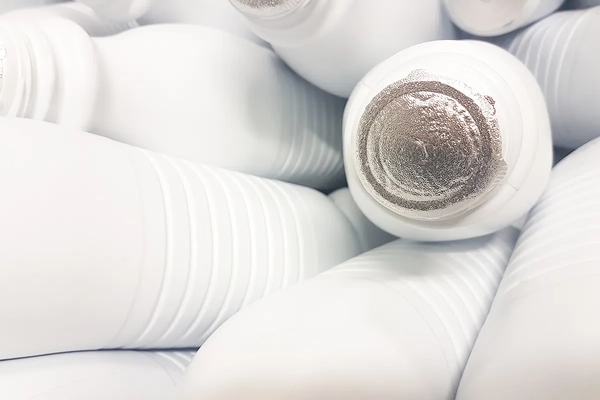
“In particular, the example of a plastic cap used in combination with an aluminum foil lid has been added, which is used, for example, on bottles made of high-density PE containing ultra-high-temperature processed milk.”
Tethered cap innovation
Caps and lids made of plastic remain subject to the tethering requirement when used on covered beverage containers. These can include plastic sports caps, pouch caps, and flip-top caps.
Since its application in July 2024, the tethered cap requirement has driven innovation in the space.
Last year, Packaging Insights spoke to Manfred Härtel, filling product manager at KHS, about how the additional retaining ring of tethered caps requires a different design for conveying and handling bottles.
“Depending on the manufacturer, there are different designs available on the market for tethered caps. These differences naturally arise from patent protection and the need for workarounds on the market,” he said.
In 2025, KHS equipped its Innocheck TSI closure inspection unit with an AI-based fault detection system to better identify defective tethered caps during production. The system analyzes bottle caps using patent-pending algorithms, while cameras photograph the caps in high resolution, and an AI model evaluates the data for defects.
Consumer perceptions
A 2024 study commissioned by the Verbraucherstimme in der Normung, also known as DIN, a German-based standardization agency, concluded that consumers find the number of tethered cap solutions confusing and are unsatisfied with the usability of the solutions on the market.
As the industry reflects on consumer feedback, it is increasingly innovating to ensure tethered caps are easy to use for consumers.
Recently, Amcor provided Vöslauer Mineralwasser with a tethered cap for the Austria-based water company’s bottles, which opens at a wide angle and clicks into place to keep it away from the face, ensuring consumer convenience.
The SUPD and the tethered cap requirement were introduced to “reduce the impact of certain plastic products on the environment.” In conversation with Packaging Insights, Dirk Groot, founder of Netherlands-based environmental NGO Zwerfinator, said that he now finds fewer bottle caps in the environment during litter picking sessions.
Groot added: “I understand the frustration [with the caps] — they can be annoying. Some manufacturers have designed better versions than others. It’s not about recycling; it’s about preventing plastic from polluting nature.”
He stressed that consumers must understand the reasoning behind the measure, which he said had not been well communicated.