
Europe’s circular plastics transition “ground to a halt,” warns industry report


Key takeaways
- Circular plastics production in Europe grew just 1.2% in 2024, according to a new report by Plastics Europe.
- Europe exports significant plastic waste due to insufficient domestic recycling and weak investment incentives.
- The report argues that rising energy costs and global competition threaten Europe’s ability to scale circular plastics effectively.

A recent report by Plastics Europe has revealed that the transition to a circular plastic economy decreased “dramatically” in 2024. It outlines that, amid increasing global competition and weak investment opportunities, 15.8% of Europe’s total plastics production was circular.
The report, titled The Circular Economy for Plastics: A European Analysis, identifies that Europe’s annual growth in circular production declined from 13.6% in 2022 to 1.2% in 2024, with circular output dropping to 8.7 metric tons.
“Europe’s circular plastics transition is slowing not because ambition is lacking, but because the economic conditions to scale circularity are still missing,” Craig Arnold, vice president at Plastics Europe, tells Packaging Insights.
“While there is a demand for circular plastics, the European annual production growth has nearly ground to a halt. The gap between political ambition and industrial reality is widening.”

By contrast, the report explains that annual growth in global circular plastics production has accelerated from 5% to 7.7%.
He adds: “High energy and feedstock costs are eroding the competitiveness of European manufacturers. Rising emissions costs and intense global competition are making investment in new circular technologies increasingly difficult.”
Meanwhile, Arnold explains that policy uncertainty and weak market incentives are “holding back” investments.
Exported plastic waste
The report spotlights Europe’s “dependence” on external value chains. It says that 19% of converter demand for circular plastics was met through imports, while 12.4% of Europe’s collected waste is recycled in other regions.
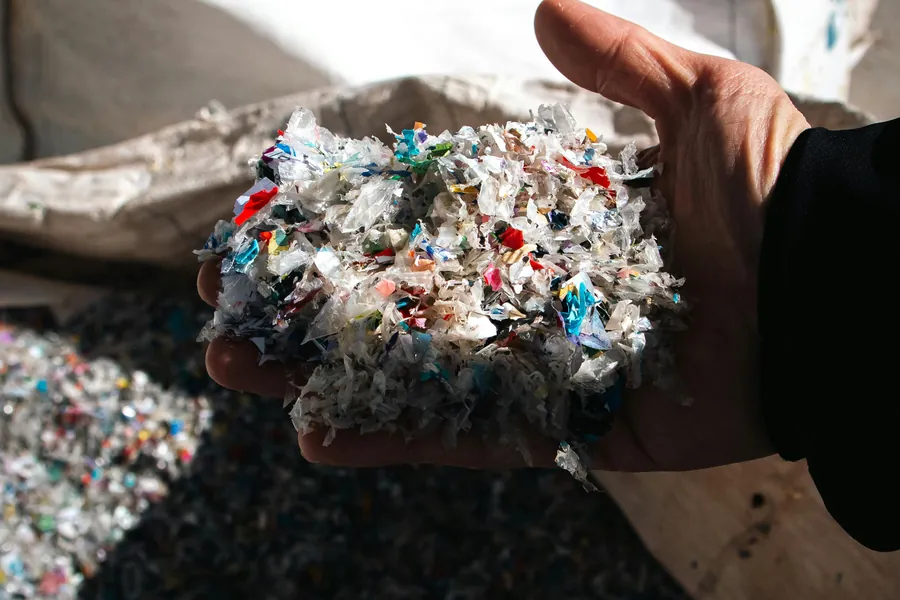 Arnold says that high energy and feedstock costs are eroding the competitiveness of European manufacturers.“Europe is still exporting plastic waste because, today, it is often neither economically nor structurally viable to process it all within Europe. This is not a waste problem alone; it is a competitiveness and investment problem,” explains Arnold.
He suggests there are three structural challenges contributing to Europe’s continued plastic waste exports: lack of sufficient sorting and recycling capacity, weak investment conditions, and economic incentives driving exported waste.
“The risk is clear,” stresses Arnold, “Europe could lose the environmental and economic benefits of circularity while becoming increasingly dependent on external value chains.”
He urges European policy to make recycling economically appealing and increase domestic recycling capacity.
The Plastics Europe report also highlights that dependence on imports is “even greater” for fossil-based plastics, with 25% of converter demand being met from abroad.
Investing in circular practices
The report outlines that recycling rates in Europe have improved to 29.6%. However, Plastics Europe says that the “scale and complexity” of ensuring Europe’s recycling and circular economy succeeds “cannot be underestimated.”
The report states that over 70% of Europe’s collected plastic waste — a feedstock that could “reduce dependence on fossil resources” — was sent to incineration and landfill in 2024.
“It is deeply concerning that, just when Europe should be accelerating the transition to a circular economy, we see a dramatic slowdown,” says Rob Ingram, president at Plastics Europe and CEO of Olefins and Polymers Europe at Ineos.
Ineos, an international chemicals and energy company, is currently building an ethane cracker in Antwerp, Belgium. The petrochemical plant will produce ethylene, a key fossil-based chemical building block for PE and many other polymers, using imported ethane derived largely from US fracking operations.
Arnold furthers: “The transition [to a circular plastics economy] is not failing on ambition; it is constrained by competitiveness. Without a stronger positive investment climate, circularity cannot scale at the speed required to meet climate goals.”
Some industry critics argue that recycling cannot keep up with the scale of plastic production — nor was it ever intended to.
Unlocking the single market
The report argues that, while the European Commission acknowledges the plastics manufacturing sector in the Industrial Accelerator Act, current EU policy frameworks are lacking.
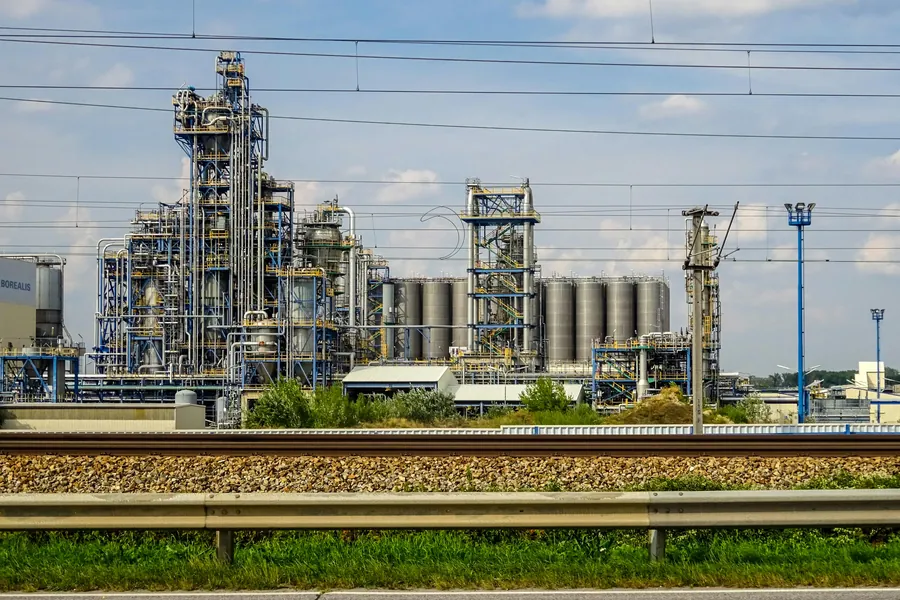 Arnold notes the EU gaps “holding Europe back”: weak market pull, high costs, and unbalanced markets.“EU policies have played an important role in setting ambitious climate and circularity targets. But ambition alone is not enough. Europe also needs the economic conditions to deliver them. Today, those conditions are still not in place for circular plastics production to scale competitively in Europe,’’ notes Arnold.
He says that growth in demand for circular plastics is outperforming production growth, while industry momentum has weakened and investment has moved to other opportunities.
“This is why many in the industry warn that Europe risks achieving circularity through deindustrialization rather than through industrial growth.”
Arnold identifies several gaps in the current EU frameworks that “are holding Europe back.” Most notably, weak market pull measures, high energy and regulatory costs that undermine global competitiveness, and the lack of a balanced international market.
He concludes: “Urgent action is needed at EU and national levels to restore industry’s competitiveness and unlock investment in circular plastics at scale. This must address Europe’s energy and emissions cost crisis, ensure fair trade and a level playing field, and foster strong market demand for circular plastics through ambitious market pull measures.”
“The objective is not to lower ambition, but to ensure that policy supports investment in Europe instead of driving it away.”