



F&B packaging tops global shoreline litter as scientists call for industry action

Key takeaways
- A study of over 5,300 surveys finds F&B plastics in the top three litter items in 93% of countries.
- Caps, lids, bottles, and single-use packaging were also identified as primary contributors to marine pollution.
- The researchers call for upstream reduction, reuse, and stronger global regulations targeting F&B plastics.
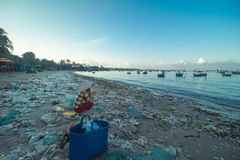
F&B plastic packaging is one of the most common sources of litter on the world’s coastlines, according to a new study from the University of Plymouth, UK, which looked at data from more than 5,300 surveys on shoreline litter — reportedly the first study of its kind.
The study calls for industry and policy action, stating that waste management can no longer keep up with the scale and severity of plastic pollution.
The study, Food and beverage plastics dominate global shorelines: A harmonized rank-based assessment of usage types to guide interventions published in One Earth, estimates that F&B plastic packaging is among the top three most abundant types of litter in 93% of countries. It is followed by plastic bags, recorded as a top-three-ranked packaging usage type in 39% of countries, and cigarettes at 38%.
“Plastic pollution is a global environmental problem that has major detrimental impacts on the environment, economies, and human health,” says professor Richard Thompson, head of the University of Plymouth’s International Marine Litter Research Unit and the study’s senior author.
The study’s authors call for harmonized global regulations and targeted upstream responses to combat plastic litter, in the form of plastic production reduction and reuse systems.
Thompson attests that the study identifies “for the first time the most abundant categories of debris at national, regional, and global scales, indicating not only where to prioritize interventions, but also which specific types of items to focus on.”
Twenty-two types of plastic packaging were found within the top three most prevalent items. Food packaging was found as a top-three ranked item in 53% of nations, followed by caps and lids in 51% of nations, and plastic bottles in 51% of nations.
Other observed types of litter included plastic bags, cigarettes, and fishing and shipping gear.
F&B sector responsibility
The study calls for a targeted policy approach toward each of these packaging materials to reduce plastic pollution, specifically from inside the F&B sector.
“The research provides critical evidence to guide industry and policy on specific points of focus needed to address plastic pollution. For example, our research indicates actions on F&B-related plastics are a key priority across 93% of nations worldwide,” adds Thompson.
The authors of the study argue that urgent measures are needed to limit the amount of plastic produced.
Dr. Max Kelly, a post-doctoral research fellow and the study’s lead author, says: “This paper provides undeniable evidence that single-use F&B packaging is the major contributor to plastic pollution in our oceans globally and that actions to reduce consumption of these items will be a key step toward tackling this global environmental challenge.”
However, in the last two years, multinational corporations like Coca-Cola and Unilever have rolled back on their sustainable packaging promises.
Unilever revised its virgin plastic reduction target from 50% by 2025 down to 33% by 2026, and Coca-Cola dropped its recycled material target from 50% to 35–40% and pushed the target year from 2030 to 2035.
Waste management is not enough
While many countries and regions are banning single-use plastic, the current state of the UN’s Global Plastic Treaty is in disarray. Last year’s INC-5.2 talks ended in “abject failure” after lobbying from petrochemical states, while the chair of the treaty talks stepped down following internal pressure.
Recent efforts to curb plastic pollution include single-use plastic bans in Alaska, US, Kyrgyzstan, Georgia, Ethiopia, and Dubai, United Arab Emirates — among many other countries and regions.
However, the study points out that national policies like these are not always successful in reducing plastic pollution due to fragmented policy and weak implementation.
“This study shows why plastic pollution cannot be solved by waste management alone,” argues professor Susan Jobling, director of the Institute of Environment, Health, and Societies at Brunel University of London, UK, and a co-author on the study.
“Across very different national contexts, the same short-lived F&B plastics repeatedly dominate shoreline pollution.”
She concludes that upstream solutions like reduction, reuse, better packaging design, and stronger policy are the main paths forward to reducing plastic pollution.