



Hydropac replaces conventional cold chain insulation with paper fiber

Key takeaways
- Hydropac has launched EcoCool, a paper-fiber box liner that combines thermal insulation and cushioning to protect temperature-sensitive goods.
- The recyclable liner is designed to replace materials such as polystyrene, loose paper fill, cotton, jute, and wool.
- Hydropac says EcoCool can help reduce packaging disposal costs under UK EPR rules.
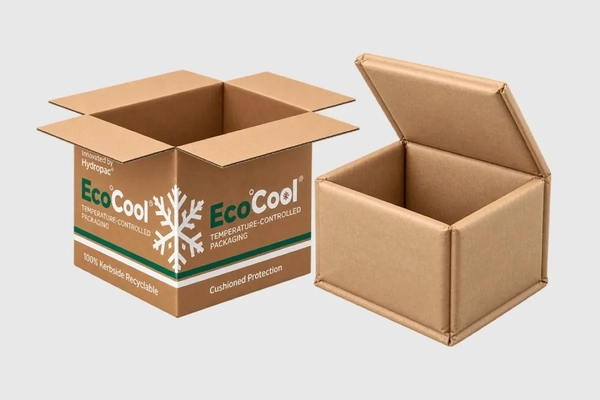
Hydropac, has unveiled EcoCool, an insulated box liner that combines thermal insulation and cushioning protection. The paper-fiber liner aims to replace traditional insulation such as polystyrene, loose paper fill, cotton, jute, and wool.
EcoCool’s structure is developed to absorb shock and keep its shape during transit. The solution is said to be able to maintain optimum levels of thermal insulation, while the liner protects cold chain goods from physical damage.
Colin Rowland, managing director at Hydropac, says: “Sustainable insulation is only sustainable if it works. There are plenty of low-cost paper options that look the part, but the question any packaging team should ask is whether the whole box, liner, and coolant together protect the product on a real route.”
“Cushioning and insulation have usually meant two different materials. EcoCool does both as a paper-fiber liner. Our advice to brands is simple — don’t just swap the liner, look at everything that goes in the box. We’ll help them test it with a coolant and their own product so they can have complete confidence before switching.”
The solution is available for use inside 10, 12, and 14 inch cubed box systems.
Curbside recyclability
Hydropac has tested EcoCool in a real-life complete box scenario, with the liner, a coolant, and product packed together as they would be for an actual delivery.
The Hydropac team also provides assistance to its customer in switching to EcoCool, helping them calculate the optimized combination of liner, coolant, and box for their product, delivery route, and temperature requirement, and will test it all with them before the switch.
“Under the UK’s EPR rules, packaging material affects what brands pay. Under the illustrative 2026–2027 fees published by the UK government, plastic packaging is charged at £415 (US$553) to £545 (US$726) a metric ton, and paper and board £190 (US$253) to £250 (US$333) a metric ton, figures which demonstrate further environmental and performance benefits of EcoCool, now with financial disposal benefits too,” says Hydropac.
“EcoCool is also rated green under the UK Recyclability Assessment Methodology, the system used to assess how recyclable packaging is under EPR.”
Hydropac states that EcoCool is made from clean, unused cardboard offcuts and is engineered for curbside recycling, backed by independent recyclability testing. The product is manufactured using a fully dry production process, with no added glue or water. According to the company, production is entirely powered by renewable electricity.
The new paper-fiber liner matches Hydropac’s existing range of coolants, including HydroPure water ice packs, as part of a complete temperature-controlled packaging system.
Earlier this year, Hydropac launched an ice pack featuring a built-in freeze indicator that changes appearance once the pack has reached a specific freezing temperature.
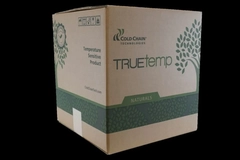
In other cold chain packaging innovations, recently, Cold Chain Technologies redesigned a temperature-controlled shipping solution to replace the dry ice-based approach with a paper-based and recyclable solution. The company also expanded its reusable parcels for temperature-sensitive pharmaceuticals across Europe.
Last year, researchers in Finland and Spain developed a bio-based packaging solution for cold-chain food transport amid consumer demand for sustainable and functional food packaging that offers thermal regulation and antibacterial protection.