


CCT expands reusable pharma packaging across Europe


Key takeaways
- CCT is expanding its EcoFlex reusable parcels across Europe for regional and last-mile pharmaceutical distribution.
- The leasing model aims to lower the cost per use, reduce storage needs, and support reverse logistics.
- CCT says EcoFlex can cut fossil fuel consumption by up to 60.3% compared to standard shipping boxes.
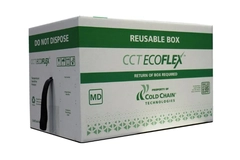
Cold Chain Technologies (CCT) has expanded its reusable parcels for temperature-sensitive pharmaceuticals across Europe. The EcoFlex range is designed for regional and last-mile product distribution.
The expansion aims to give customers access to reusable packaging options for pharmaceuticals through a leasing model that is said to lower the cost per use and reduce storage requirements.
“We’re expanding our EcoFlex offering across Europe, enabling customers to benefit from a more integrated reusable solution and service model to improve performance across their cold chain,” says Kristian Williams, senior director of sales for EMEA at CCT.
According to CCT, EcoFlex can reduce fossil fuel consumption by up to 60.3% compared to a standard shipping box.
Digital reuse tools
Alongside the expansion, CCT customers can make use of the ReNew program, a system that manages reverse logistics and tracks parcels.

The company highlights that alongside a broader range of digital and AI tools, EcoFlex ensures customers “reduce costs, risks, and environmental footprint.”
David Webber, senior global marketing manager at CCT, says that EcoFlex represents a “new level” of reusable packaging for pharmaceutical packaging.
“It offers a robust thermal packaging solution which minimizes the need for payload interference, simplifies packing and unpacking, and enhances our reusable program,” he adds.
“The purpose of the range is to provide customers with solutions which minimize waste and CO2 emissions, optimize packaging and freight processes, and manage thermal, mechanical, and regulatory risk.”
CCT also offers a Track Your Landfill Avoidance tool, which provides insights into packaging supply and waste disposal. Its reusable system aims to help customers reduce inventory, increase performance, and cater to greater operational flexibility.
The rise of reuse
As reusable systems rise amid concerns over packaging waste, digital systems are becoming increasingly important to facilitate functional return and reuse processes. Packaging Insights recently spoke to Glenn Verhaege, co-founder of Borro, a start-up offering a digital deposit system for reusable cups, about the importance of operational digital systems.
“The moment the system has bugs, or does not work at all, trust collapses. We went deep on owning the full payment flow: not as a tech choice, but as a trust choice,” he tells us.
He argues that a seamless system doesn’t happen by accident, but comes when a reuse system takes “friction removal” as a serious design principle, and “not an afterthought.”
In other recent reuse innovations, Meadow, a Swedish packaging technology company, has partnered with Ball Corporation to release the Meadow Kapsul SleeveLock, a wall-mounted dispenser system for personal care products.
Reuse systems are increasing, but are often hindered by scalability, cost measures, and consumer adoption. Ahead of the FIFA World Cup 2026, organizers decided to use disposable cups at matches, despite the potential to reduce single-use items.