



Koehler Group expands recyclable paper packaging testing capabilities

Key takeaways
- Koehler has installed a Rovema vertical form-fill-seal machine to test paper packaging under real-world production conditions.
- The expanded pilot system will assess machinability, shorten development times, and reduce commercialization risks.
- The investment supports the development of recyclable barrier papers compatible with modern packaging equipment.
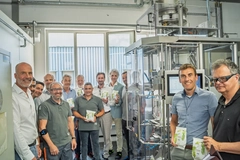 (Image credit: Koehler Group).
Koehler Group’s research team Koehler Innovation and Technology has installed a Rovema BVC 260 vertical form fill and seal machine at its site in Oberkirch, Germany, to test paper-based packaging solutions under what it describes as “accurate real-life conditions” to facilitate product development.
The Rovema BVC 260 machine is an addition to the team’s existing pilot system, which also includes a test coating machine. The company says the expanded system allows it to produce paper-based packaging solutions at a pilot scale and evaluate their processing properties on packaging machines before their large-scale adoption.
“With this system, we’re taking a strategically important step: Our material development and application efforts are becoming more closely interlinked, not to mention that we’re systematically expanding our packaging know-how further,” says Christian Kölmel, corporate director of Technology at Koehler Innovation and Technology. “Ultimately, our goal is to make development times shorter and reduce market launch risks.”
Fritz Brümmer, head of Specialty Paper/Process Development Department at Koehler Innovation and Technology, adds: “We want to take our findings from pilot tests and squeeze every last bit of usefulness out of them, improve quality and safety, and make innovation faster.”
Paper packaging innovation
Koehler Innovation and Technology was founded in 2019 and has a team of over 120 researchers improving and testing the recyclability of paper-based packaging materials.
The Koehler Innovation and Technology team says it implements a combination of basic research, applied research, and disruptive development approaches to create new technology platforms for products with improved environmental credentials and a circular design.
Alexander Rauer, head of Business Development for Flexible Packaging Paper at Koehler Paper, comments: “With this investment, we’re keeping our promise of being there for our customers as development partners along the entire product lifecycle. Our goal is to create solutions that meet the needs of brand-name manufacturers and are matched to modern packaging machines.”
Last month, Packaging Insights spoke to Koehler, as well as Sappi, Paptic, and Metsä Board about the growing significance of investment in functional barrier papers and converting compatibility as the paperization trend continues to rise. The experts indicated that the shift is driven by brands seeking alternatives to plastic in line with the Packaging and Packaging Waste Regulation.
Rauer told us that the most notable trends in flexible packaging right now are to replace materials that are not recyclable with materials that are bio-based and made from renewable resources, that also offer an end-of-life means to be recyclable in paper waste streams.