



Nerea aims to scale chemical recycling amid standardization push

Key takeaways
- Neste, Alterra, and Technip Energies have launched Nerea, a modular chemical recycling plant solution designed to standardize processes.
- The launch comes as Cefic calls for EU-wide end-of-waste criteria and SCS introduces a new certification standard to improve transparency in chemical recycling.
- Environmental NGOs, including GAIA, warn that chemical recycling can be low-yielding and polluting, and may undermine waste reduction efforts.
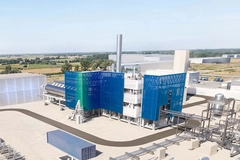 (Image credit: Technip Energies).
Neste, Alterra, and Technip Energies have launched Nerea, a modular chemical recycling plant solution that aims to standardize chemical recycling processes and ramp up industry adoption.
The comprehensive solution coincides with the European Chemical Industry Council’s (Cefic) call for an EU-wide harmonized end-of-waste criteria for chemical recycling and the launch of the Certification Standard for Responsible Chemical Recycling by the Scientific Certification Systems’ (SCS) Standards and Assurance Systems development body — highlighting industry efforts to create a common framework for the technology.
However, as the industry propels chemical recycling forward as a solution to tackle plastic packaging pollution, environmental NGOs, such as the Global Alliance for Incinerator Alternatives (GAIA), have called the process energy-intensive, low-yielding, and polluting.
The pre-designed chemical recycling plant package solution, Nerea, will feature Alterra’s thermochemical liquefaction technology, Neste’s circular feedstock expertise, and Technip Energies’ engineering, project delivery, and modularization capabilities.
“By combining proven technology, industrial expertise, and a standardized delivery model, we're helping reduce the barriers that have traditionally slowed the growth of chemical recycling,” says Fred Schmuck, CEO at Alterra.
Julie Cranga, senior VP of carbon capture and circularity product line at Technip Energies, adds that, with Nerea, companies can have “great predictability" in the development, investment, and operations phase.
Recently, Neste Corporation commissioned a new facility to scale up its chemical recycling capabilities at its existing refinery in Porvoo, Finland, enabling the production of feedstock for the plastics and chemicals industry. Lars Peter Lindfors, senior VP of technology and Innovation at Neste, says that the Porvoo facility will help scale the Nerea solution.
Ensuring consistency
The companies say that standardizing the chemical recycling process will reduce project complexity and provide cost and schedule certainty for companies. Chemical industry association Cefic is also calling for a more standardized EU approach to chemical recycling in order to scale the perceived circular solution.
It urges the European Commission (EC) to establish harmonized EU-wide End-of-Waste criteria for chemical recycling, stating that, in the absence of an EU-wide harmonized criterion for chemical recycling, member states apply “different interpretations of when waste ceases to be waste,” which leads to “fragmentation and uncertainty” for operators, investors, and cross-border trade.
 As chemical recycling grows, so does pressure to certify its environmental and social impacts.Cefic calls for EU-wide rules to clarify when recycled outputs from chemical recycling count as non-waste materials.
As chemical recycling grows, so does pressure to certify its “environmental and social impacts honestly and transparently.”
This week, the EC published a new Implementing Decision under the Single-Use Plastics Directive about how chemically recycled PET is counted, verified, and reported for recycled content targets in beverage bottles.
Earlier this month, the SCS Standards and Assurance Systems launched the Certification Standard for Responsible Chemical Recycling (SCS-004) — reportedly the first independent standard of its kind.
“Brands are under real pressure to deliver on recycled-content commitments, and chemical recycling is part of how that gets done. But we need to have confidence that the recycling process is done in a responsible way,” says Victoria Norman, executive director at SCS Standards and Assurance Systems.
“SCS-004 gives procurement and sustainability teams a rigorous, independently verified framework for knowing that the chemically recycled materials they source come from recycling operations that meet clear standards for environmental and social performance and operational transparency.”
Chemical recycling caution
Chemical recycling has appeared in recent years as a novel way to tackle mounting plastic pollution. SCS Standards and Assurance Systems argues that “mechanical recycling can’t handle the volume, complexity, or contamination levels of the world’s plastic waste problem.”
Similarly, Cefic underscores chemical recycling as playing a “distinct and complementary role to mechanical and solvent-based recycling.”
However, in conversation with Packaging Insights, Weyinmi Okotie, clean air program manager at GAIA Africa, was critical of the method as a waste management solution.
“We need to be careful about such technology. Most of the time, it’s a false solution and always wants us to keep producing waste. It competes with and undermines mechanical recycling and waste reduction efforts.”
Toxic air pollution can affect human reproduction, disrupt endocrine systems, and is mainly carcinogenic, says GAIA.
He adds, “Some even go as far as calling incinerators renewable energy. That’s the biggest lie — burning fossil fuels as renewable energy.”