



Global plastic waste trade amplifies microplastic pollution, research finds


Key takeaways
- Researchers estimate that around 15% of traded plastic waste could become microplastics over a decade through mismanaged pathways.
- Flexible films, multilayer laminates, sachets, and mixed-material packaging present heightened risks because they are difficult to recover and recycle.
- The study urges packaging producers to prioritize monomaterials, traceability, stronger EPR systems, and controls that prevent microplastic emissions during recycling.
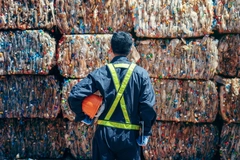
A recent review, published in npj Emerging Contaminants, argues that the mismanagement of global plastic waste, which includes packaging, contributes to microplastic pollution risks and environmental inequality.
The study asserts that up to 60% of global waste trade is mismanaged, with 26% eventually fragmenting into microplastics over the course of a decade. The researchers propose a science-policy framework that links waste trade governance and monitoring to microplastic reduction strategies.
The review resulted from a collaboration between three global research groups, namely the Integrated Land Ecosystem-Atmosphere Processes Study (iLEAPS) at the UK Centre for Ecology & Hydrology, the Basel Action Network in Malaysia, and the International Global Atmospheric Chemistry project.

Packaging Insights speaks to Dr. Valiyaveetil Shamsudheen Semeena, corresponding author and expert at iLEAPS, to learn more about how global waste trade can compound microplastic pollution, and the packaging industry’s role in mitigating waste.
In recent years, microplastics from packaging have been found in humans, agricultural systems, and food. Semeena notes that packaging is one of the most dominant uses of plastic worldwide, but explains that the “precise contribution” of packaging in global plastic waste exports is hard to estimate using current data.
The review suggests that flexible films, multiplayer laminates, sachets, and mixed material packaging may present the “greatest microplastic risk” because they are difficult to sort, recycle, and recover.
However, underpinning this is the waste-management context in which exported materials are handled, Semeena argues. “A key finding [of the review] is that plastic waste exports can amplify microplastic pollution where materials are processed through informal recycling, open dumping, or uncontrolled burning.”
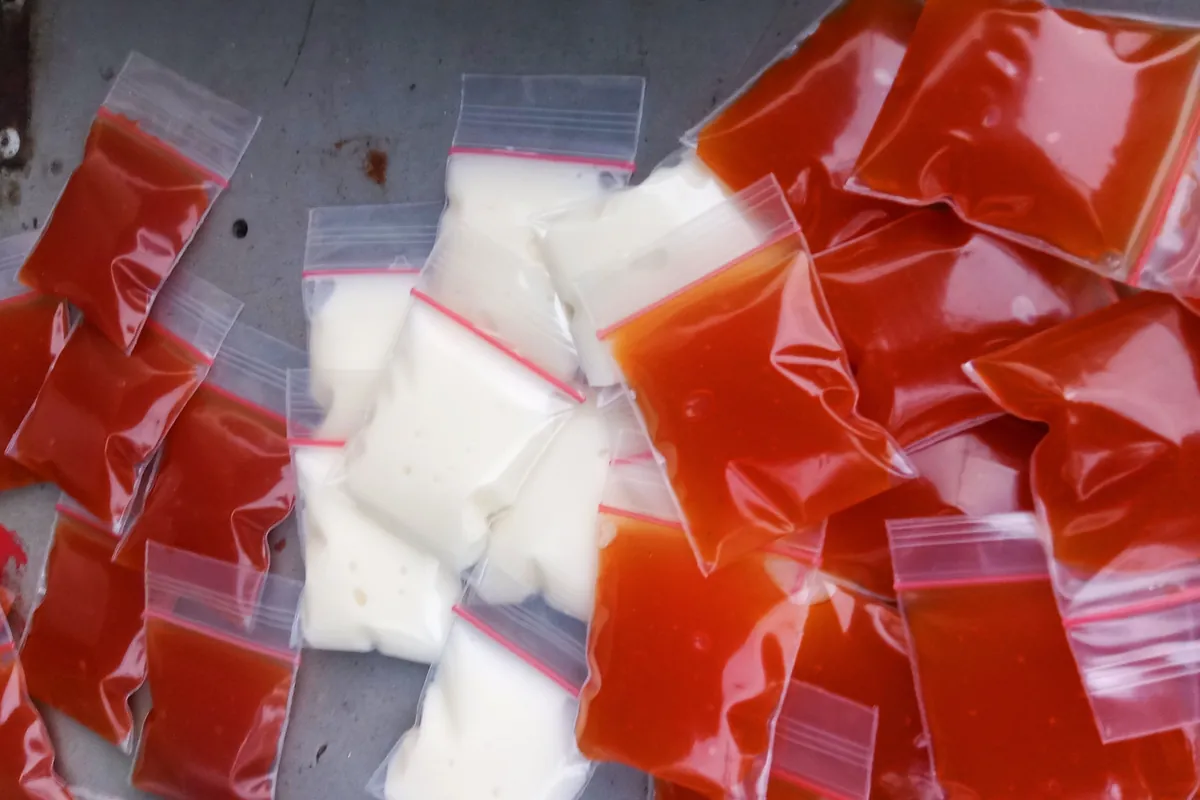 Flexible films, multilayer laminates, sachets, and mixed-material packaging may pose the greatest microplastic risks.As such, the review estimates that around 15% of traded plastic waste over a decade could become microplastics through mismanaged pathways — although Semeena points out that this should be viewed as a “conservative estimate with significant uncertainty.”
Shifting global plastic waste channels
In recent years, the global plastic waste trade has increased and shifted geographically. Since China’s 2018 Operation National Sword policy, which banned waste imports, plastic scrap exports have shifted to Southeast Asia, Turkey, Mexico, and parts of Africa.
The review argues that in these regions, limited waste management infrastructure has led to unregulated waste management strategies that accelerate microplastic pollution.
“Our review highlights a broader policy issue,” says Semeena, arguing that environmental responsibility does not end when waste is exported.“Plastic waste trade can redistribute environmental burdens to countries with weaker waste-management systems, creating environmental inequality and elevated microplastic risks.”
Previously, Packaging Insights spoke to experts about waste management practices in Africa, Southeast Asia, and Latin America, who all pointed out that the impact of an unequal plastic waste trade system is amplified by fragmented infrastructure and limited resources.
Semeena underscores: “Producers should pay greater attention to downstream waste destinations and treatment outcomes, not just collection and recycling rates.”
Recycling without microplastics
The review highlights that a large part of microplastic pollution comes from recycling practices. Semeena makes it clear that the review is not against recycling, but stresses the need to expand recycling to control microplastic emissions.
“Mechanical recycling processes, including shredding, grinding, and washing, can generate plastic particles if facilities lack effective containment and filtration systems,” she says.
“To avoid unintended emissions, the industry should adopt closed-loop water systems, particle-capture technologies, improved dust controls, and more systematic monitoring of microplastic releases.”
Importantly, Semeena notes that the global evidence based on microplastic pollution caused by the global plastic waste trade remains limited.
“Greater standardization of monitoring, reporting, and environmental assessment is therefore essential if recycling expansion is to deliver genuine circular economy benefits without transferring pollution elsewhere,” she asserts.
Semeena concludes: “The more important question is whether waste-management systems prevent leakage and microplastic generation throughout the value chain. Current evidence suggests that international waste trade can contribute to microplastic pollution when exported materials are managed in regions with limited infrastructure, but significant data gaps remain.”
Scaling recycling
Additionally, the research suggests that the global plastic waste trade has “enabled” the expansion of plastic production. They suggest that the system of exporting waste allows high-consuming countries to avoid the full environmental and social costs of overconsumption.
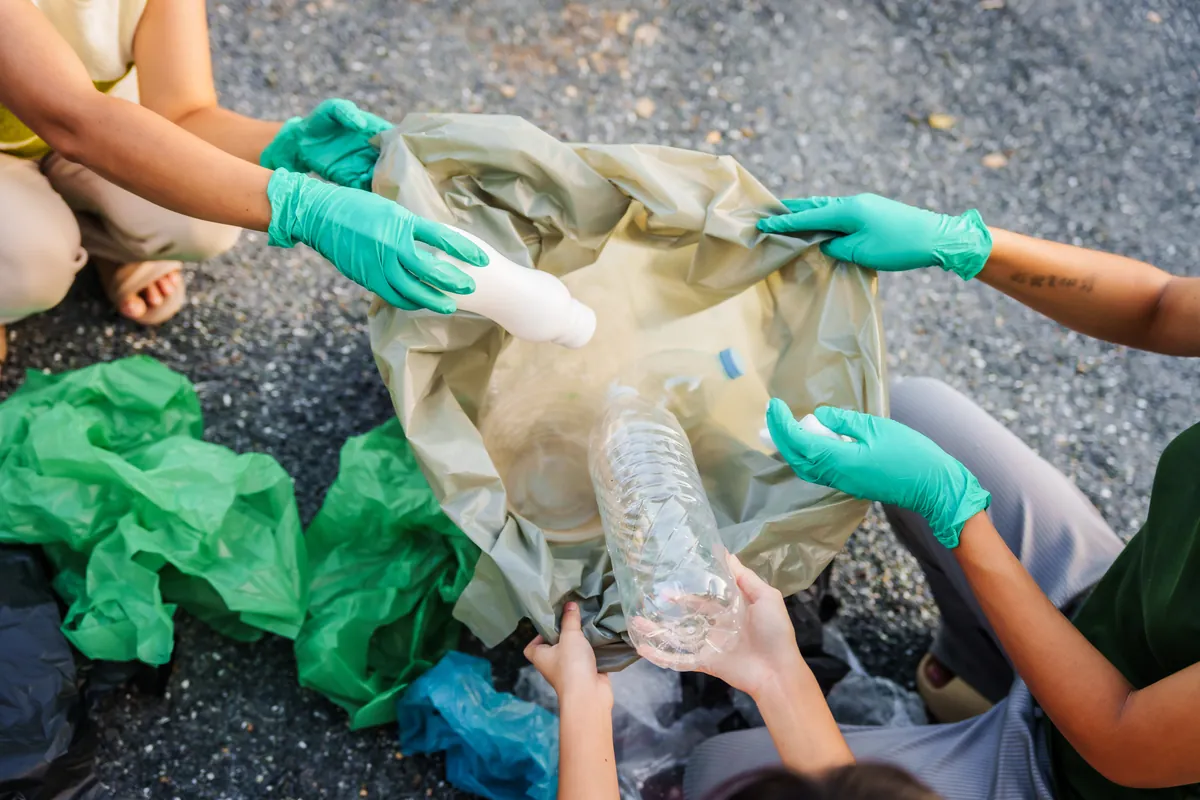 Researchers urge packaging producers to prioritize monomaterials, traceability, and recycling systems that control microplastic emissions.This has, according to the review, created the impression that continued plastic production could be managed through overseas recycling.
As one industry solution to plastic packaging waste, recycling has, in recent years, been increasingly scrutinized by scientists and NGOs, who note its inadequacy to tackle increasing plastic production.
Semeena says the study’s key message for the packaging industry is that “recyclability alone is not enough.”
“Practical priorities include increasing the use of monomaterial packaging, reducing unnecessary multilayer constructions, improving product traceability, and supporting EPR schemes that strengthen collection and recycling infrastructure.”
Reducing global plastic waste exports and production can help lower the risk of microplastic pollution associated with mismanaged waste, argues the review. Scientific evidence shows that humans have exceeded the “planetary boundary” for chemicals and plastic pollution. This means humanity is producing and releasing plastics and other chemicals faster than their risks can be assessed and safely controlled.
“Packaging should be designed to minimize [chemical] leakage risks across the entire waste-management chain, including collection, sorting, recycling, and final disposal,” urges Semeena.
Recently, scientists from the Food Packaging Forum Foundation urged the assessment of food contact chemicals, such as those from packaging, to be evaluated in groups of structural similarity, rather than on an individual basis.
Overall, the paper calls on stakeholders across sectors to address plastic pollution, reinforcing how it is “not solely a waste management challenge, but a systemic issue requiring integrated governance, scientific leadership, and international cooperation.”