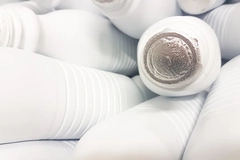

Solvent-free method can separate mixed plastic packaging, scientists find


Key takeaways
- Singaporean researchers have developed a solvent-free process to selectively break down one type of plastic in mixed packaging while leaving others intact.
- According to the researchers, the process recovers PP with up to 90% of its original tensile strength, and PET-derived materials can be repurposed for specialty applications.
- The method operates at room pressure without harmful chemicals and is designed for industrial-scale recycling.
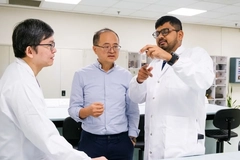 (Image credit: Nanyang Technological University).
Researchers from Singapore have developed an approach to recycle mixed plastic packaging without using “harmful” chemical solvents.
Mixed plastic packaging is made up of several different plastics bonded tightly together, making it challenging to recycle.
To address the problem, the research team from Nanyang Technological University (NTU), Singapore’s School of Materials Science and Engineering, and Nanyang Environment and Water Research Institute (NEWRI) have unveiled a process called depolymerization-induced polymer separation (DIPS).
The new method, published in Industrial & Engineering Chemistry Research, is engineered to selectively break down one type of plastic in mixed plastic packaging while leaving the other plastics intact, allowing each material to be recovered and reused.

Hu Xiao, professor and the program director for Sustainable Chemistry and Materials at NEWRI, says: “We’re seeing more mixed plastic packaging used in everyday food products, but recycling it safely and efficiently is still a major challenge. Our team set out to tackle this by developing a practical, scalable way to separate these materials without using harmful solvents.”
High-quality results
When applying the DIPS method to mixed plastic packaging, PET reacts with glycerol, a widely available reagent, and is selectively broken down into smaller molecules.
According to researchers, the PET-derived material has a different physical and chemical nature from the original plastic, causing it to naturally separate from PP. The entire process runs at room pressure and without any solvents, providing a safer and more cost-effective approach to conventional chemical recycling methods.
Scientists highlight that the recovered PP retained mechanical properties close to those of virgin plastic in laboratory tests, achieving up to 90% of its original tensile strength under optimal conditions.
Dr. Liang Yen Nan, co-author of the study and senior research fellow at NEWRI, says: “One of the biggest hurdles in plastic recycling today is the lack of a viable way to deal with mixed plastics. This project was driven by that challenge, and our goal is to help move the industry closer to a solution that works in the real world.”
Potential for scaling up
The recovered PET cannot be directly reused in packaging, but it contains chemical groups that could be applied in specialty materials to replace epoxy used in wind turbine blades or for conversion into a monomer.
The researchers indicate that the DIPS approach can be extended to other mixed plastic combinations and scaled up using industrial extrusion equipment.
Kathirvel Periasamy, first author of the study, shares: “Our process attempts to bridge the gap between laboratory research and industrial application. By simplifying separation and eliminating solvents, we aim to make plastic recycling more economically viable and environmentally sustainable.”
As a next step, the research team is set to join forces with industry partners to validate the approach under scaled-up conditions.