




Alupro urges UK to retain recycled aluminum as export risks divide industry


Key takeaways
- Alupro warns that the UK must retain more recycled aluminum domestically to support manufacturing, decarbonization, and long-term material resilience.
- The organization identifies packaging EPR, a UK-wide DRS, and stronger sorting systems as key to stabilizing aluminum supply.
- Recycling experts caution that export restrictions must be proportionate, warning they could depress scrap prices and raise costs for recyclers.

Securing the supply of aluminum is critical to the material’s future as a continued driver of the UK’s circular economy, according to the Aluminium Packaging Recycling Organisation (Alupro).
In a new manifesto, Alupro, an industry-funded trade body, outlines five themes that can increase the supply of used aluminum packaging in the UK and help the material remain competitive in the “face of headwinds and uncertainty.”
“The UK is facing a significant challenge when it comes to retaining recycled aluminum within the domestic supply chain,” Tom Giddings, executive director of Alupro, tells Packaging Insights.
“More must be done to build a competitive circular aluminum economy that supports manufacturing growth, national resilience, decarbonization ambitions, and defense capability.”

He says that large volumes of scrap aluminum leave the UK while domestic sorting and traceability remain “underdeveloped.” However, last week, recycling experts at the Bureau of International Recycling’s (BIR) convention in Gothenburg, Sweden, warned that aluminum export restrictions could depress recycled metal prices.
Alupro’s report identifies effective EPR legislation, a UK-wide deposit return scheme (DRS), and a strong recycling system as key to ensuring the aluminum industry remains competitive.
“Strategically important key sectors include packaging, automotive, defense, construction, transport, and energy infrastructure,” says Giddings. “With demand projected to rise, safeguarding supply is essential to delivering upon the future opportunity.”
Supply chain uncertainty
As aluminum continues to be exported, Giddings stresses the importance of government policy and cross-industry collaboration with recyclers.
 The Strait of Hormuz disruption has delayed Gulf aluminum and can shipments.“Without intervention, this risks an increasing dependence on volatile international supply chains and weakening circular economy manufacturing capability.”
However, at BIR’s convention, recycling groups cautioned that retaining more aluminum scrap domestically is not a simple policy fix. Paul Voss, director general of European Aluminium stated that export restrictions on aluminum scrap need to be “proportionate” and “make sense.”
“I’ve read many times in the press that we were asking for a ban on the export of aluminium scrap from Europe. It’s fundamentally untrue. I think it would be excessive and heavy-handed and unhelpful. What we’re asking for is a targeted measure,” Voss adds.
Giddings attests that “we need to keep supporting packaging recyclers to properly incentivize recycling.”
He adds that cross-industry support can “ease the transition” from the current landscape in which beverage cans are the dominant aluminum packaging type, to a “post-DRS world” where material is smaller and differently composed.
The Strait of Hormuz disruption has delayed Gulf aluminum and can shipments, including into India, where Coca-Cola revived its Diet Coke glass bottle amid aluminum supply concerns.
This week, aluminum market prices dropped after the US and Iran reached a framework agreement. According to multiple sources, on Monday the benchmark three-month aluminum price on the London Metal Exchange fell by around 3.3% to US$3,417 per metric ton, its lowest since March 30.
Circularity actions
Giddings highlights the UK packaging EPR and DRS as key circularity measures that can help increase aluminum recycling rates and stabilize the supply of the material.
“By providing a separate, dedicated collection mechanism for empty beverage containers, the UK’s DRS has the potential to increase national recycling rates and edge the UK ever-closer toward a 100% recycling rate for drink cans,” he adds.
“However, the initiative will only achieve its full potential if a conscious effort is made to ensure that the cans it captures are recycled back into cans that will supply the UK market wherever possible, rather than being exported further afield.”
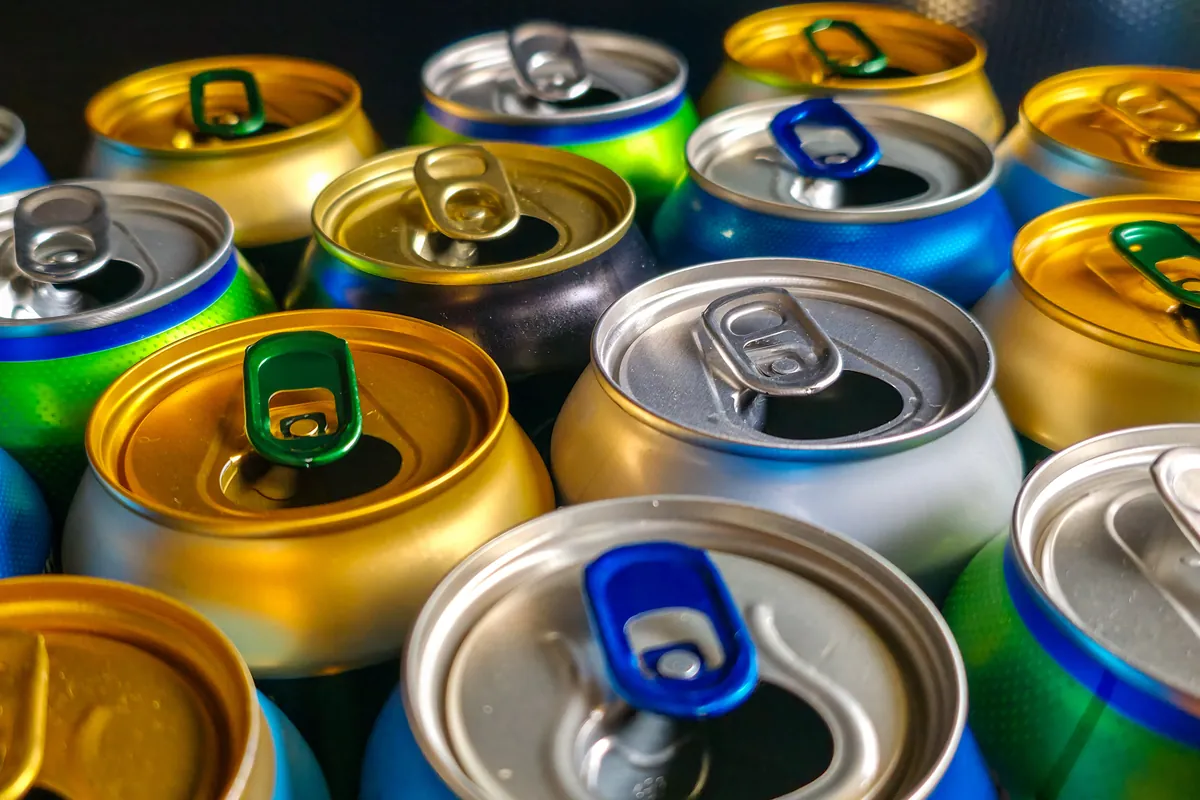 Aluminum scrap exports raise circularity concerns from industry groups. Earlier this year, the UK introduced the Exchange for Change deposit management organization and announced a 2027 DRS launch. However, producer compliance scheme Ecosurety described the proposed launch timeline as “ambitious”, considering the systems and infrastructure that need to be put in place for a nationwide DRS.
Meanwhile, Giddings says the packaging EPR (pEPR) can reassign the cost of collecting, sorting, and recycling.
“To ensure that the initiative delivers wider value and accelerates progress toward increased recycling rates, we believe that pEPR funding should be channeled into supporting proven behavioral change campaigns.”
“The key priority is ensuring that packaging reforms actually deliver upon their ambitious targets of delivering significantly higher collection and recycling rates — in practice, not just in principle.”
“Long-term material resilience”
In partnership with Make UK and the Aluminium Federation, Giddings tells us that Alupro has suggested a joint government-industry working group to help push for regulatory change around scrap classification and traceability, to ensure “long-term strategic material resilience.”
“Our collective goal is to accelerate progress toward an industry that is ambitious, attractive, collaborative, and circular,” underscores Giddings.
However, other experts at BIR’s conference, including Jessica Fung, head of Consulting at Project Blue, a market intelligence consultancy, warned that restrictions would be “detrimental” to the recycling sector.
She argued that holding costs for yards would increase and domestic scrap prices would fall.
Giddings adds: “While aluminum packaging is, in many ways, leading the charge on utilizing recycled material in new products, we must also increase the resilience of that supply chain, which necessitates keeping recycled aluminum within the UK packaging supply chain.”