

US water vending machines may expose consumers to dangerous lead levels, study finds


Key takeaways
- A study comparing water vending machines to tap water found that some refill systems may contain lead levels exceeding public health recommendations.
- Water vending machines are lightly regulated compared to tap and bottled water, with fewer testing and reporting requirements, according to researchers.
- Experts recommend replacing metal plumbing in water vending machines with plastic or stainless steel and implementing regular water quality testing to protect consumers.

A study has found that the water dispensed at US vending machines, also referred to as kiosks, may contain pollutants, including lead, posing unchecked public health risks.
The study, published in the American Chemical Society’s Environmental Science & Technology journal, presents a comprehensive comparison of the chemical and microbiological profiles of water sourced from twenty kiosks, representing four manufacturers across six US states, against local tap water samples.
The findings suggest that instead of providing enhanced purity, the water refill systems can exhibit lead concentrations exceeding public health recommendations, highlighting regulatory oversight.
Samantha Zuhlke, an assistant professor in the School of Planning and Public Affairs at the University of Iowa and a corresponding author of the study, tells Packaging Insights: “Consumers need to know that bottled water and water vending machines, or water refill kiosks, are regulated differently so they have different testing and safety requirements.”
“In the US, tap water is regulated by the Environmental Protection Agency (EPA) under the Safe Drinking Water Act, and bottled water is regulated by the Food and Drug Administration (FDA) under the Federal Food, Drug, and Cosmetic Act. Water vending machines, like the ones we studied, are regulated differently depending on where you live in the US.”
“The water vending machines we studied are the least stringently regulated of these three drinking water sources.”
Regulation gaps
Previous research showed the prevalence of tap water avoidance in the US, particularly among low‐income and minority groups. In response, refill options have increased as an alternative, marketed as a safer source of drinking water.
However, the study has revealed “widespread instances” of lead release into water and ice purchased at kiosks by several refill system manufacturers.
According to the scientists, for some kiosks, lead release persists over time and can lead to levels that exceed recommendations for vulnerable groups, such as pregnant women and infants.
“In general, kiosks have fewer testing and reporting requirements than tap or bottled water. Many drinking water kiosks source their water from the local tap water and apply additional treatment processes, like reverse osmosis (RO), to the tap water,” says Zuhlke.
“However, because kiosks are lightly regulated, there are fewer checks in place to ensure that the water they dispense is treated as advertised and meets the health and safety standards that tap water and bottled water are required to meet.”
Safety concerns
Zuhlke highlights that low levels of lead exposure can cause behavior and learning problems for children, resulting in lower IQ and hyperactivity, slowed growth, hearing problems, and anemia.
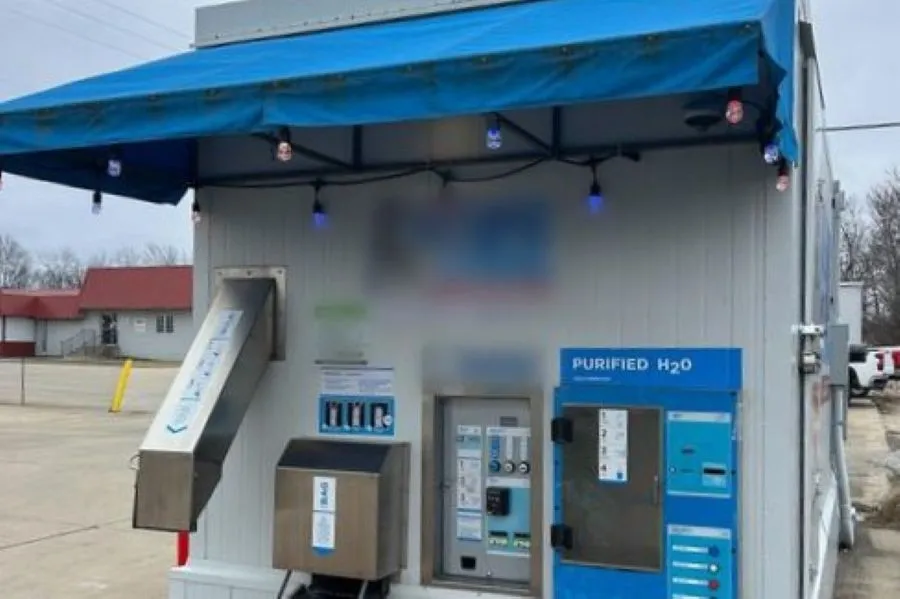 The study shows that kiosks’ marketing claims do not always reflect the product they deliver (Image credit: Samantha Zuhlke).Last year, the FDA set maximum levels for lead in baby food such as fruits, vegetables, yogurts, and cereals in an effort to reduce infant exposure to harmful contaminants.
“The lead concentration levels we observed in our study would be of serious concern if kiosk water, purchased under the assumption from marketing claims that it is safer than tap water, is used for the preparation of infant formula,” she adds.
Zuhlke shares that formula-fed infants can receive 40−60% of their total lead exposure from drinking water, according to the EPA.
“Although direct evidence linking specific water lead levels to IQ loss in formula-fed infants is limited in the peer-reviewed literature, studies in children aged one to five years demonstrate that each one part per billion increase in water lead is associated with a 35% increase in blood lead levels (BLLs) over extended exposure periods,” she continues.
“Importantly, BLLs even below 10 μg/dL are associated with decreased IQ, with the steepest dose−response occurring at the lowest exposure levels.”
For adult consumers, Zuhlke notes that prolonged lead exposure can result in cardiovascular effects, increased blood pressure, decreased kidney function, and reproductive problems.
Improving water quality
The researchers pointed out that the lead levels in the water were linked to the corrosion of brass plumbing in the kiosks.
“The lead in some US water vending machines originates from ‘lead-free’ plumbing components within these machines. The small amount of allowable lead present in these parts can leach into the drinking water when these parts are placed after RO treatment,” explains Zuhlke.
“To address this problem, industry should replace or work with individual owners to replace metal plumbing components in kiosks, especially those downstream of RO treatment, with plastic or stainless steel materials, which are more compatible with RO-treated water.”
“Further, industry should regularly test the water quality of water dispensed by kiosks and share this information with consumers so they can make informed decisions about their drinking water. It’s important to note that the problems we identified might not be present in every drinking water kiosk. But, without improved oversight, it is impossible to know,” she concludes.