



Vietnam advances QR code traceability to boost farm product safety


Key takeaways
- Vietnam is developing a nationwide digital traceability system for agricultural products through packaging, using smart label technologies such as QR codes.
- Proposed amendments to Vietnam’s Food Safety Law would require all food products to carry verified digital traceability information through QR codes, barcodes, or DataMatrix codes.
- Research in Vietnam found that QR code-based traceability can increase consumer trust and lower perceived food safety risks.
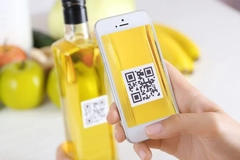
Vietnam is modernizing its agricultural supply chain by developing a nationwide digital traceability system for farm products, including through packaging and labeling. The system aims to achieve stronger application of digital technologies such as geographic information systems, QR codes, electronic logs, blockchain, and IoT.
The Ministry of Agriculture and Environment has introduced a pilot program of the traceability system focusing initially on durian, with plans to expand across various agricultural commodities.
Speaking at a recent meeting, Deputy Minister of Agriculture and Environment Vo Van Hung said technologies such as QR codes can “enhance transparency, reduce commercial fraud, and improve the effectiveness of state management.”
“At the same time, these technologies are also important tools for building trust with importing markets and international consumers.”

Advancing transparency
Aligning with this digital push, the Ministry of Health published a draft amendment last year to the Food Safety Law. The proposed regulation mandates that all food products circulating on the market carry verified traceability data via QR codes, barcodes, DataMatrix, or other digital tools.
Label innovations are transforming consumer engagement and supply chain traceability, with QR codes emerging as a key tool for brand communication.
A recent study also indicated that QR code-based food traceability is reshaping consumer behavior and enhancing food safety governance in Vietnam.
Researchers surveyed 400 urban consumers across Hanoi and Ho Chi Minh City to analyze the impact of scanning QR codes on consumer trust, risk perception, and purchasing behavior. The results reveal that QR code usage can “significantly increase consumer trust and reduce perceived food safety risk.”