



Cap and closure innovations target lower carbon footprints, accessibility and safety

Key takeaways
- Packaging companies are redesigning caps and closures with lightweight materials, fiber-based solutions, and improved accessibility features.
- SIG, Blue Ocean Closures, and SnapSlide are targeting sustainability gains across pharmaceutical, F&B, and household packaging applications.
- Next-generation closure systems aim to reduce material use while maintaining safety, dosing accuracy, recyclability, and consumer convenience.
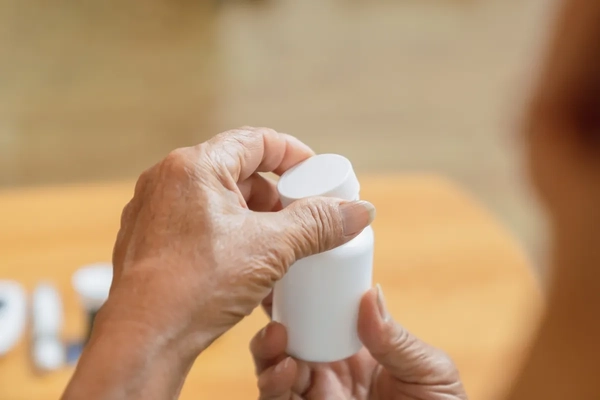
Packaging companies are innovating on cap and closure solutions to lower carbon footprints through eco-friendly materials while improving consumer accessibility and product safety.
Packaging Insights speaks to SIG, Blue Ocean Closures, and SnapSlide on how their proprietary closure architectures are displacing conventional twist-off plastics across pharmaceutical, F&B, and household markets.
Chason Sordoni, chief operating officer of SnapSlide, tells us: “Practicality has always guided our development, driving us to prioritize designs that deliver optimal performance while using as little resin as possible.”
“When pioneering an entirely new mechanism, there is no blueprint to follow. The core engineering challenge lies in balancing two conflicting requirements, namely, child-resistant protocols demand physical forces and motions directly opposite to what dexterity-challenged consumers need.”
“To find that ideal ‘Goldilocks Zone,’ our team engineered, analyzed, and rigorously tested dozens of prototypes. We measured operational forces and tactile feedback against child-resistance benchmarks and senior-friendly focus groups. Once we mapped the exact thresholds where safety intersects accessibility, we optimized the final architecture to align seamlessly with high-volume manufacturing parameters.”
Balancing accessibility and child safety
SnapSlide highlights that its Rx solution is engineered for easy opening, requiring minimal force to open and close. The no-torque closure enables smooth, one-handed accessibility.
“The solution features a sliding closure that eliminates the need to push down and twist, making it simpler for seniors, individuals with arthritis, and patients with limited hand strength or dexterity — all while still maintaining official levels of child resistance,” says Sordoni.
“The single-handed cap aims to maximize accessibility without compromising safety — designed from day one to scale efficiently and outperform legacy incumbents on price and performance.”
Sordoni shares that the cap stays firmly affixed to the vials, adding an additional dimension of safety. “The closure system also provides definitive security feedback, by producing a 57-decibel ‘snap’ upon closing — an auditory cue informing consumers when SnapSlide has been closed properly.”
The innovation aligns with the growing focus among packaging industry leaders on inclusive design. Amcor, Tilt Beauty, and Etia previously spoke to Packaging Insights about the ways in which improved accessibility can translate into better user experiences and stronger brand trust.
Resource-saving design
Recently, SIG and Zydus partnered to develop packaging of liquid cough and cold medication in single-serve spouted pouches featuring the tethered spout solution SIG StrawCap 30 Linked, which includes a straw.
SIG StrawCap 30 Linked enables direct, mess-free consumption without the need for a separate spoon, syringe, or dosing device.
Dhandutt Shah, managing director India for SIG’s bag-in-box and spouted pouch business, says: “Pharmaceutical packaging requires the complete packaging and filling system to work together with a very high degree of precision. The central challenge was not simply to create a smaller closure, but to combine patient safety, dosing accuracy, hygiene, ease of consumption, and material efficiency into a single integrated solution.”
“SIG StrawCap 30 Linked features a tethered design that keeps the cap attached to the pouch, while the integrated straw provides a simple, convenient drinking experience.”
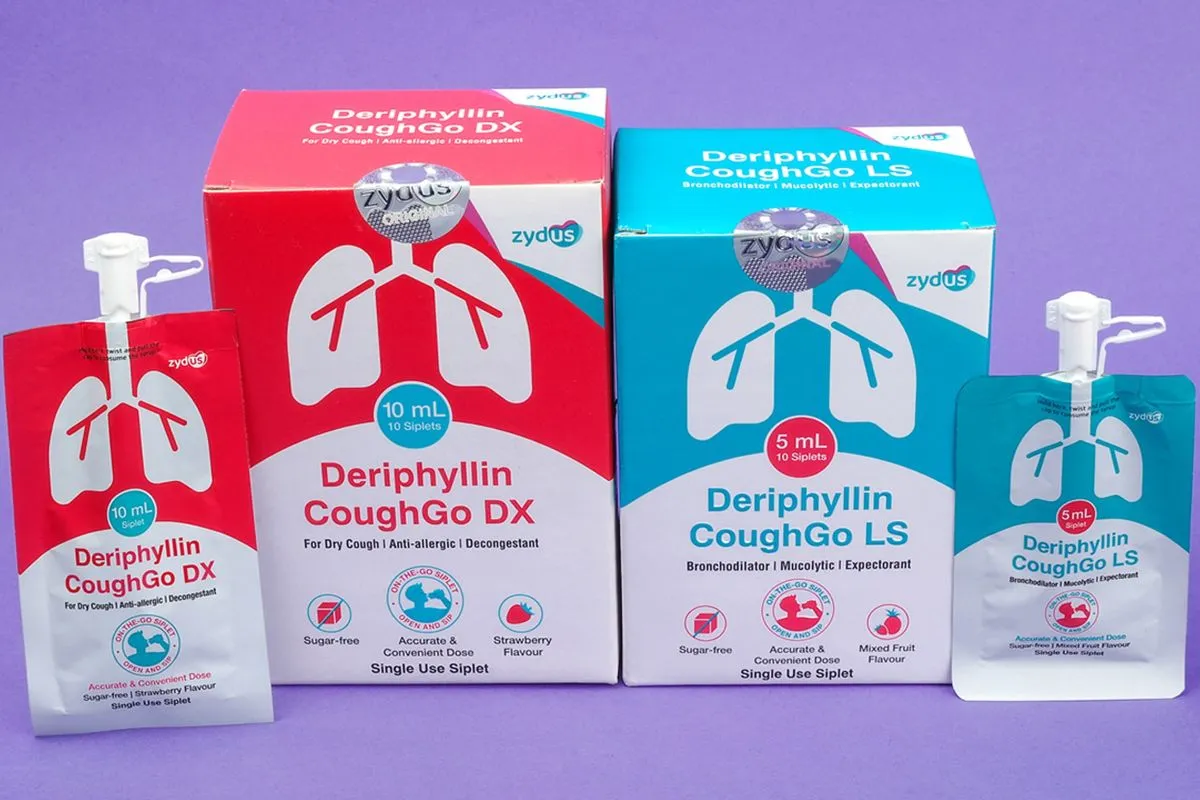 SIG StrawCap 30 Linked is designed to be suitable for industrial-scale production (Image credit: SIG).“For the Deriphyllin CoughGo application, the medicine is supplied in pre-portioned 5 mL and 10 mL pouches. The defined single-serve pack volume, together with the high-precision filling capability of the SIG Motion Servo horizontal form-fill-seal system, enables dosing accuracy,” he adds.
Fiber-based Innovation
By embedding fiber-based openings into renewable cartons, Blue Ocean Closures aims to deliver low-cost and low-carbon solutions across food and home care applications.
“Our Paper-Plug can match fossil-based plastic closures in performance and cost at sufficient volumes, whether compared with standard or customized solutions. Since the closure is made from paperboard and can use the same coating as the surrounding packaging, if any, Paper-Plug adds only a marginal amount of CO2 equivalent to the package,” Lars Sandberg, CEO at Blue Ocean Closures, tells us.
“It may also reduce material use, carbon emissions, and cost when replacing conventional opening systems for cartons. In addition, the integrated plug can increase the overall structural strength and integrity of the package.”
Sandberg shares that Blue Ocean Closures invested “significant effort” in developing the design and thread geometry of the plug closure.
“The solution is enabled by, and builds on, our proprietary production technology for threaded fiber-based closures, which is already in commercial use. One particularly encouraging result has been the strength and integrity of the die-cut hole in the carton. It enables a high closing torque, reliable reclosure, and hundreds of opening and closing cycles while maintaining the package’s functionality.”
Integrated production
Shah from SIG underscores that for closures used in pharmaceutical packaging, sustainability must progress without compromising product safety, dosing accuracy, hygiene, or regulatory compliance.
“We see the future developing through a complete-system approach optimizing the closure, film, filling equipment, and manufacturing process together rather than treating them as separate components,” he says.
SIG StrawCap 30 Linked uses less plastic than a conventional pouch closure with a cap, according to the company. Its tethered design reduces the risk of small plastic components becoming litter.
“The next area of progress is greater compatibility between lightweight closures and packaging structures designed for recycling. SIG StrawCap 30 Linked is intended to be combined in the future with SIG Terra Rec Shield film, which is designed for recycling,” Shah adds..webp) The linear sliding motion requires less material in the closure and the bottle than traditional threaded, twist-off alternatives (Image credit: SnapSlide).
The linear sliding motion requires less material in the closure and the bottle than traditional threaded, twist-off alternatives (Image credit: SnapSlide).
“However, material reduction or recyclability cannot be evaluated in isolation from pharmaceutical performance. Future development will continue to require rigorous assessment of product compatibility, barrier protection, sealing integrity, filling accuracy, patient safety, and shelf life performance. The objective is to reduce material use and improve circularity while maintaining the uncompromising functional requirements of pharmaceutical packaging.”
Lightweight closure design
In response to the demand for eco-friendly packaging, SnapSlide highlights that Rx weighs 27% less than the current industry average, according to the company. Its form factor, paired with the advantage of the closure remaining attached to the bottle, introduces weight-saving benefits.
“In our prescription vial application, this streamlined geometry delivers a 30% reduction in material and requires 43% less storage space, driving significant resource savings across the supply chain. Achieving this balance demanded rigorous, multi-round testing. The result is a lightweight yet durable product that meets industry performance standards while eliminating excess mass and maximizing storage efficiency,” says Sordoni.
He notes that SnapSlide is actively expanding beyond its initial prescription vial offering into other sectors, with immediate developments underway in over-the-counter nicotine products, among others.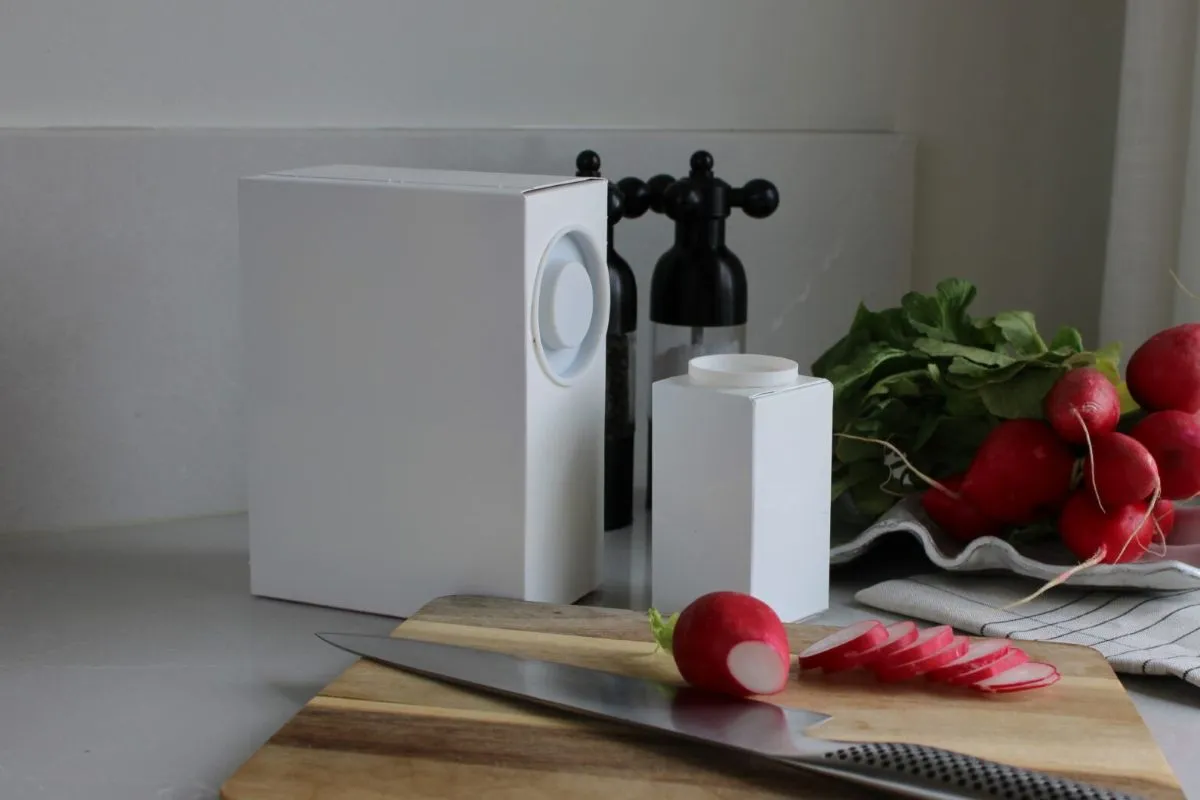 Paper-Plug is developed to unlock new recyclable formats for carton board packages (Image credit: Blue Ocean Closures).
“Whether adapting our sliding closure to rigid bottles, specialized tins, or bulk dispensers, SnapSlide easily scales to replace traditional twist-off closures across any format that demands accessibility and sustainability.”
Unleashing paperboard potential
Blue Ocean Closures works with paperboard suppliers and converters that are seeking to expand their offering to customers and bring new functionality to paperboard packaging. “Together, we can adapt Paper-Plug to different board structures, converting processes, package geometries, barrier requirements, and end-use applications,” says Sandberg.
“We also work directly with leading brands to create packaging with greater convenience, integrity, functionality, and perceived value. Some of the most straightforward opportunities are in home-care products such as powders and tablets, bakery products and breakfast cereals, food additives, frozen spices, and similar dry-product categories.
Looking into the future, Blue Ocean Closures identifies opportunities for distinctive opening and unboxing solutions in premium and luxury packaging, including confectionery, as well as new industrial applications such as product positioning and transport securing.
“Our aim is to develop solutions that use the structural properties of paperboard in new ways while remaining scalable, cost-efficient, and compatible with established recycling systems,” he concludes.