

ACG tackles pharma recyclability gap with PP blister

Key takeaways
- ACG has launched RecycloPod PP Ultra, a high-barrier pharmaceutical blister designed to improve recyclability.
- The PP/EVOH/PP structure targets moisture and oxygen protection while supporting thermoforming and sealing on pharma packaging lines.
- Launched at CPHI 2026, the solution responds to growing industry pressure around PPWR, simpler material structures, and recyclable pharmaceutical packaging.
 (Image credit: ACG).
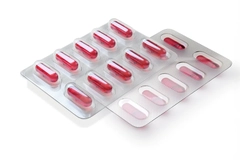
ACG has launched the RecycloPod PP Ultra blister packaging with high moisture and oxygen barrier protection and a design for recyclability.
ACG developed RecycloPod PP Ultra alongside its customers to use a PP/ethylene vinyl alcohol/PP forming structure. The company says this results in a water vapor transmission rate of less than 0.60 g per square meter per day and an oxygen transmission rate of less than 0.20 cubic cm per square meter per day.
When the structure is used with a PP lidding film, it creates a predominantly PP blister structure, which ACG says supports reliable thermoforming and sealing on pharmaceutical packaging lines.
Dr. Akbar Ali, head of Development and Technology at ACG Packaging Materials, comments: “Pharmaceutical companies should not have to choose between protecting their product and progressing their packaging sustainability objectives.”
“With RecycloPod PP Ultra, our objective was to provide both high moisture and oxygen barrier protection while meeting the practical requirements of pharmaceutical manufacturing and supporting design for recyclability.”
SR Shivshankar, CEO of ACG Packaging Materials, adds: “RecycloPod PP Ultra forms part of our wider sustainability strategy. We are participating in the Science Based Targets initiative as part of its net-zero ambitions and using digitalization to support more efficient and sustainable manufacturing, with facilities recognized by the World Economic Forum’s Global Lighthouse Network.”
Market gap
ACG highlights that while conventional PP blister solutions can meet moisture barrier requirements, oxygen protection can remain a challenge.
According to the developer, RecycloPod PP Ultra can address this challenge with oxygen protection, as well as the challenge of recyclability generally associated with pharmaceutical blisters.
The company says that RecycloPod PP Ultra provides a more complete barrier solution for sensitive pharmaceutical formulations.
ACG launched the PP blister at the CPHI 2026 trade show in Milan, Italy (Oct 6–8), as part of its Pod family of packaging solutions for the pharmaceutical sector. The Pod range takes inspiration from the way a pea pod protects what is inside. ACG notes that it monitors more than 125 sustainability parameters through a framework outlined in its Sustainability Report.
The company adds that it designed the range with evolving packaging, sustainability, and regulatory requirements in mind. In particular, the RecycloPod PP Ultra responds to the EU Packaging and Packaging Waste Regulation (PPWR) and the increased focus on packaging recyclability, ACG adds.
Although certain pharmaceutical packaging remains exempt from PPWR recyclability requirements, the European Federation of Pharmaceutical Industries and Associations, ACG, and Plastic Ingenuity urged industry stakeholders to start preparing, in an interview with Packaging Insights.
ACG is among the pharmaceutical packaging manufacturers that have already begun redesigning materials, structures, and formats in response to the EU’s PPWR requirements.
Industry experts highlighted simpler material structures, optimized pack dimensions, and improved recyclability as key design trends.
Recently, Bayer adopted a monomaterial PP blister for its Talcid antacid medicine.