



Tetra Pak highlights pulp traceability as EUDR deadline approaches

Key takeaways
- EUDR requirements are approaching for relevant wood-derived products, placing greater focus on deforestation risks and supply chain transparency.
- Tetra Pak highlights how pulp traceability can help packaging companies identify sourcing risks, strengthen supply chains, and improve procurement decisions.
- Supplier collaboration, reliable sourcing data, and risk assessments are said to be essential to building more transparency and resilience.

The EU Deforestation Regulation (EUDR) sets out to safeguard forests around the world by verifying that the products placed on or exported from the EU market, including some fiber-based packaging formats, do not lead to deforestation.
The EUDR will start applying for large and medium-sized operators on Dec 30 and for micro and small enterprises on June 30, 2027.
We speak to Tetra Pak to find out why deforestation is a growing issue for paper-based packaging producers. We discuss how traceability can ensure EUDR compliance alongside more reliable and environmentally sustainable supply chains for pulp.
“The EUDR helps establish a common baseline for businesses operating in the market, supporting a greater consistency in sourcing expectations,” Ylva Lundgren, sustainability performance lead at Tetra Pak, tells Packaging Insights.

“Compliance is an important starting point, but it is not the end goal. Traceability extends well beyond regulatory requirements, helping businesses improve sourcing decisions, strengthen risk management, and build greater resilience to shocks and disruption.”
Lundgren highlights how stakeholders across the fiber-based packaging supply chain can go beyond compliance by embedding traceability as a central part of their pulp sourcing agenda. She points to the significance of data in informing decisions and managing long-term risks.
“Effective supply chain risk management starts with knowing where raw materials come from. Data can help businesses trace materials back to their original production sites or sourcing areas, providing understanding of where risks may arise.”
The paper packaging industry needs to take advantage of that visibility by using it to inform action, says Lundgren. “While data alone cannot prevent disruption, it can help businesses identify vulnerabilities and make more informed sourcing decisions to protect continuity of supply.”
“This shifts traceability from a means of understanding supply chain risks to a tool for managing them and mitigating risk.”
Deforestation and material supply
 Ylva Lundgren, sustainability performance lead at Tetra Pak.Lundgren highlights that supply chain resilience starts at the source, long before materials enter packaging production. The security of paper-based packaging supply is closely tied to the health of the forests that supply paperboard, she points out.
“Deforestation, forest conversion, drought, and biodiversity loss can all affect forest ecosystems and, over time, the security of raw-material supply. But these risks are not distributed evenly. They vary by geography and source, making a more detailed understanding of supply chain origins essential.”
Lundgren argues that traceability becomes particularly valuable during climate-related disruptions. According to her, during such times, granular information about material origins can help businesses understand where their exposure is greatest.
Then, businesses can take a more targeted approach to risk management, directing additional assessments, verification, and supplier engagement where needed, she outlines.
“At Tetra Pak, responsible sourcing and traceability have long been part of our approach. Through our Approach to Nature framework, we are improving visibility of raw material origins and using sourcing information to identify nature-related impacts and risks.”
“This [framework] includes a 2027 target to achieve traceability of origin or sourcing areas for paper, plant-based polymers, and aluminum foil from high-priority locations.”
Similarly, Kai Aldinger, global lead for forest and paper packaging at SAP, spoke to Packaging Insights at the Aicomp Summit 2026, highlighting the software company’s solutions for paper packaging production, including how to track recycled content use.
Climate change challenges
The long-term availability of raw materials is closely tied to the health of the natural environments from which they come, Lundgren emphasizes.
“Deforestation and land conversion can reduce the areas available for responsible sourcing, while climate change increases exposure to drought, extreme weather, and other pressures that affect forest growth and productivity.”
“Biodiversity loss compounds these challenges by weakening ecosystems’ ability to withstand and recover from disruption.”
Over time, these pressures can shape the availability of raw materials and where they can be reliably sourced, according to the expert.
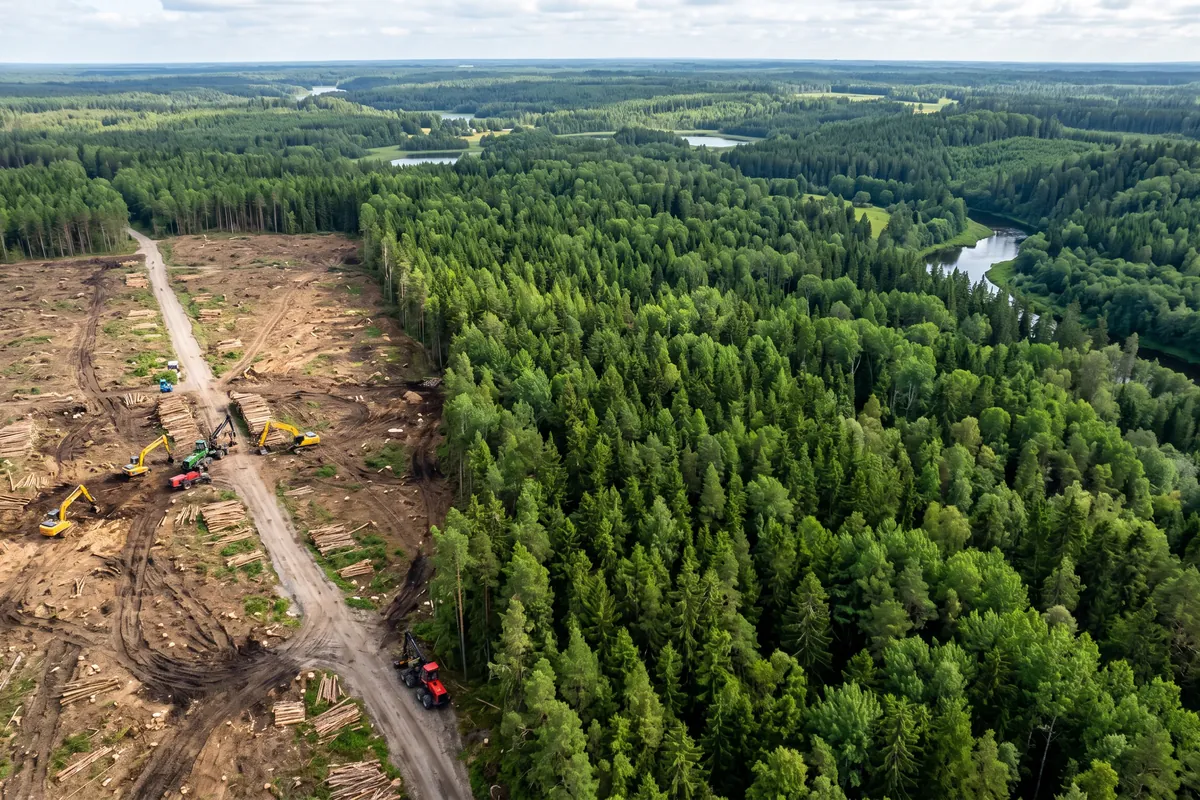 Raw material availability is closely tied to the health of nature, Lundgren emphasizes.“They have direct implications for long-term sourcing strategies and businesses' ability to secure reliable raw-material supplies, reinforcing the importance of nature protection to supply chain resilience.”
Recently, Canopy Planet, a nonprofit based in Vancouver, Canada, told us that paper packagers can respond to climate-related pulp sourcing challenges by switching from forest fiber to pulp from agricultural residues, such as wheat straw and sugarcane bagasse.
Visibility in sourcing
Lundgren expands on the challenges packaging companies may face when implementing effective traceability systems across complex supply chains.
“No single business has complete visibility across a complex supply chain,” she asserts. “Suppliers, producers, and partners each hold different parts of the picture, from where raw materials originate to how they move through the value chain. Bringing that information together requires collaboration.”
She adds that collecting information is far from the only hurdle, as establishing the trust and common understanding needed to share information effectively can be even more challenging.
“This [trust] takes time, particularly where companies are seeking more detailed sourcing information from multiple tiers of suppliers. It also requires robust processes to verify what is shared and translate it into meaningful insight.”
“Tetra Pak works with suppliers through the ‘Join Us in Protecting the Planet’ initiative to gather detailed information about where and how materials are sourced.”
Discussing the factors packaging companies should prioritize now to build more resilient and transparent supply chains in the future, Lundgren notes that resilience isn’t about achieving perfect visibility overnight.
“Supply chains are complex and improving traceability is an ongoing process. The priority is to keep improving the quality of information available, while using what businesses already know to identify where action can have the greatest impact.”
“Crucially, greater transparency needs to lead to better decisions. Companies should focus not only on gathering more detailed sourcing information, but on embedding those insights into procurement, risk management, and long-term planning.”
She argues that taking this holistic approach is what turns traceability from a reporting exercise into a foundation for more resilient supply chains.