

Alliance to End Plastic Waste: Advanced mechanical recycling needs EPR & investment to scale circularity

Key takeaways
- Advanced mechanical recycling can turn household flexible plastic waste into high-quality recyclates.
- Scaling the technology requires stronger EPR schemes, mandatory recycled content targets, affordable financing, and long-term brand offtake agreements.
- Centralized sorting facilities and upgrades to existing recycling plants could reduce contamination.
 Jean-Loup Masson (Image credit: Alliance to End Plastic Waste).
Advanced mechanical recycling can process post-consumer household flexible packaging into high-quality recyclates. However, scaling requires systemic enablers, such as robust EPR schemes, mandated recycled content targets, and concessionary capital, to improve investment viability and drive demand, according to Jean-Loup Masson, chief technical advisor for circular solutions at Alliance to End Plastic Waste.
Alliance to End Plastic Waste, a global non-profit organization, has published a report titled The Quest for Quality: Scaling Advanced Mechanical Recycling to Meet Recycled Content Targets for Flexibles, outlining a blueprint to enhance flexible packaging circularity.
Packaging Insights speaks to Masson about how the industry can scale high-quality recycled flexibles and meet packaging content targets.
What are the key findings from the latest report?
Masson: The report is based on a comprehensive technical and economic assessment of a 50,000-metric-ton-per-year advanced mechanical recycling plant for flexible plastics, developed through the ValueFlex initiative — a collaboration between the Alliance to End Plastic Waste, CEFLEX, Roland Berger, and HTP Engineering.
The report demonstrates that advanced mechanical recycling can produce high-quality recyclates suitable for demanding applications such as shrink films, pouches, and labels with 30% or more recycled content. That is no small feat given the sheer diversity of materials discarded by households across Europe, involving rigid and flexible packaging, multiple polymer types, colors, and prints.
It also highlights that achieving high-quality outputs at scale will require systemic enablers. At the same time, recyclers need to move away from traditional low-cost, high-volume “commodity” processing of plastic waste toward a “market-pull” approach focused on producing premium recyclates that meet converter and brand requirements for demanding film applications.
Today, converters and brands sometimes struggle to find recyclates of adequate quality on the market — for example, pellets with the required level of cleanliness — regardless of cost. The shift toward premium recyclates requires greater investment in technologies and granular sorting, as well as deeper technical competencies, including advanced competencies in polymer science.
What role can collaboration between brands, recyclers, policymakers, and waste management players play in accelerating flexible packaging circularity?
Masson: The priority now is in creating the policy, financing, infrastructure, and market conditions needed to deploy these solutions at a commercial scale. Achieving that will require coordinated action across the entire value chain.
 Flexible plastic packaging is one of the most challenging packaging formats to recycle at scale, according to the Alliance to End Plastic Waste.No single actor can solve the flexible packaging recycling challenge alone. Collaboration and transparency across the plastics value chain are essential, with every stakeholder playing a distinct but complementary role in creating a circular economy for flexible plastics.
Policymakers and producer responsibility organizations must establish the system conditions needed to make high-quality recycling of flexible plastic waste economically viable — robust EPR schemes to fund collection and sorting, enforceable recycled content targets to drive demand, and improved access to affordable capital.
Brands and converters must commit to long-term offtake agreements to help de-risk new recycling investments, as well as champion the integration of next-generation sorting and decontamination technologies.
In parallel, recyclers and waste management operators must focus on brownfield upgrades and embrace a quality-first mindset, moving from high-volume, low-cost commodity processing toward high-quality, premium outputs driven by market demand.
Investors also have a critical role to play in directing capital toward advanced mechanical recycling facilities and large-scale plastic recovery facilities (PRF) that strengthen the economics of the entire downstream recycling system.
Why are brownfield expansion and upstream sorting important for scaling advanced mechanical recycling, and where do you see the biggest gaps in current infrastructure?
Masson: Upstream sorting is critical for scaling advanced mechanical recycling. In our economic analysis of a 50,000-metric-ton-per-year advanced mechanical recycling plant for flexible plastics, we found that sorting infrastructure accounts for around 25% of total capital expenditure.
Processing raw bales at individual recycling facilities also results in approximately 50% yield losses due to contamination, increasing transportation, warehousing, purchasing, and disposal costs. Shifting sorting upstream to large-scale, centralized PRFs would allow material to be processed more efficiently and at a greater scale, producing cleaner and more consistent feedstocks for downstream recyclers.
This would reduce upfront capital requirements, minimize yield losses, and allow recyclers to focus their investments on advanced decontamination and producing high-quality recycled materials for specific end uses.
While major investments in PRFs are already emerging across Europe, including Sweden, Austria, Germany, and Norway, significant infrastructure gaps remain, and further investment will be needed to support the scale-up of advanced mechanical recycling.
Although the ValueFlex initiative was initially conceived as a 50,000-metric-ton-per-year greenfield project, brownfield expansion — involving upgrading and expanding existing facilities — is an alternative and cost-effective pathway to success.
How should brands prepare themselves to meet the EU Packaging and Packaging Waste Regulation (PPWR)?
Masson: The clock is ticking for brands and packaging producers. With the EU’s PPWR mandating 35% post-consumer recycled content in non-food packaging by 2030, there are two key steps brands can take now to prepare.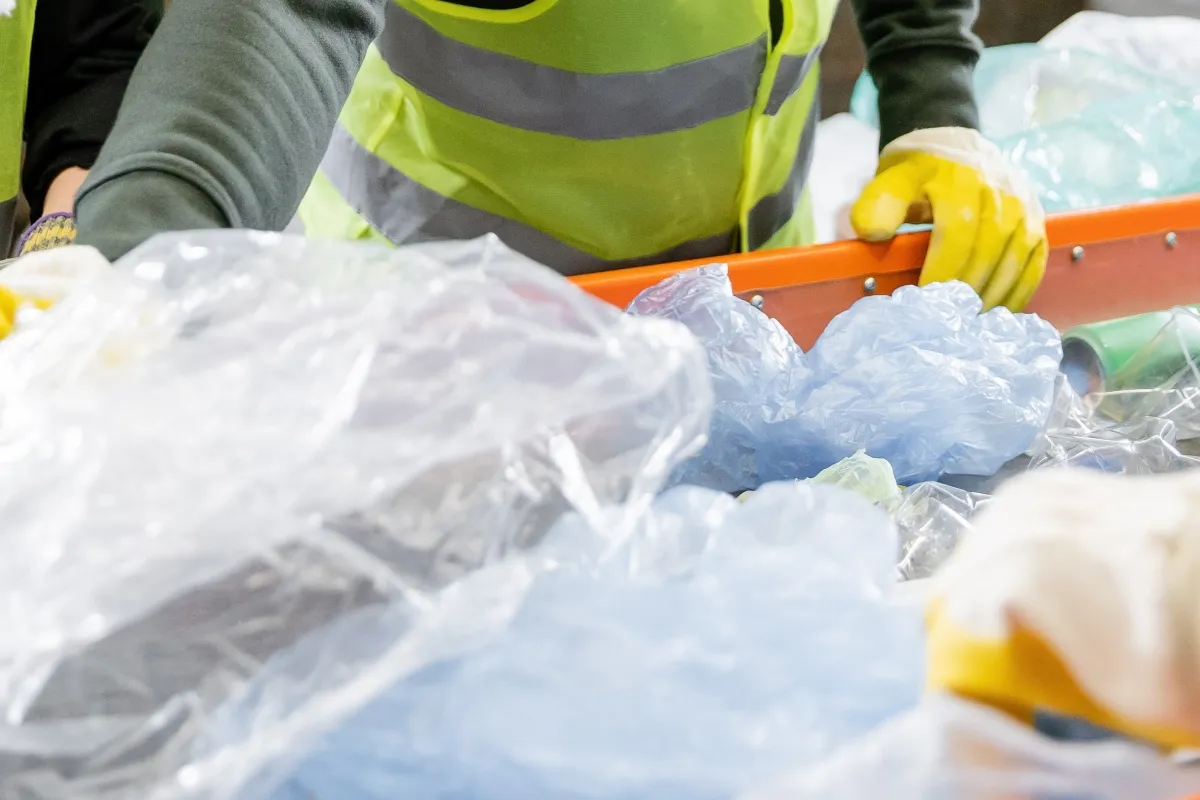 Recyclers should focus on producing premium recyclates that meet converter and brand requirements for demanding film applications.
Firstly, building closer, longer-term relationships with advanced recyclers is vital. Brands should view them as long-term, strategic partners — on par with traditional petrochemical suppliers. Committing to long-term offtake agreements can provide the certainty recyclers need to invest in new capacity and advanced technologies, provided that material quality is consistent and meets required standards.
Secondly, brands and industry stakeholders must continue to participate in and champion next-generation solutions to achieve the required quality levels, including food-contact status, for recycled flexible packaging.
This includes investment in scaling advanced sorting capabilities, such as the ability to distinguish surface-printed from sub-surface-printed films, or to separate food from non-food packaging, as well as effective decontamination methods capable of removing oils, adhesives, inks, and other impurities.
As recycled content targets become more important globally, how could advanced mechanical recycling for flexible packaging influence international supply chains?
Masson: The ValueFlex initiative proves that the technology already exists to produce high-quality recycled material from post-consumer household flexible plastics. Advanced mechanical recycling can deliver recycled film suitable for demanding applications with recycled content levels of 30% or more, demonstrating its potential to help brands meet increasingly ambitious recycled content requirements.
Importantly, we have determined that scaling advanced mechanical recycling does not require starting from scratch. Upgrading existing mechanical recycling infrastructure provides a practical pathway to significantly increase the supply of high-quality recycled material.
The opportunity now is to create the conditions for these solutions to be deployed at scale. This will require supportive policies and market incentives that encourage investment, strengthen recycling infrastructure, and create sustained demand for recycled materials.