

August in review: EU’s PPWR starts applying, scientists pitch UN Plastics Treaty framework

Key takeaways
- The EU’s PPWR entered its application phase, with updated guidance clarifying compliance, enforcement, traceability, and existing stock requirements.
- US-China researchers proposed a reporting framework for the UN Global Plastics Treaty, while negotiators prepared for further discussions in Bangkok.
- Chemical recycling, fiber packaging claims, Digital Product Passports, and cybersecurity in digital printing emerged as key industry focus areas.
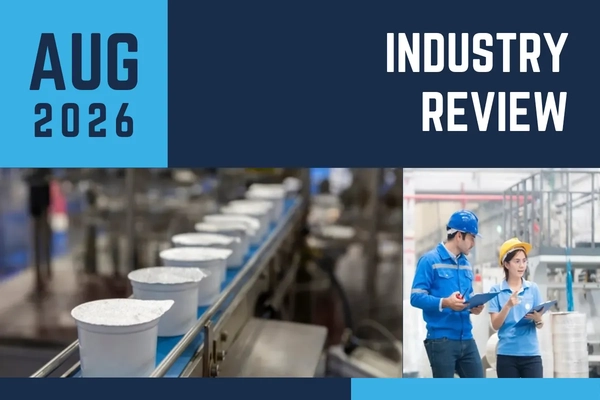
Last month, the EU Packaging and Packaging Waste Regulation (PPWR) came into effect, generally applying as of August 12, and Packaging Insights looked back at our regulatory development coverage.
Meanwhile, researchers in the US and China identified a gap in the draft UN Global Plastics Treaty text and proposed a reporting framework for improved accountability. We spoke to Julio Cordano, Chair of the UN Intergovernmental Negotiating Committee on Plastic Pollution, about accountability concerns and the next phase of informal meetings in Bangkok, Thailand, in September.
We also delved deeper into the latest debate surrounding chemical recycling and its significance for the packaging industry, as well as sustainability claims in the fiber space and the new data demands introduced by the EU’s Digital Product Passport (DPP) Registry.
Look back at the biggest stories of the month:
EU’s PPWR comes into effect as packaging industry innovates and navigates compliance
The widely discussed and hotly debated EU PPWR came into effect, generally applying as of August 12, marking a major milestone for the packaging industry in Europe and beyond. As companies and organizations across the value chain react to the new requirements, we took a look back at innovations, as well as pushbacks from industry and NGOs since the text of the regulation was published.
EU updates PPWR FAQ to clarify penalties, traceability & existing stock
 (2) 1.webp) Industrial Physics underscores pack testing as rPET and lightweighting reshape performanceA week before the PPWR came into force, the European Commission (EC) updated its PPWR Frequently Asked Questions (FAQ) document, clarifying that companies placing non-compliant packaging on the market will be given a warning before a fine and its approach to existing stock. In total, there are 33 “new” and “updated” sections in the PPWR FAQ document. These sections provide clarifications on definitions, including regarding envelopes as packaging, as well as on the differences between sales, grouped, and transport packaging.
Industrial Physics underscores pack testing as rPET and lightweighting reshape performanceA week before the PPWR came into force, the European Commission (EC) updated its PPWR Frequently Asked Questions (FAQ) document, clarifying that companies placing non-compliant packaging on the market will be given a warning before a fine and its approach to existing stock. In total, there are 33 “new” and “updated” sections in the PPWR FAQ document. These sections provide clarifications on definitions, including regarding envelopes as packaging, as well as on the differences between sales, grouped, and transport packaging.
US-China researchers propose UN Global Plastics Treaty reporting framework
Researchers identified a gap in the draft UN Global Plastics Treaty text, which does not require countries to report how much plastic they produce, which chemicals are used in its manufacture, or how much plastic pollution enters the environment. The study was conducted at the University of California, Santa Barbara (UCSB), and the University of California, Berkeley, US, along with Tsinghua University, China. We spoke to Douglas McCauley, director at UCSB’s Benioff Ocean Science Lab and co-author of the paper, about the framework for standardized global reporting and accountability.
UN Global Plastics Treaty: INC Chair Cordano addresses accountability concerns ahead of Bangkok meetings
Julio Cordano, Chair of the UN Intergovernmental Negotiating Committee (INC) on Plastic Pollution, responded to NGO concerns regarding the omission of plastic production and accountability in his Global Plastics Treaty “Aid to Negotiations.” In this interview with Packaging Insights, he highlighted that negotiations are between the representatives of the countries members of the UN, as the next phase of informal meetings in Bangkok, Thailand, approaches this September 27–30.
Chemical recycling scales amid regulatory support and environmental concerns
Chemical recycling is entering a new stage of investment and regulatory support as developments in the US and EU aim to provide greater regulatory certainty — but questions over economic viability and environmental performance continue. We spoke to Dow and GAIA to further uncover the latest developments in chemical recycling, as well as highlight some of the criticisms the process has attracted.
Microplastics concerns drive calls for safer plastic packaging design
 (1) 2.webp) Masterpress spotlights non-laminated, single-layer pouches for PPWR complianceA white paper released by experts at the University of Technology Sydney Business School, Australia, underscored the business risks of failing to respond to scientific evidence and consumer awareness of the potential harms associated with microplastics, including those originating from plastic packaging. The experts argued that businesses should make lower-microplastic choices accessible, credible, and affordable rather than relying on consumers to drive change.
Masterpress spotlights non-laminated, single-layer pouches for PPWR complianceA white paper released by experts at the University of Technology Sydney Business School, Australia, underscored the business risks of failing to respond to scientific evidence and consumer awareness of the potential harms associated with microplastics, including those originating from plastic packaging. The experts argued that businesses should make lower-microplastic choices accessible, credible, and affordable rather than relying on consumers to drive change.
Indorama Ventures brings FtoP recycling to Thailand with Suntory PepsiCo as first customer
Indovida, Indorama Ventures’ packaging business segment, partnered with Suntory Holdings, Iwatani Corporation, and Suntory PepsiCo Beverage (Thailand). Suntory Beverage & Food and PepsiCo introduced a commercial-scale circular PET packaging in Thailand. Indorama Ventures told us that it has partnered with Iwatani Corporation to bring Flake-to-Preform (FtoP) Direct Recycling Technology to the Southeast Asian nation and to enhance its downstream packaging platform.
Fiber packaging sustainability claims face recyclability reality check
While the paperization trend continues to inspire product launches, there is growing attention to certain fiber-based claims that overlook the complexity and nuance of the material. We spoke to experts from Aicomp, Boxway Packaging Group, Flint Group, and MM Board & Paper to explore how overstated sustainability claims and gaps in consumer understanding of fiber have led to an oversimplified picture of the material’s environmental performance.
EU’s Digital Product Passport Registry raises new data demands
The EC introduced its DPP Registry and testing environment to establish DPPs as “a practical reality for businesses placing products on the EU market,” following the adoption of the Implementing Regulation establishing the practical arrangements for the Registry. We spoke to the plastics research center Aimplas, the European Organisation for Packaging and the Environment, and Henkel to find out how DPP can support data-sharing and transparency for packaging companies.
Digital printing systems raise new cybersecurity concerns
As the printing industry continues to digitalize, it is becoming more important for packaging producers and operators to ensure they have secure software that complies with privacy and data regulations. We interviewed Bobst, Mondi, Flint Group Digital Xeikon, and Xaar about the systems they have in place to mitigate the risk of unsafe digital printing scenarios.