




China’s flexible packaging market balances recyclability, barrier & production demands

Key takeaways
- China’s flexible packaging sector is balancing demand for recyclable and monomaterial structures.
- Szkayu Packaging says sustainable packaging designs must be based on product requirements, shelf life needs, sealing performance, and distribution conditions.
- Future innovation will focus on higher-barrier recyclable films, improved coatings, and digital prepress.
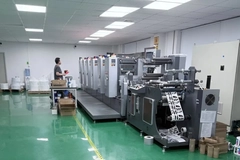 (All image credits: Szkayu Packaging).
In China’s flexible packaging market, brands and converters are balancing material reduction and monomaterial demands with strict barrier performance, cost constraints, and high-speed production realities.
Zhengsen Luo, director at Szkayu Packaging, a China-based manufacturer of custom flexible packaging, printed rollstock, and labels, explains that bridging the gap between recyclability and commercial viability requires connecting material science and digital prepress early in product development.
“Chinese buyers are increasingly looking beyond a simple ‘recyclable’ claim. They want structures that match the actual product risk, including moisture, oxygen, aroma, and light protection, puncture resistance, seal integrity, and compatibility with filling equipment,” Luo tells Packaging Insights.
“At the same time, brands are asking for material reduction, simpler structures, and more recyclable options. Compared with some overseas markets, Chinese projects often move faster and remain highly cost-sensitive, but export customers usually require more documentation concerning material composition, recyclability, and regulatory compliance.”
Last year, a report highlighted that the EU’s Packaging and Packaging Waste Regulation could create an opportunity for Chinese producers to align with EU standards, accelerating investment in R&D for recycled and bio-based packaging materials.
Maintaining efficiency and product protection
Luo shares that the practical challenge now is to meet sustainability targets without creating shorter shelf life, unstable sealing, or additional product waste.
.webp) Szkayu Packaging supplies printed rollstock, stand-up pouches, labels, and foil-based packaging structures.“To strike a balance, the product and its required shelf life should establish the minimum performance baseline. A pouch structure should then be designed around the contents, distribution conditions, sealing process, and filling machine rather than being selected only from a sustainability label.”
Szkayu Packaging supplies printed rollstock, stand-up pouches, labels, and foil-based packaging structures.“To strike a balance, the product and its required shelf life should establish the minimum performance baseline. A pouch structure should then be designed around the contents, distribution conditions, sealing process, and filling machine rather than being selected only from a sustainability label.”
“Monomaterial PE or PP solutions can be suitable for many applications, but they must be validated against the required oxygen, moisture, aroma, and mechanical performance. Higher-barrier coatings, metalized films, or other structures may still be necessary for sensitive products,” he adds.
Luo also highlights that downgauging should also be verified through sealing-window, drop, puncture, transport, and machine trials. “Reducing a small amount of packaging material is not an improvement if it increases product loss, rejects, or production downtime.”
Looking ahead, Luo expects continued development in higher-barrier recyclable films, improved coatings and sealing layers, as well as structures designed to deliver performance with fewer incompatible materials.
“Digital prepress and production data will become increasingly important. Better color management, automated artwork checks, camera inspection, and tighter control of repeat length, winding direction, and sealing specifications can reduce waste before production begins.”
“The next stage will involve connecting packaging design, material selection, printing data, and filling-line requirements earlier in the development process. This will help converters identify potential failures before full production and make sustainable structures more commercially reliable,” he concludes.