


Researchers test clay for packaging to control produce ripening


Key takeaways
- Danish researchers have found that chemically modified montmorillonite clay can absorb and retain ethylene inside fresh produce packaging.
- The innovation could help slow ripening and quality loss in fruits and vegetables such as apples, bananas, avocados, tomatoes, leafy greens, and cucumbers.
- The technology is currently at TRL 3, with further testing needed under real-world humidity, temperature, and supply-chain conditions.
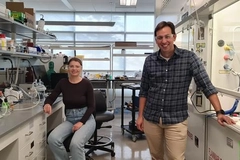 Karina Kovalchuk and co-author Leander Michels (Image credit: University of Copenhagen).
A powdered clay solution placed in fresh produce packaging can absorb ethylene to control ripening, researchers at the University of Copenhagen, Denmark, have found. According to the researchers, their study provides a “design manual” for the development of food packaging that limits ethylene release.
The study, published in Applied Surface Science Advances, explains that when fruits and vegetables are transported and stored in closed packaging, the concentration of ethylene in the produce accelerates, leading to quicker ripening and rotting.
“Our study focused on understanding how chemical modification affects ethylene adsorption and retention in the clay montmorillonite,” study lead Heloisa Bordallo, associate professor at the University of Copenhagen, and co-author Karina Kovalchuk, tell Packaging Insights. “The modified materials also retained ethylene more effectively.”
“However, the actual shelf life benefit will depend on factors such as the type of produce, package volume, clay loading, temperature, humidity, ventilation, and initial ethylene production rate. Shelf life studies under realistic packaging and supply-chain conditions are therefore the next essential step.”
Bordallo and Kovalchuk expect the greatest benefit of the clay-based solution to be in packaging ethylene-producing or ethylene-sensitive produce. Examples include apples, bananas, avocados, tomatoes, pears, kiwis, and mangos, as well as ethylene-sensitive vegetables such as broccoli, leafy greens, and cucumbers.
“Because ethylene plays a central role in ripening and the natural aging process of harvested food, reducing its concentration in packaging environments can slow quality loss and extend the marketable life of a wide range of fresh produce.”
Current readiness level
Bordallo and Kovalchuk approximate that the current technology readiness level (TRL) of the innovation is at TRL 3.
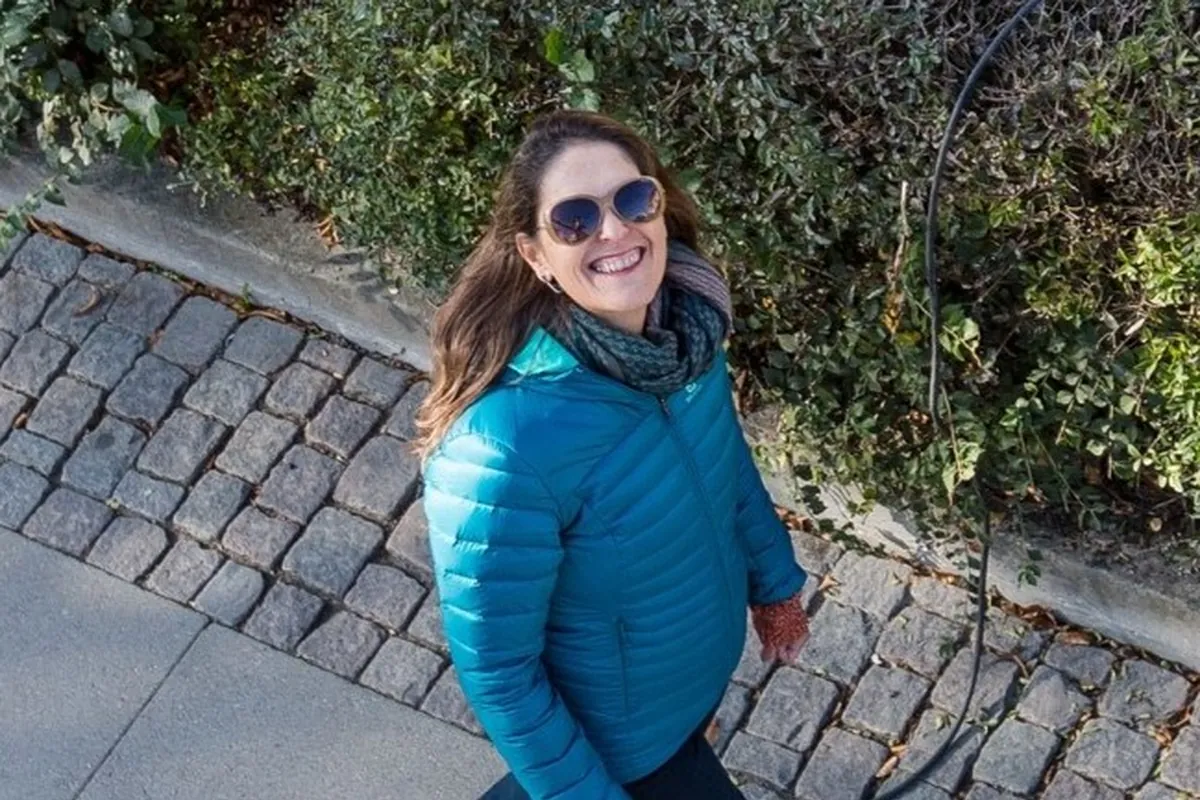 Study lead Heloisa Bordallo, associate professor at the University of Copenhagen.“The scientific concept and ethylene-capture functionality have been successfully demonstrated in laboratory experiments, but the material has not yet been validated in an integrated packaging system under real-world supply-chain conditions.”
The next R&D stages will focus on prototype development, performance testing with fresh produce, and validation in relevant operational environments, add the scientists.
They explain that temperature and humidity are expected to influence the solution’s performance, although this has not been tested yet.
“Water molecules may compete with ethylene for adsorption sites or affect access to the clay’s internal pore structure. As a result, we do not expect identical performance under all transport conditions without further optimization. Performance tests across refrigerated and ambient temperatures, as well as under realistic humidity levels, are one of the key next steps toward commercial use.”
Reliability at scale
The researchers outline that a key remaining challenge is converting their “promising” laboratory results into a packaging solution that performs reliably at scale.
“This includes adapting the material to different products, verifying its stability under variable temperature and humidity, integrating the clay into functional packaging formats, and confirming its impact through shelf life studies and pilot supply‑chain trials,” say Bordallo and Kovalchuk.
“In short, science has demonstrated strong potential; the next phase is engineering and validation under real-world conditions.”
According to the scientists, the study represents an important foundational step that has presented a clearer understanding of how chemical modification enhances ethylene adsorption and retention in montmorillonite, providing a strong scientific basis for further development.
“The next natural step is to actively explore pathways to accelerate development toward TRL 6 and move to prototype validation in relevant operational environments. If successful, this technology could contribute to reducing food waste and improving the efficiency and sustainability of fresh produce supply chains.”
We explored other ethylene-management solutions for fresh produce packaging and food waste reduction with Ampacet, Avantium, Avery Dennison, DS Smith, and the Waste and Resources Action Programme.
Recently, DS Smith developed a fiber-based tray for fresh produce transportation, and Innovia Films unveiled a PP film designed for flow wrap for produce packaging.