

Curaçao project highlights packaging design barriers to island recycling


Key takeaways
- TUI Care Foundation and Green Phenix are expanding Destination Zero Waste Curaçao to include 100 tourism and hospitality businesses.
- The project aims to collect, sort, and recycle 25 metric tons of plastic waste.
- Packaging companies are urged to design materials with realistic island end-of-life solutions, especially by avoiding colored PET and mixed-material formats.
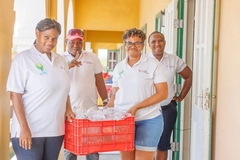 (Image credit: TUI Care Foundation).
The TUI Care Foundation has expanded its recycling project in Curaçao, a constituent country of the Netherlands, to boost tourism's role in reducing plastic waste through design-for-recycling and packaging material choices.
In collaboration with local organization Green Phenix, the second stage of Destination Zero Waste Curaçao is set to incorporate 100 tourism and hospitality businesses, with the aim of collecting, sorting, and recycling 25 metric tons of plastic waste and 30 metric tons of other waste materials.
Packaging Insights speaks to Ivory Hackett-Evans, senior manager for Program Development, at the TUI Care Foundation, to understand the role of packaging companies and the tourism industry alike in the long-term prevention of plastic packaging waste in island settings.
“Packaging producers can support more circular packaging systems by designing packaging that is manageable in an island context,” she tells us.
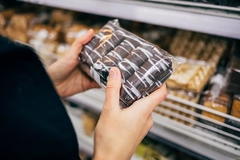
“These include avoiding colored PET, mixed-material packaging, unnecessary layers, and plastics without realistic end-of-life solutions.”
In the project, all plastic is sorted at a designated facility, after which it is either upcycled by Green Phenix, returned to international recycling value chains, or used for testing potential local applications.
Destination Zero Waste Curaçao works with 46 hotels, restaurants, beach clubs, and other tourism operators that host 68 plastic collection points across the island. Green Phenix provides collection infrastructure, sorting guidance, and collection services.
Hackett-Evans points out that “because tourism generates a significant volume of packaging waste on islands, these actors can play an important role in shifting from short-term waste management to long-term circular procurement and prevention.”
The TUI Care Foundation explains that, as tourism continues to grow across the Caribbean, finding sustainable waste management solutions for plastic packaging has become “increasingly urgent” for small islands.
The PET “problem”
Hackett-Evans explains that PET bottles are the most challenging packaging materials to manage on Curaçao — especially if it’s colored.
“Clear PET has some potential for export to specialized recycling facilities, but colored PET has very limited demand on the international recycling market, making it a particularly problematic material for small islands.”
She adds that packaging that combines multiple types of plastics, chemicals, and foils is often not recyclable.
“In practice, these materials often end up in landfill, especially when they are contaminated, degraded, or collected during beach cleanups. By contrast, high-density PE and PP plastics can be processed locally by the Curaçao-based sorting facility that was established in the scope of this project.”
Hackett-Evans highlights that local upcycler Green Phenix is involved in material governance discussions on what types of packaging should be allowed on small islands.
“For islands like Curaçao, the question is not only whether a material is recyclable somewhere in theory, but whether there is a realistic, accessible, and economically viable end-of-life solution in the local or regional context.”
Industry responsibility
Island nations are often disadvantaged in their ability to combat rising levels of plastic pollution, largely due to limited infrastructure, geographic isolation, and exposure to ocean currents that carry plastic waste into their territory.
Last year, Packaging Insights spoke to Dr. Rufino Varea, director at the Pacific Islands Climate Action Network, about Coca-Cola’s switch from glass to plastic bottles in Samoa, underscoring the role of local and international bodies like the UN in regulating the use of plastic for island nations.
Hackett-Evans says that tourism operators, alongside packaging companies, have a role to play in ensuring plastic packaging circularity.
“Hotels and tourism operators can support circularity by reducing unnecessary plastic packaging, improving waste separation, adopting reusable alternatives, and purchasing products made from locally recovered materials.”
She continues that the tourism sector can also educate staff and visitors to build a culture of circularity within island communities. In addition to scaling up operations in Curaçao, the project also aims to introduce a “regional knowledge-sharing component” across all six Dutch Caribbean islands.
The TUI Care Foundation’s Destination Zero Waste Programme is also implemented in Zanzibar, Mauritius, Cyprus, Greece, Menorca, Sicily, and Mexico.