


EU drafts waste export list as Tomra urges recycling investment


Key takeaways
- The EC’s draft list identifies non-OECD countries that could receive EU non-hazardous waste from May 2027, subject to sustainable processing requirements.
- Tomra says tighter export controls could strengthen European recycling investment, while putting short-term pressure on sorting and processing capacity.
- Clear PPWR recycled-content rules, traceability, and equivalent treatment standards are needed to support investment and responsible waste trade.
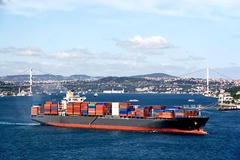
The European Commission (EC) has published a draft list of countries outside the Organization for Economic Co-operation and Development (OECD) that could be allowed to import non-hazardous waste from the EU after May 2027, under the Waste Shipment Regulation.
Non-hazardous waste includes recovered paper and cardboard, metal scrap, glass, and certain textiles and rubber, depending on composition and contamination levels.
Europe’s waste exports, which include waste from packaging, have long been a point of tension as recyclers highlight the economic value of recyclable materials while environmental organizations argue that receiving countries, usually lower income, bear environmental risks and treatment costs.
Against the backdrop of the EU’s Packaging and Packaging Waste Regulation (PPWR) — which mandates recycled content targets — the EC’s draft list represents the bloc’s shift toward responsible waste trade and treating waste as a secondary raw material.
“Strict export rules on waste combined with a robust non-OECD country list mean the EU must process and recycle more of its waste domestically rather than shipping it abroad,” Wolfgang Ringel, senior VP of public affairs at recycling company Tomra, tells Packaging Insights.
However, he also notes that in the short term, stricter export controls could put pressure on European sorting and recycling infrastructure.
The Waste Shipment Regulation, adopted in 2024, introduced stricter export rules that aimed to mitigate the impact of exported waste challenges in non-EU countries. The Regulation states that the EU will no longer export non-hazardous waste to non-OECD countries from May 2027 — unless a country explicitly requests to continue to receive exports and can demonstrate processing capabilities.
According to the EC, 32 countries have submitted requests to continue receiving waste exports, which it has evaluated based on the capacity of each country to manage waste.
Plastic waste is subject to a separate ban in which EU exports to non-OECD countries will be prohibited from November 21, 2026, until at least May 21, 2029.
Securing EU recycling
According to the EC, the EU generates around 40 million metric tons of plastic waste annually and exports between 1 and 1.5 million metric tons each year. Recently, a Plastics Europe report revealed that Europe’s annual growth in circular production declined from 13.6% in 2022 to 1.2% in 2024, with circular output reaching 8.7 million metric tons.
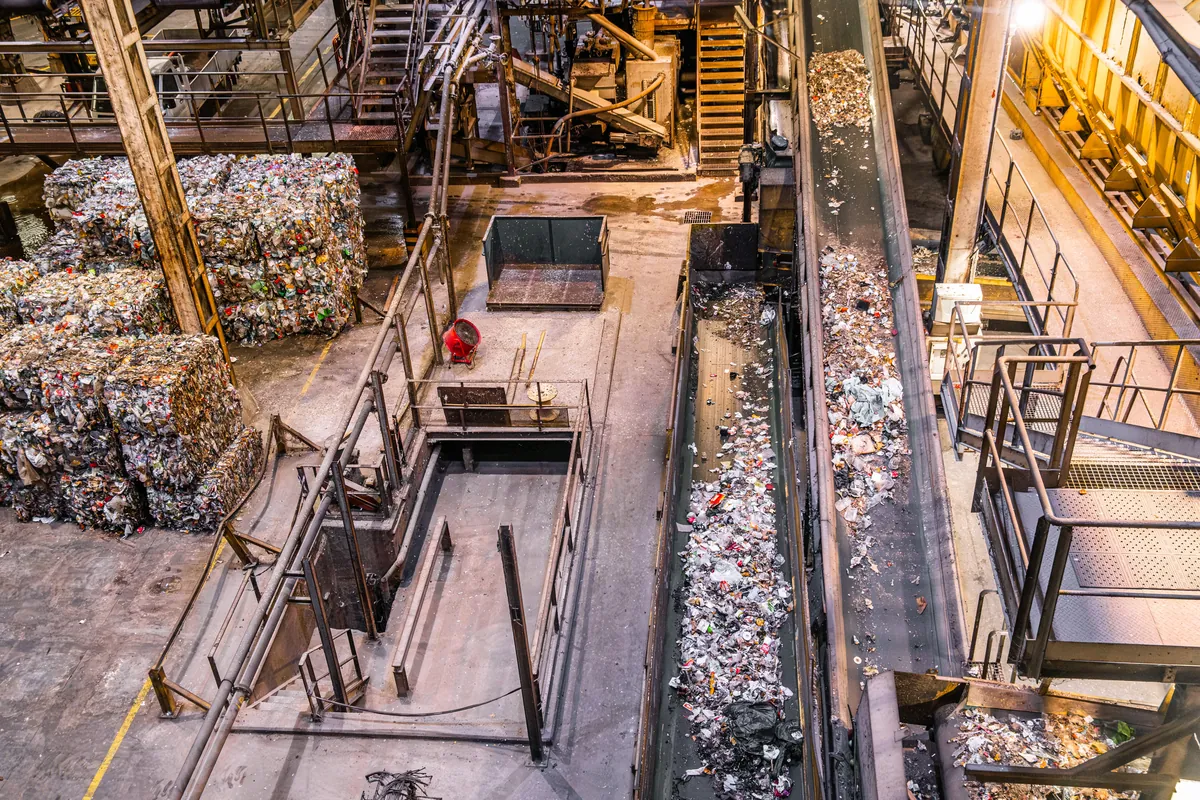 Tighter waste export controls could increase pressure on Europe’s sorting and recycling infrastructure.“Europe’s circular plastics transition is slowing not because ambition is lacking, but because the economic conditions to scale circularity are still missing,” Craig Arnold, vice president at Plastics Europe, told us.
Tomra’s Ringel says that packaging should be collected, sorted, and recycled locally, adding that “exports of unsorted plastic waste should only occur when responsible treatment closer to the source is not available.”
Retaining packaging waste in Europe will strengthen the investment case for recycling waste into secondary raw materials, he explains.
“This is essential to meet recycled-content targets, cut dependence on virgin plastics and imported resources, and improve resource resilience.”
Last year, the EC announced new measures to address rising imports of cheap virgin plastic in the EU. The plan outlined that “urgent action” is needed by EU member states to boost the recycling sector, which faces high energy costs, low prices for virgin plastic, and a lack of demand for recycled plastics.
Ringel stresses that Europe “cannot build a circular economy” if valuable plastic resources continue to leave the system before they are “properly sorted and recycled.”
“The goal should not be to stop responsible trade, but to ensure that more materials are recovered at high quality, close to where they are consumed, and kept in productive use for as long as possible.”
Responsible waste trade
In 2025, reportedly around half of EU plastic waste exports went to OECD countries and half to non-OECD countries, according to the EC. Türkiye was the main destination country in 2025, followed by Malaysia, Indonesia, Vietnam, and the UK.
 Keeping packaging waste in Europe could strengthen investment in secondary raw material production.“A level playing field is key to sustaining the European recycling industry, but it is also a way to encourage investments in circular systems in other regions,” continues Ringel.
“If recycled materials are to compete internationally, they must do so on the basis of transparent standards, reliable traceability, and effective enforcement.”
A recent review, published in npj Emerging Contaminants, argues that the mismanagement of global plastic waste trade, which includes packaging, contributes to microplastic pollution risks and environmental inequality.
Ringel adds that credible proof of sustainably processed waste is critical to conversations about waste trade and recycling.
“If plastic waste leaves the EU, it should remain subject to meaningful oversight. Receiving systems should demonstrate comparable treatment standards, reliable traceability, credible certification, and effective enforcement.”
This, Ringel argues, requires system-level equivalence and assessment of the wider regulatory and operational framework.
Enhancing the PPWR
Ringel links tighter waste export controls to achieving the PPWR’s recycled-content targets, highlighting that its obligations “must become bankable” for investors.
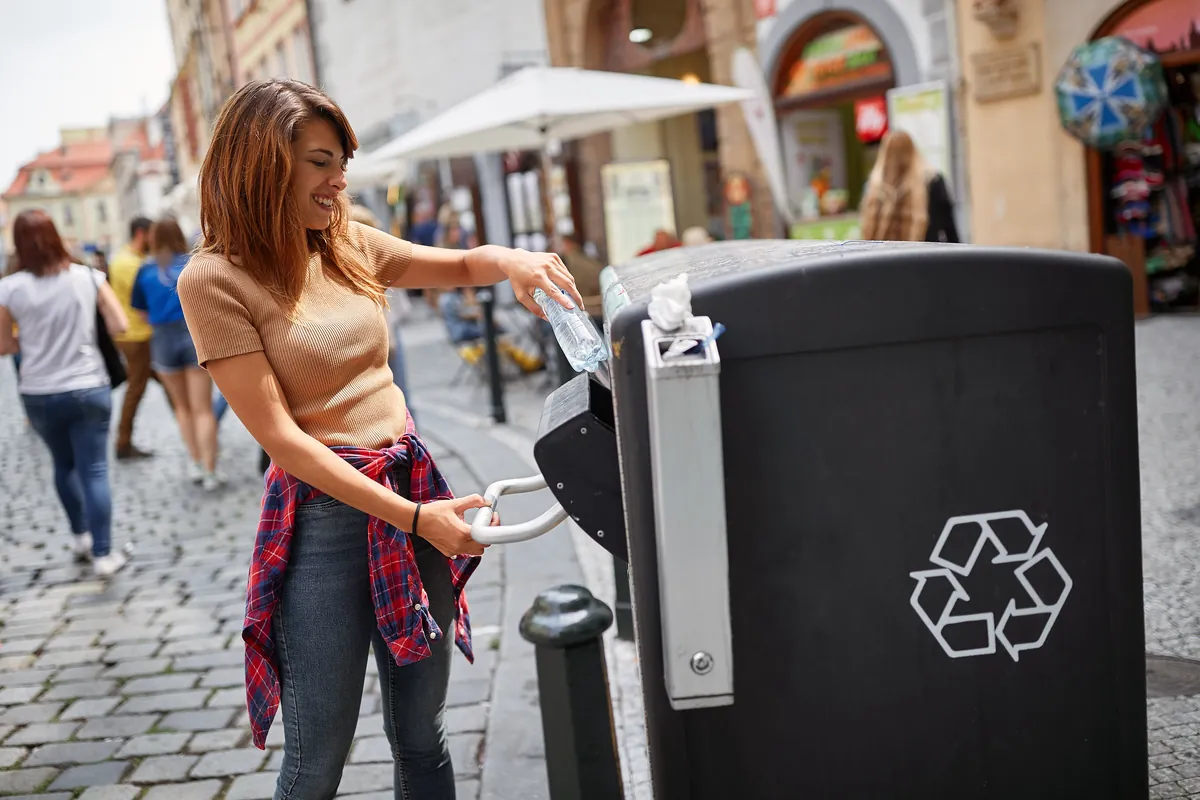 Tomra calls for clear PPWR rules to support investment and verify imported recycled plastics.Recently, Tomra joined more than 30 industry partners calling for clear PPWR Article 7 rules, stipulating that imported recycled plastics only count toward EU targets if they meet equivalent processing standards.
Ringel argues: “Investors need clear, enforceable, and consistent rules on what counts as recycled content. PPWR Article 7 is critical because its implementing rules on calculation, verification, and import conditions will determine whether targets drive real investment in European circular infrastructure.”
He highlights that demand for recycling, encouraged by the EU’s Waste Shipment Regulation, must be matched with investment across the value chain, from collection to advanced recycling methods.
Moreover, he says deposit return schemes and separate collection remain “essential,” while mixed waste sorting capacity is crucial to divert plastics from incineration or landfill.
“Europe needs implementation that gives investor confidence: enforceable demand, robust equivalence criteria, traceability, and recognition of recycling infrastructure as strategic industrial capacity,” concludes Ringel.
“That is how PPWR can move from regulatory ambition to circular progress.”