


Pack Expo 2026: Syntegon debuts modular NeXt packaging automation in North America


Key takeaways
- Syntegon is bringing its NeXt food packaging architecture to North America with the HFX flow-wrapping and TRX topload cartoning platforms at Pack Expo 2026.
- The modular, retrofit-capable systems combine robotics, AI, real-time data and automated changeovers to help manufacturers address labor shortages and changing production needs.
- HFX3 supports up to 1,000 products per minute, while TRX targets flexible secondary packaging with rapid format changes and reduced manual intervention.
 (All image credits: Syntegon).
Syntegon is launching two modular machine platforms targeting food manufacturers at Pack Expo 2026 in Chicago, US (October 18–21). The machines are part of Syntegon’s NeXt range for the food industry, and their launch marks NeXt’s North America debut.
At the trade show, Syntegon will demonstrate its new HFX flow-wrapping platform for primary packaging and TRX topload cartoning platform for secondary packaging. The two machines are compatible with Syntegon’s robotic pick-and-place platform.
“NeXt is designed as an intelligent, modular system architecture that brings together seamless operation, smart decisions, and touchless automation,” a spokesperson for Syntegon tells Packaging Insights. “Instead of treating a packaging line as a collection of isolated machines, it enables manufacturers to connect technologies, data, and automation in a scalable way.”
“Modular, retrofit-capable building blocks, such as the HFX flow-wrapper platform and TRX topload cartoning solution, allow customers to add capabilities or adapt their operations as formats, materials, and market demands evolve.”
The spokesperson points out that manufacturers want to protect their existing investments while retaining the ability to respond to changing consumer demands, regulations, and material innovations.
“Modular and retrofit-capable equipment offers a practical path: customers can modernize specific parts of a line, add automation or digital capabilities, and scale capacity over time rather than replacing an entire operation at once. This flexibility is central to Syntegon’s approach at Pack Expo 2026, where we are demonstrating how connected, adaptable solutions can help manufacturers reimagine the factory of the future.”
Syntegon says that its NeXt system addresses challenges commonly faced by food manufacturers, including rising costs, skilled-labor shortages, increasingly stringent quality requirements, and an expanding variety of products and packaging styles.
Modular flow wrapping
For the food industry, Syntegon says it has designed its HFX platform to accommodate a range of products and flow-wrapping applications, as it is made up of independent modules. In particular, the new HFX3 is meant for medium- to high-speed production.
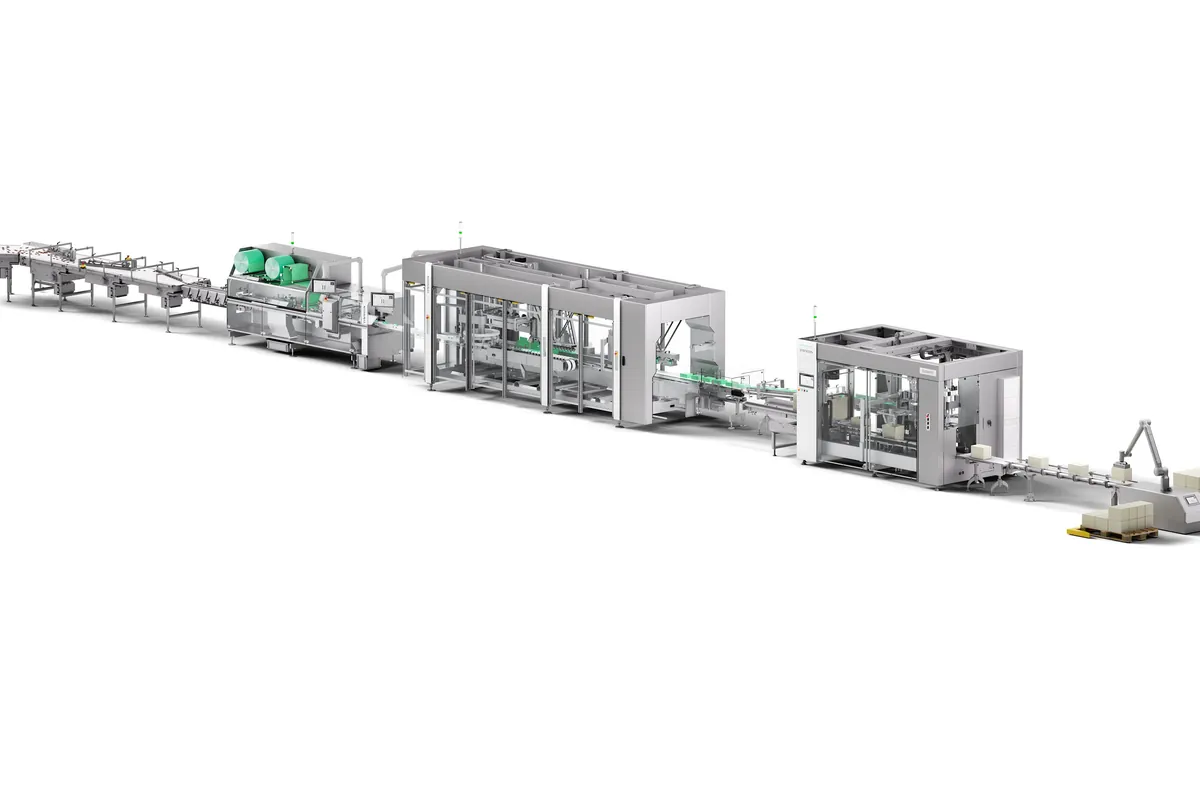 Syntegon says its NeXt modular solutions can adapt as production needs evolve.The platform supports cold- and heat-sealing technologies and a variety of film materials, including paper-based materials.
HFX3’s modular flexibility also allows customers to adopt new production units at a later stage, after the initial installation. Modular neXt software features can also be added later on, as production requirements change.
Syntegon argues that the functions can help food manufacturers to configure packaging machines for the exact applications they need, while preparing them for future upgrades.
The HFX3 can pack 1,000 products per minute and supports product lengths from 2 to 12 inches and product widths from 0.5 to 7.5 inches.
The Syntegon spokesperson acknowledges that manufacturers may face certain issues related to materials when switching to HFX.
“Alternative materials can behave very differently from conventional films,” the spokesperson points out. “They may have different sealing windows, stiffness, friction characteristics, or tolerances in web handling.”
“At high speeds, this places particular demands on film transport, tracking, product handling, and sealing technology. The task is not simply to run a new material, but to maintain pack quality, product protection, and line efficiency. This requires close collaboration between material suppliers, brand owners, and equipment partners, as well as flexible machine technology and process expertise.”
Topload cartoning
Syntegon’s TRX topload cartoning platform can provide fast changeovers, while being “highly compact,” according to the company. The platform extends the NeXt system architecture into secondary packaging.
Like the HFX3, TRX also has a modular design, alongside guided, verified, or semi-automated format-change features that Syntegon says can help manufacturers respond to changing production requirements. It says that format changes can be completed in 10 minutes. The company describes the TRX as easy to operate, even for less experienced operators.
The platform offers a maximum packing speed of 200 cartons per minute. The TRX21, which will be on display at Pack Expo 2026, can reach up to 80 cartons per minute and has an infeed speed of up to 1,500 products per minute .
Automation amid labor shortages
According to Syntegon, labor shortages and changing production requirements in the food industry are pushing manufacturers to turn to automated packaging lines.
“Labor shortages are accelerating the shift toward packaging lines that are easier to operate, maintain, and adapt,” the company spokesperson continues. “Manufacturers need systems that reduce manual intervention while enabling operators to manage increasingly complex production requirements with confidence.”
“This means more guided processes, automated material handling, faster format changes, and intuitive human-machine interfaces. At the same time, lines must handle shorter runs, more SKUs, and evolving packaging materials without compromising performance.”
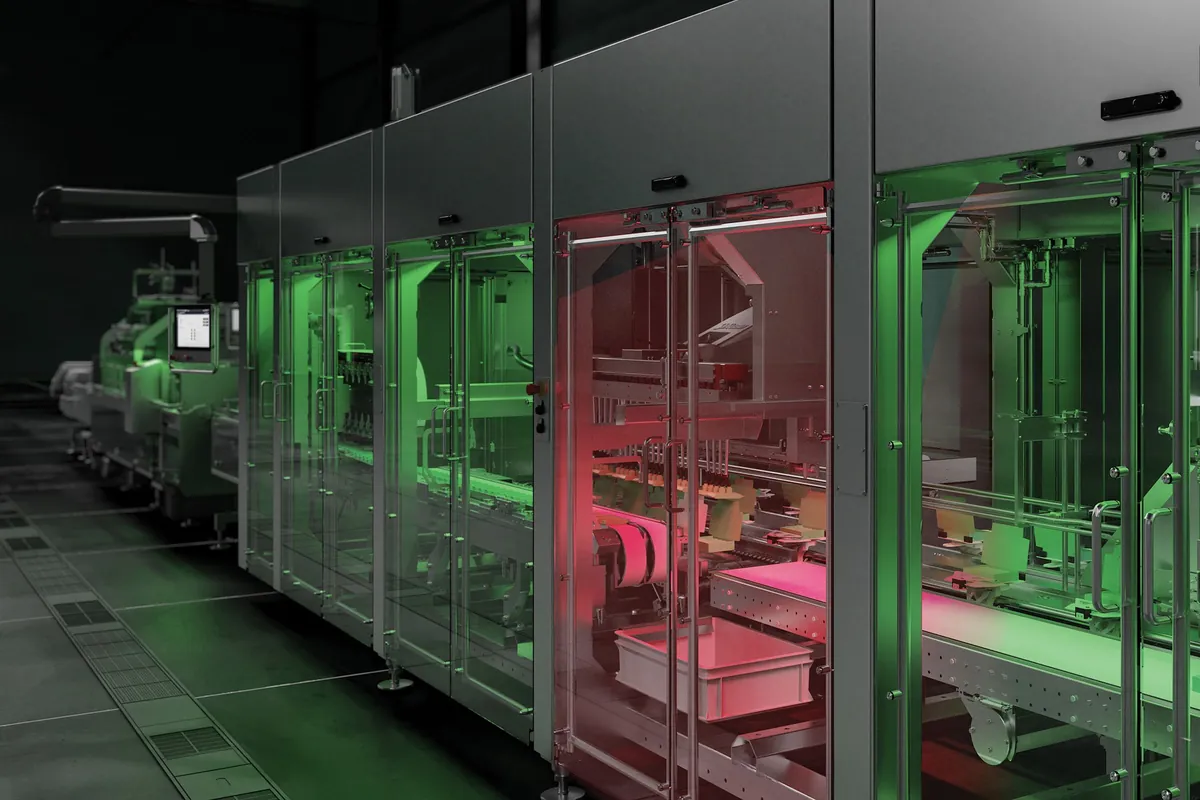 NeXt machines combine automation, robotics and AI, Syntegon highlights.Syntegon aims to tackle these issues through its “touchless automation” concept centered around decreasing manual intervention in packaging.
For example, autonomous material supply systems complete the provision and insertion of film reels or cardboard blanks. Meanwhile, autonomous mobile robots can supply the machines and splicing systems work in flow-wrapping.
The German packaging machinery supplier argues that its touchless automation solutions allow packaging lines to run for hours without intervention from a human. This reduces the workload on staff and increases their availability for “value-adding” tasks, according to the company.
Syntegon’s automation approach
Syntegon’s NeXt machine range features software optimization, including its cloud-based Synexio, machine-based Logbook functions, or a 3D error view. Additionally, they use camera and AI-based quality controls for automatic error detection and status monitoring to help ensure productivity, quality, and efficiency, the company outlines.
Elias Hashemian Nik, product manager for sterilization at Syntegon, previously told us that Synexio can provide visibility by connecting equipment, monitoring process performance, and helping manufacturers continuously improve production over the entire lifecycle of their equipment.
Using the camera and AI system, operators can monitor the packaging lines remotely, while still being able to respond quickly to hindrances, according to the supplier. It adds that the system helps production managers as well, by allowing them to make decisions based on data.
“Combining AI, real-time data, and robotics within a packaging line can turn individual machines into a more responsive, connected operation,” highlights Syntegon’s spokesperson. “Real-time data creates transparency across the line, while AI-supported tools can help identify deviations earlier and support faster, better-informed decisions.”
“Robotics can take over repetitive material-handling and pick-and-place tasks. The result is more consistent quality, less unplanned downtime, reduced dependence on manual labor, and a stronger foundation for continuous improvement.”
The spokesperson adds that greater automation helps manufacturers reduce waste by improving packaging line efficiency. “Camera- and AI-based quality controls, automated error detection, and status monitoring identify issues sooner, helping prevent avoidable product and material loss.”
“Automated adjustments, guided changeovers, and robotics also reduce variability caused by manual processes. This supports higher uptime, reliable pack quality, and more efficient use of materials, energy, and labor.”
Recently, Avery Dennison, Polytag, and BoxWay spoke to Packaging Insights about the accelerating importance of automation, including that enabled by AI, for data collection throughout the packaging supply chain.