




FSSC 22000 certification adds packaging rules to reduce food waste

Key takeaways
- FSSC 22000 Version 7 has added packaging design requirements focused on food loss and waste.
- The guidance emphasizes protection, preservation, and performance across the food value chain.
- More than 40,000 certified organizations will need to consider the new principles.
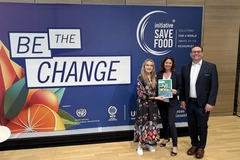 (Image credit: WPO).
Foundation Food Safety System Certification (FSSC), the World Packaging Organisation (WPO), and the Australasian Institute of Packaging (AIP) have joined forces to add a new packaging design and development requirement to FSSC 22000 that addresses Food Loss and Waste (FLW).
Foundation FSSC is the organization behind the global Certification Scheme FSSC 22000 for Food Safety. Its latest version (V7) includes guidelines regarding packaging in relation to food waste. It was developed after Foundation FSSC acknowledged how the design of packaging “plays a vital role in reducing FLW.”
Kelly Mulholland, technical manager for Safety and Quality at FSSC, outlines: “To address this, we recently announced Version 7 of the FSSC 22000 Certification Scheme, which now incorporates a new requirement under product design and development, which applies to all organizations that design primary packaging and packaging material.”
Mulholland notes that the previous version of the certification (V6) stipulated that organizations must address FLW. The new version links this goal to product packaging and material usage.
Combining industry with research
The guidelines draw on research from the WPO, AIP, the Royal Melbourne Institute of Technology, Australia, and End Food Waste Australia, and can be implemented by macros, SMEs, and F&B companies.
Nerida Kelton, VP of Sustainability and Save Food at the WPO, and executive director at AIP, highlights that “the true role of packaging is its functionality.”
“Packaging needs to be designed to ensure that a product is protected, preserved, contained, and transported all the way through the value chain from production until it is used in the household.”
She adds that Save Food Packaging guidelines aim to minimize food waste from “paddock to plate” using design features that chiefly aim to protect and preserve, “all the while meeting global sustainable packaging targets.”
Mulholland says that Foundation FSSC now has over 40,000 Certified Organizations that are required to consider these packaging design principles, “resulting in further support for the reduction of Food Loss and Waste.”
Regulatory overhaul
As a once loosely regulated packaging industry continues to contribute to plastic pollution, innovation in the sector is currently marked by a global regulatory push toward a circular economy.
In a recent conversation with Packaging Insights, Kelton explained how the industry-wide shift toward designing for end-of-life rather than for performance is the most significant change of the current regulatory cycle.
As fiber-based solutions increase as consumers take greater concern with plastic packaging waste, and as regulations reduce virgin plastic content, Kelton also urged the sector to root fiber substitution decisions in life-cycle data rather than consumer sentiment.