
Veolia and Mars target global recycling data gaps with scientific method
Key takeaways
- Veolia and Mars are partnering with Imperial College London researchers to assess packaging recycling rates across 70 countries.
- The study will combine Circpack’s recycling data with Imperial College London’s SPOT model to identify gaps between reported recycling rates and actual material recovery.
- Results expected in Q2 2027 will examine 14 packaging materials and aim to help policymakers and producers improve waste management.

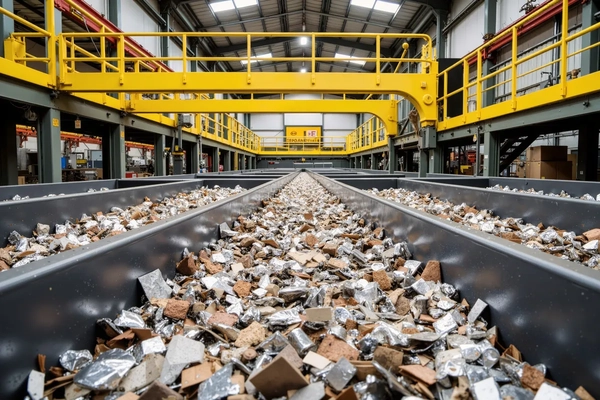
Circpack by Veolia and Mars have partnered to map global packaging recycling rates to address gaps between reported recycling rates and actual material recovery. The study will use a new scientific methodology developed by researchers at Imperial College London, UK.
The study will begin this month, with results expected in Q2 2027. It aims to estimate how much of each major packaging material is recycled, disposed of, or polluted into the environment.
“This study counts what leaves the recycling facility as usable material, as a share of what households purchased,” Vincent Mooij, director of Circpack by Veolia, tells Packaging Insights.
“We trace every number to its source for 14 different packaging materials across 70 countries, providing a verifiable range with a confidence interval.”

The study will pair Circpack’s existing national recycling rates for 13 different material categories with Imperial College London’s Spatio-temporal Quantification of Plastic pollution Origins and Transportation, or SPOT tool, which models how much global plastic waste is recycled, disposed of, or leaked into the environment.
The confectionery giant Mars is described as a “strategic industry partner” that will contribute its global perspective and translate the results into practical evidence for businesses and policymakers.
“For a producer, [our system] turns one headline rate into a picture of where material is lost: never collected, sorted out, rejected at the plant, or collected with no buyer. Our methodology therefore shows which formats are really recycled in which markets, across the different material categories,” adds Mooij.
Gaps in global waste management
According to Circpack, its dataset includes recycling information for glass, steel, rigid and flexible aluminum, paper, complex paper, and seven plastic formats.
Rather than providing a national average across packaging types, Circpack explains that its data reflects “how likely” a specific packaging format is collected and recycled.
Mooij shares that in many countries, household packaging is never collected, sorting capacity is limited, and some material flows have few buyers even when collected.
Additionally, he adds that there is an information gap: “Countries count at different points in the value chain, many publish no national figures at all, and where informal collectors do much of the work, that work is rarely measured.”
He notes that this means reported rates never accurately reflect a recycling rate reality.
“Our contribution is to put the two side by side: for each country and material, how much material truly becomes usable, and how certain we can be of that figure. That shows where the losses are largest, so producers, schemes and governments can fix the biggest leak first.”
Advancing policy with science
The SPOT tool has measured recycling rates for rigid and flexible plastic and aims to estimate recycling, disposal, and leakage at material level for a 2025 baseline, which the researchers will project onto 2050 under three shared socio-economic pathways.
Dr. Costas Velis, associate professor in Waste and Resource Engineering, in the Department of Civil and Environmental Engineering at Imperial College London, says: “This initiative advances our scientific work toward a common, evidence-based understanding of these pathways.”
“It seeks to generate novel capabilities while building trust in the numbers, informing policy and business decisions, and accelerating the development of effective pollution prevention solutions -and, ultimately, enabling greater transparency and accountability.”
Increasingly, trans-industry collaborations seek to tackle packaging pollution through data collection and knowledge collaboration. Feliks Bezati, global circular packaging director at Mars, underscores that to solve a global challenge like packaging pollution, “we must start with local understanding.”
“This study with Circpack is offering us a factual approach to understanding waste management and recycling performance in each country,” he concludes.