

Ampacet and Borealis tackle recycled content challenges in rigid plastic packaging
Borealis and Borouge have merged to form Borouge International.


Key takeaways
- Ampacet and Borealis (now Borouge International) aim to advance recycled content use in rigid plastic packaging without compromising on performance or aesthetics.
- Ampacet and Borealis aim to advance recycled content use in rigid plastic packaging without compromising on performance or aesthetics.
- Innovations like ThermProtect PET and Borcycle C are said to tackle degradation, enabling higher-quality recycled materials for food-grade applications.

Regulatory pressure and circular economy goals are driving adoption, but challenges remain in scalability, consumer understanding, and infrastructure.
The improvement of plastic packaging recyclability and recycling technologies, along with increased inclusion of recycled content in rigid plastic packaging, is vital to developing environmentally sustainable solutions for the sector, according to experts at Ampacet and Borealis.
François Thibeau, strategic business manager for Flexibles, E&E, and Sustainability at Ampacet, tells Packaging Insights there are significant opportunities as well as challenges in the rigid plastic packaging space.
“On one hand, there is growing demand from regulators, brands, and consumers for more sustainable packaging solutions with higher recycled content,” he points out. “Technologies like Ampacet’s ThermProtect PET create new opportunities to meet these expectations without sacrificing performance or appearance.”
“On the other hand, challenges remain in managing the effects of thermal degradation, such as yellowing and loss of mechanical properties, especially as recycling loops increase.”
Thibeau asserts that ensuring consistent quality in recycled materials while maximizing sustainability will continue to be a key focus for innovation in rigid plastic packaging.
Jos van Haastrecht, global communications lead for polyolefins and circular economy solutions at Borealis, spotlights the company’s advanced rigid PP packaging materials. Its Borcycle C portfolio features chemically recycled polyolefins said to deliver virgin‑like quality and full food‑contact compliance.
“These materials can be used as drop‑in replacements for conventional fossil‑based PP and have already been successfully applied in thin‑wall injection‑molded pots, lids, and thermoformed cups, such as the Finnish dairy and food company Valio’s Kreikkalainen Jogurtti and Oivariini packaging,” tells us Van Haastrecht.
“The materials ensure reliable processing, stable performance on filling lines, and maintain the same visual appearance and functionality as virgin plastics.”
Facilitating rPET performance
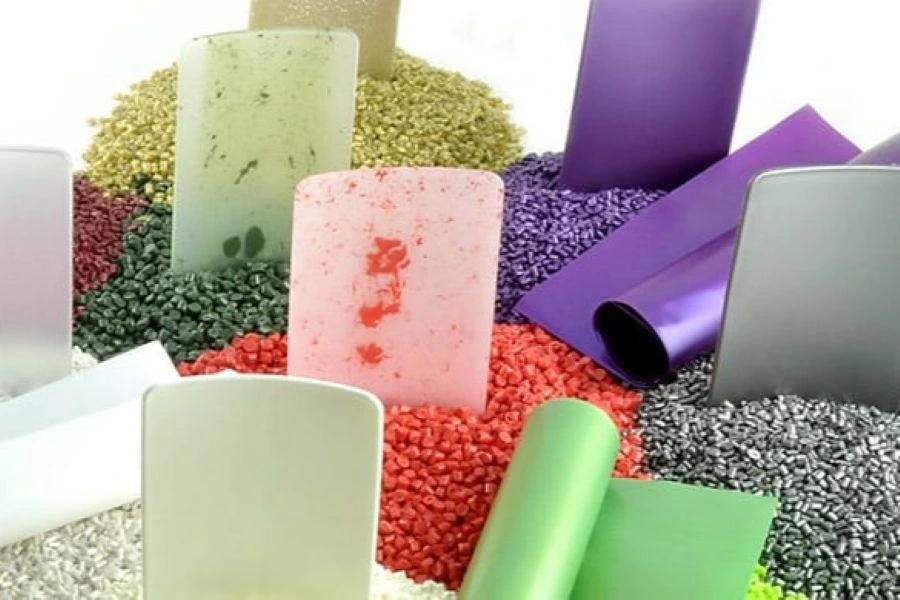 Ampacet’s ThermProtect PET range of advanced stabilizing masterbatches is designed to improve rPET performance (Image credit: Ampacet).Ampacet’s latest rigid plastic packaging solution is its ThermProtect PET range, a series of advanced stabilizing masterbatches, which Thibeau says was designed to improve the performance of recycled PET (rPET).
“ThermProtect PET range directly addresses one of the main limitations of using rPET in rigid packaging, which is thermal degradation during repeated processing,” he adds.
“By protecting the polymer from heat-induced damage, ThermProtectPET helps maintain the material’s intrinsic viscosity while significantly reducing yellowing, which is critical for preserving the visual clarity and quality of packaging such as bottles, trays, and containers.”
Thibeau says that as a result, manufacturers can incorporate higher levels of rPET into virgin material without compromising aesthetics or functional performance.
The environmental sustainability of ThermProtect PET lies in its ability to enable greater use of recycled content in plastic packaging, according to the expert.
“PET is already one of the most widely recycled plastics, particularly in Europe, and can be remelted multiple times. However, repeated heating typically degrades the material, limiting how much recycled content can be reused.”
He points out that ThermProtect PET overcomes the barrier by stabilizing the polymer during reprocessing, allowing for increased rPET usage while maintaining product quality.
“This directly supports circular economy initiatives by reducing reliance on virgin plastics, minimizing waste, and promoting closed-loop recycling systems.”
Chemical recycling solutions
Borealis’ sustainability advantages stem from its use of chemically recycled feedstock, certified traceability, contribution to reduced carbon footprint, and support for compliance with regulations, such as the EU’s Packaging and Packaging Waste Regulation (PPWR), according to Van Haastrecht.
“Borcycle C grades incorporate chemically recycled PP, sourced via a mass‑balance approach, enabling significant replacement of virgin fossil feedstock while maintaining food safety and performance,” he highlights.
“All Borcycle C materials are ISCC PLUS certified, ensuring a transparent and verified chain of custody for recycled feedstock and guaranteeing that the attributed recycled content is credible and auditable.”
He adds that by substituting virgin PP with chemically recycled alternatives, Borealis’ solutions lower the carbon footprint associated with plastic production. “Value‑chain partners, such as Neste, convert difficult‑to‑recycle waste into virgin‑quality feedstock, supporting a more circular system.”
“The materials help brand owners meet EU PPWR targets on recycled content and design‑for‑recycling, well ahead of mandated deadlines.”
Opportunities and challenges
Van Haastrecht further elaborates on the key opportunities and challenges he spots in rigid plastic packaging development.
“PPWR is driving demand for high‑quality recycled content and more circular packaging formats, creating strong incentives for innovation in rigid plastics.”
“Meanwhile, chemically recycled PP allows packaging manufacturers to integrate sustainability without sacrificing mechanical strength, food safety, or aesthetics, enabling wider adoption across food‑grade applications,” he argues.
He emphasizes the importance of consumer transparency tools. “Brands like Valio demonstrate how digital transparency, such as clear labeling and QR‑code explanations, can increase consumer trust in recycled or reusable formats.”
However, the complexity of explaining chemical recycling to consumers is a challenge, according to Van Haastrecht. “Mass‑balance allocation and advanced recycling processes can be difficult for everyday users to understand, requiring robust communication strategies.”
“Rigid food packaging, especially thin‑wall injection molding, demands high process stability and strict safety compliance, meaning materials must consistently match virgin quality.”
He adds that advanced recycled content relies on tightly integrated cooperation with feedstock suppliers, such as Neste, and converters, making scalability dependent on coordinated infrastructure.
“Good collection, sorting, and recycling systems are crucial. Governmental support is certainly playing a big role in enabling the right infrastructure for that,” he emphasizes.
Food-grade recycled content
Van Haastrecht spotlights the use of Borealis’ recycled PP for the new packaging of Valio’s Oivariini butter-blend spread. The packaging includes a thin-wall injection-molded pot and a lid. Borealis says this format prioritizes material performance and process stability.
“Valio shows that circular rigid plastic packaging is already commercially viable at scale and can be adopted without compromising product quality,” he argues.
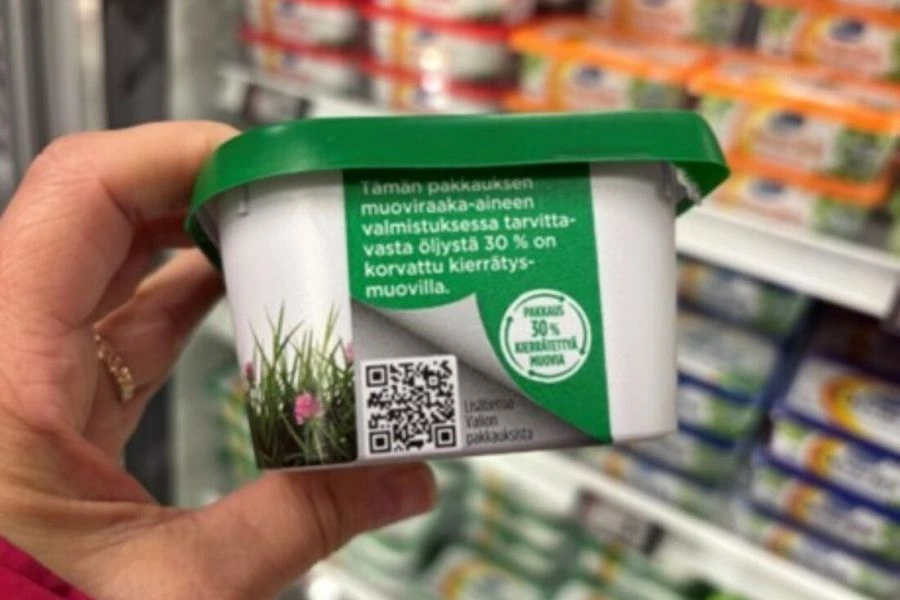 Valio’s Oivariini butter-blend spread connected packaging featuring Borealis’ recycled PP (Image credit: Valio).The Oivariini packaging also features a QR code linking to an online explanation of chemical recycling and mass balance in the context of food packaging.
Huhana Pilkama, head of packaging development at Valio, comments: “Introducing chemically recycled materials into our packaging is only part of the task.”
“It’s equally important to explain what this means in practice — how the material is produced, how recycled content is accounted for, and why we’ve chosen this approach. Clear information helps consumers understand the changes they see on the pack.”
According to Innova Market Insights’ Top Packaging Trends for 2026, substantiated sustainability, or the ability of companies to verify their environmental claims, is the top trend of the year.
Peter Voortmans, vice president of marketing consumer products at Borealis, adds: “Packaging is where circularity becomes visible to consumers.”
“We’re pleased to have worked with Valio on this project, which demonstrates that the use of chemically recycled materials in food packaging can be explained clearly through simple on-pack information and digital content.”
Van Haastrecht concludes: “With chemically recycled, ISCC PLUS certified materials, brands can prepare for future regulations, reduce reliance on fossil resources, and strengthen consumer trust through greater transparency.”
“Borealis’ work with partners demonstrates how cross‑value‑chain collaboration accelerates the transition toward a more sustainable plastics economy.”
UPDATE: Borealis and Borouge have merged to form Borouge International, with the new entity acquiring Nova Chemicals and backed by shareholders OMV and XRG, each holding a 50% stake.