
Refill systems advance amid demand for convenience and material reduction

Key takeaways
- Refillable packaging is gaining momentum as brands seek to reduce material use, improve recyclability, and meet regulatory mandates.
- Amcor, Coveris, and SP Group highlight flexible refill pouches as a key growth area, balancing lightweighting, recycled content, product protection, and consumer convenience.
- Future refill solutions are expected to focus on recyclable monomaterial structures, reusable systems, concentrated products, and improved dispensing.

Eco-conscious consumers are growing accustomed to refillable packaging, but as brands face ever more rigorous regulations, suppliers have to break new ground. Packaging Insights speaks to Amcor, Coveris, and SP Group to better understand how their refill solutions are helping clients reduce packaging weight, introduce recycled content, and push for recyclability.
“Demand for refillable and reusable packaging continues to grow, driven by a combination of consumer preferences, sustainability objectives, and evolving regulation,” Ellen Seyda, director of Sustainability for Rigid Packaging Solutions International at Amcor, tells us.
She points to Amcor’s research finding that refill packaging is now well established across personal care categories in Europe. “Refill pouches are emerging as the leading format, and 66% of consumers report purchasing a refill pouch within the previous 12 months.”
“Consumers are increasingly looking for solutions that combine environmental benefits with convenience and value for money. More than two-thirds of consumers surveyed said they are more likely to purchase refill pouches if they are recyclable, while affordability remains a major factor in future adoption.”
Katja Killian, business development director at Coveris, says that legislation is also accelerating the move toward more resource-efficient packaging. “In the UK, the packaging EPR is encouraging further lightweighting and weight reduction in plastic packaging, while the EU’s Packaging and Packaging Waste Regulation (PPWR) is driving greater emphasis on recyclability and recycled content.”
A spokesperson for SP Group highlights that convenience is critical for refill applications. “Consumers are increasingly open to refill systems, but their adoption depends on formats being easy to store, open, dose, and empty, as well as economically attractive.”
Evolving consumer needs
Amcor, Coveris, and SP Group highlight that their customers’ changing needs are influencing the development of refillable packaging solutions.
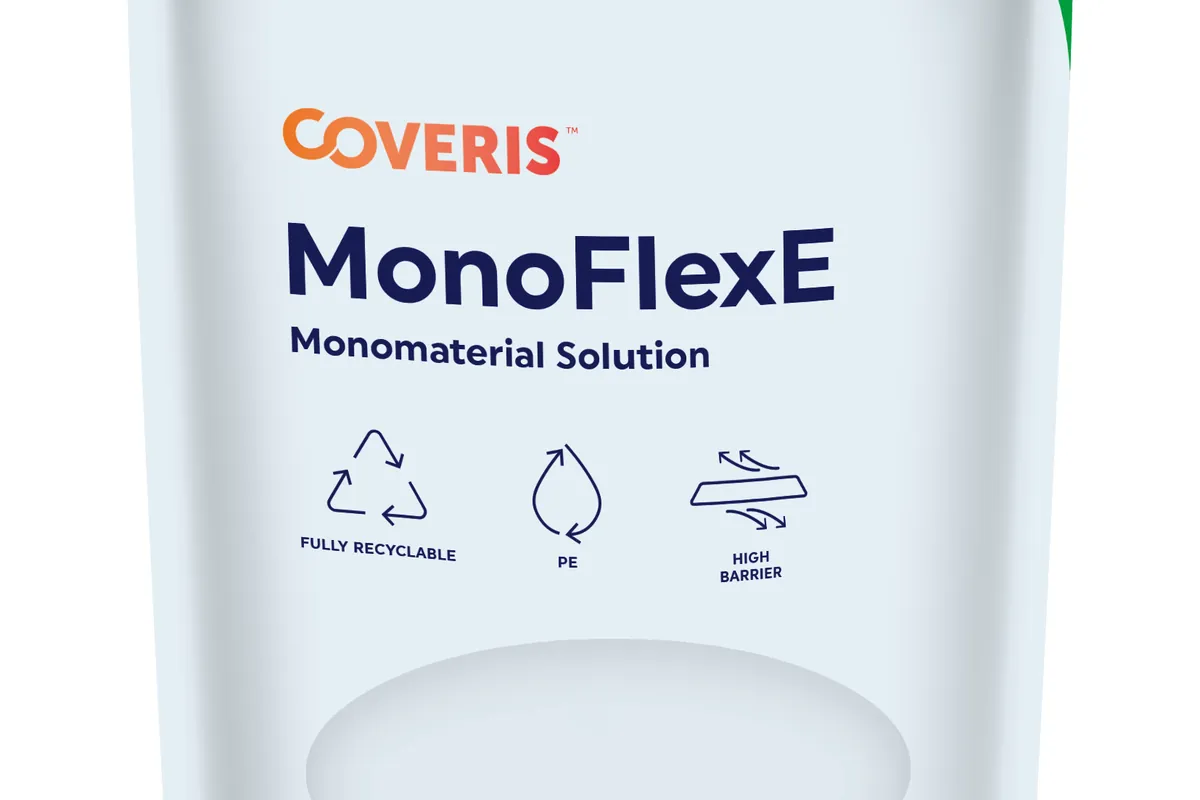 Refill pouches are being used for direct-contact products and secondary packaging application, highlights Coveris (Image credit: Coveris).In particular, Killian tells us that Coveris’ customers are looking for packaging solutions that combine strong sustainability credentials with reliable product protection and consumer convenience.
“Refill applications vary considerably, with pouches being used for direct-contact products and secondary packaging applications,” she continues. “Direct-contact examples include liquids such as soaps and household cleaners, as well as tablets and powders used in laundry and home care products. Secondary packaging applications can include confectionery, where individual items are already wrapped.”
She explains that each application brings its own technical requirements, from barrier performance and seal integrity, to ease of opening, re-closability, and overall durability throughout the product’s lifecycle.
SP Group’s customers approach packaging development from a broad perspective, according to the company spokesperson. “The question is no longer simply ‘Can we reduce plastic?’ but rather ‘How can we reduce the overall environmental impact of the packaging without compromising its performance?’”
“This creates opportunities for flexible refill formats such as pouches. A lightweight refill pouch can complement a more durable primary container, allowing consumers to reuse the original pack while purchasing subsequent quantities of the product in a format that uses significantly less packaging material.”
Amcor’s Seyda shares that its customers are looking for refill systems that deliver a seamless consumer experience without compromising on sustainability, product protection, or brand appeal. “In response, Amcor is developing complete refill systems that combine rigid packaging, dispensing solutions, and flexible refill formats.”
“For example, Amcor’s refill-ready portfolio includes the durable Mocha bottle and Wave pump paired with AmPrima recycle-ready spouted stand-up pouches, designed to work together to create a clean, intuitive refilling experience. The pouch range is available in sizes from 30 mL to 2 L and is engineered to be robust, leak-resistant, and suitable for e-commerce distribution.”
Amcor is also supporting reuse at a practical trial level, having designed and manufactured bespoke 2 kg and 3 kg refillable containers used in the Refill Coalition’s ongoing work with Ocado Retail.
The partners are testing approaches to supplying online grocery customers with products such as pasta, rice, and washing liquid in reusable packaging, while allowing them to return the empty containers for washing and refilling.
“The project is helping to generate real-world data on the operational, environmental, and consumer adoption potential of large-scale reuse models in UK grocery,” Seyda asserts.
Achieving material reduction
Seyda highlights that refill systems can reduce the amount of packaging material required over the product lifecycle by enabling consumers to reuse the primary container multiple times and replenish it using lightweight refill formats.
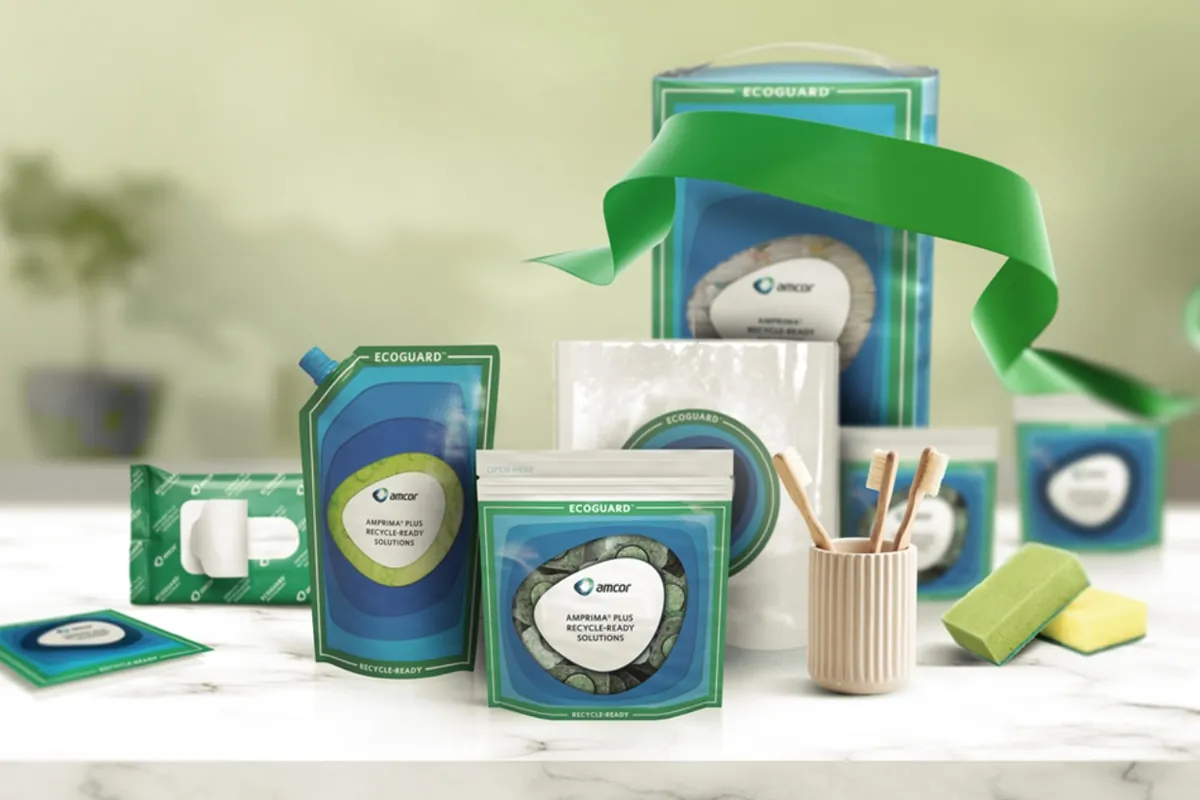 Amcor’s AmPrima recycle-ready refill pouches are designed to support circularity, functionality, and convenience, the company says (Image credit: Amcor).“Amcor’s AmPrima recycle-ready refill pouches are designed to support circularity objectives while maintaining functionality and convenience for consumers,” she notes.
Coveris’ Killian says that its flexible pouches are inherently lightweight, helping to minimize transport-related emissions throughout the supply chain. “In addition, advances in recyclable monomaterial structures are helping brands improve the circularity of their packaging portfolios.”
Similarly, SP Group argues that flexible packaging can play an important role in refill systems because of its high product-to-packaging ratio. “Compared with heavier rigid formats, pouches can reduce the amount of packaging material required per unit of product and can also generate efficiencies during transport and storage.”
“Our approach is to evaluate the packaging as a complete system. Material reduction must always be balanced with the barrier properties and mechanical performance required to protect the product. Packaging that uses less material but leads to greater product waste would not represent a real sustainability improvement.”
For this reason, the company works on downgauging, structure optimization, and the development of recyclable solutions, “where technically feasible.”
“For brands, this can contribute to packaging reduction and circularity objectives while maintaining the functionality expected by industrial customers and consumers.”
Refill systems mature
Over the coming years, SP Group expects flexible pouches for refill to continue evolving toward improved recyclability, reduced material consumption, and better functionality. The company foresees easier opening, controlled dispensing, and more efficient product evacuation.
“We expect greater development of concentrated products, particularly in home and personal care applications, where smaller refill packs can further reduce packaging and transport requirements,” the spokesperson adds.
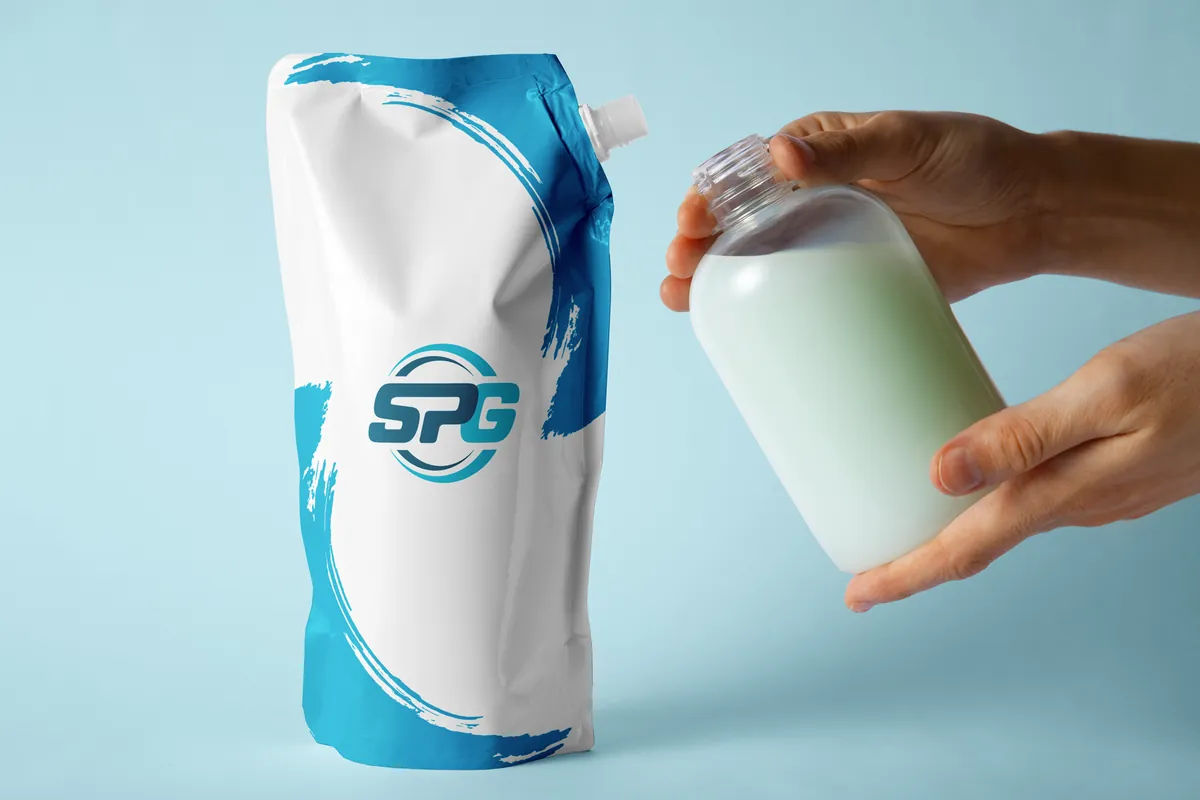 SP Group expects flexible pouches for refill to continue evolving toward improved recyclability, reduced material consumption, and better functionality (Image credit: SP Group).Killian asserts that the incorporation of recycled content into refillable solutions “where appropriate” is becoming increasingly important as businesses work toward compliance with regulations like the EU’s PPWR and the UK Plastic Packaging Tax, while also pursuing their corporate sustainability targets.
She describes the shift toward recyclable monomaterial pouch structures to support recycling as “one of the most significant developments in recent years.”
“Creating genuinely circular solutions also requires investment beyond pack design,” she continues. “Through ReCover, Coveris is helping strengthen the infrastructure needed to recover, source, process, and recycle flexible plastics, while combining mechanical recycling capabilities with solvent-based and chemical recycling partnerships.”
This process can support greater availability of high-quality recycled materials that can be returned to the value chain and used in future packaging applications, she outlines.
“The continued development of recyclable monomaterial flexible packaging will be one of the most significant innovations in the sector. With co-extrusion capabilities, we are able to innovate material formulations to achieve high levels of performance while simplifying structures to improve recyclability.”
Amcor also anticipates the continued growth in recycle-ready refill pouches and broader use of post-consumer recycled materials across refill and refillable packaging formats. “In parallel, brands will increasingly seek packaging systems that balance sustainability requirements with aesthetics, functionality, and premium brand presentation,” Seyda asserts.
“The ability to source rigid and flexible refill solutions from a single supplier will become increasingly valuable as companies scale their circular packaging strategies across product portfolios.”
Seyda expects future innovation to focus on making refill systems “even more” convenient and more attractive for consumers to adopt as part of their everyday routines. “This will include greater integration between reusable containers, dispensing systems, and refill packs to create cleaner and more intuitive user experiences.”
Killian concludes: “Refill packaging is not a standalone solution, but an important part of the broader transition toward more sustainable packaging systems. Its success depends on delivering the right balance of product protection, consumer convenience, shelf appeal, and recyclability.”