



Researchers convert microplastics into UV-protective food packaging films

Key takeaways
- Researchers have developed a method to convert polyamide microplastics into food packaging applications.
- The CQD/PVA composite films combine UV-blocking performance with fluorescent properties.
- Before commercialization, the technology requires further development, including mechanical and barrier testing, as well as food-contact safety assessments.

A research team at Saitama University, Japan, has developed a method to transform polyamide microplastic waste into high-value fluorescent nanomaterials to protect UV-sensitive fresh produce.
The study, published in Materials Research Bulletin, has examined the synthesis of defect-engineered carbon quantum dots (CQDs) and their incorporation into polyvinyl alcohol (PVA) composite films as a potential approach to addressing plastic waste.
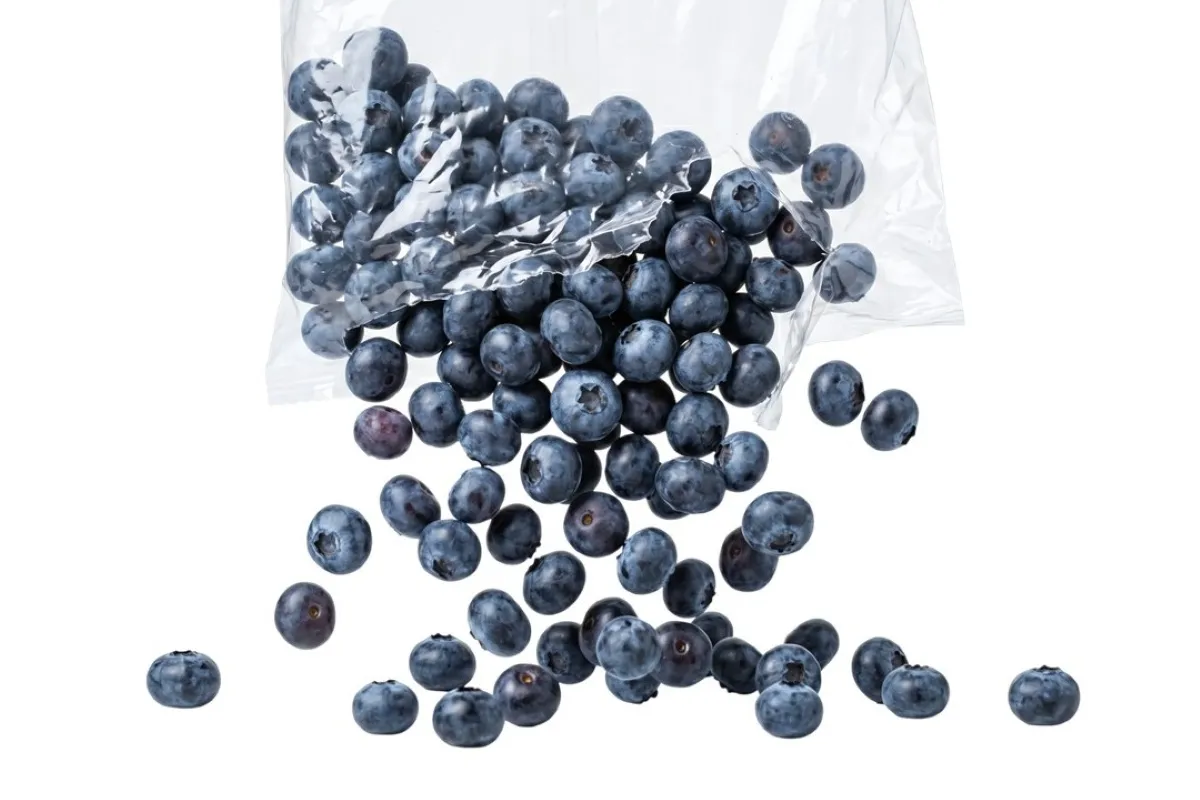
Dr. Christian Ebere Enyoh, corresponding author of the study and research fellow at the Graduate School of Science and Engineering, Saitama University, tells Packaging Insights: “Our CQD/PVA composite films are most immediately suited for fresh produce packaging, particularly for UV-sensitive fruits and vegetables such as grapes, berries, tomatoes, and leafy greens that are prone to rapid UV-induced deterioration during retail display and storage.”
“The films combine two properties rarely found together in a single biodegradable packaging material: strong UV-blocking performance approaching that of commercial plastic films, and visible fluorescent emission under UV light. This dual functionality opens several exciting application formats.”
Potential applications in different formats
Enyoh explains that rather than simply replacing one plastic with another, the researchers are converting a waste stream and environmental hazard into a functional and value-added food packaging material.
“What makes our approach particularly compelling from a sustainability perspective is the feedstock, we are using polyamide microplastics, one of the most persistent and problematic plastic pollutants in the environment, as the raw material.”
According to the results of the study, scientists can use defect engineering to convert them into CQDs with tunable optical properties. The nanomaterials can then be adopted to enhance food packaging films.
The defect engineering is said to be able to control the structure–property–function relationships of plastic-derived CQDs. The result also reveals that boron-doped polyamide CQDs can serve as multifunctional additives for UV-protective food packaging.
 Researchers say that the approach could contribute to sustainable packaging systems that protect food while adding value to plastic waste.“In the near term, we envision these films as flexible wrapping films or produce bags for retail packaging, a direct replacement for conventional PE or PP films where UV protection and biodegradability are priorities,” says Enyoh.
“The luminescent properties also create opportunities for anti-counterfeiting labels and smart packaging indicators, where the characteristic blue-to-cyan emission color of the film under UV light could serve as a visual authentication feature or freshness signal.”
Optimization of performance
Enyoh shares that several important steps remain before these films are ready for commercial adoption.
“The most immediate priorities are mechanical characterization, measuring tensile strength and flexibility under realistic packaging conditions, as well as water vapor barrier performance, which is critical for maintaining fruit freshness over extended storage periods,” he shares.
“We also need to conduct food contact safety testing to confirm that the CQDs do not migrate from the film into food at detectable levels, a regulatory requirement in most markets and a prerequisite for any commercial application.”
Enyoh also notes that beyond safety, scaling the hydrothermal synthesis of CQDs from laboratory batch quantities to industrial volumes while maintaining consistent optical and functional properties is a significant engineering challenge.
“Optimizing the CQD loading within the PVA matrix to maximize UV-blocking and barrier performance simultaneously without compromising film transparency or mechanical integrity is another key area of ongoing development.”
“We are also keen to evaluate the films against a broader range of fresh produce and storage conditions, and to explore whether the luminescent functionality can be harnessed as an active freshness indicator, where the emission signal responds to volatile compounds released during fruit ripening, effectively making the packaging a real-time quality sensor.”